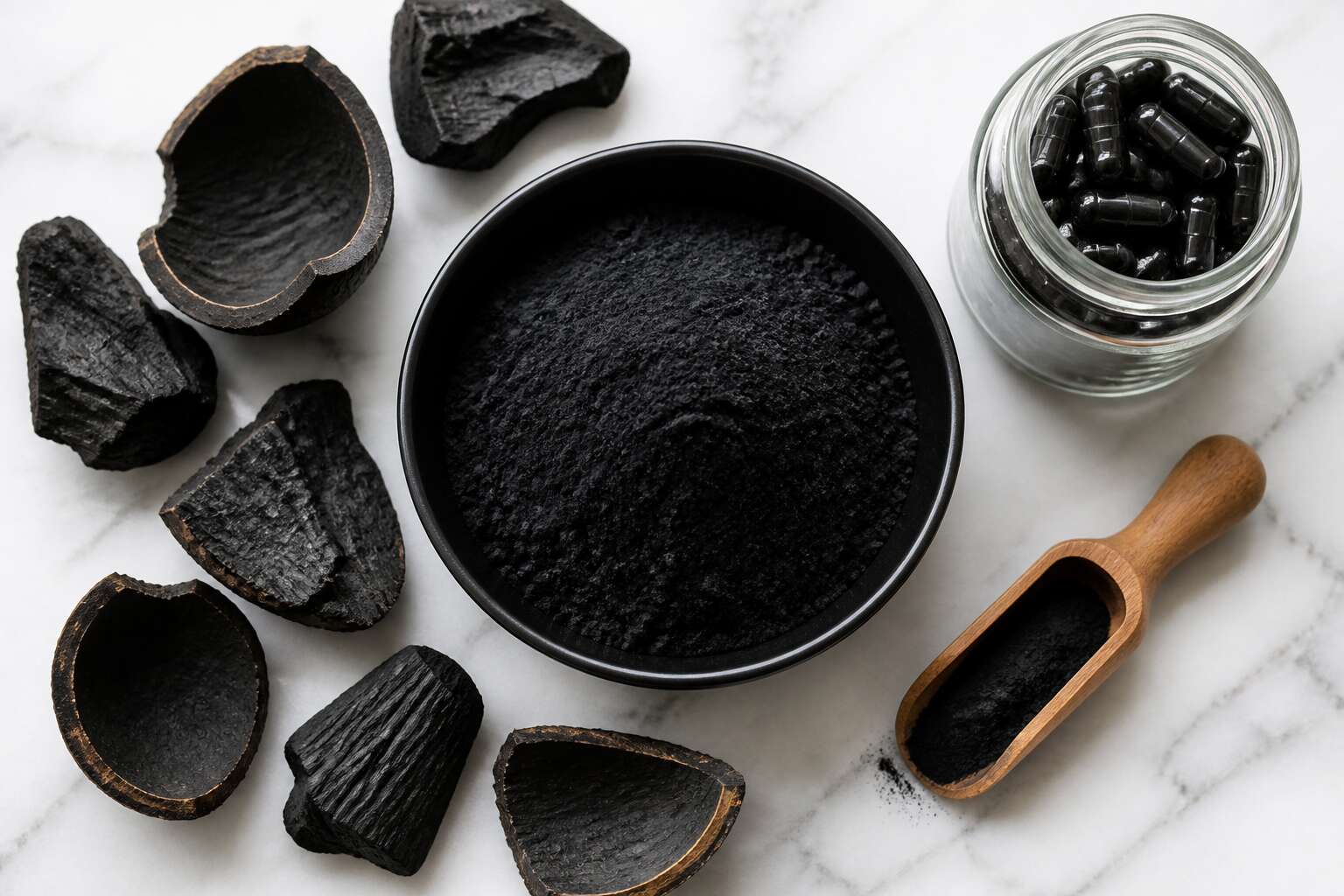
Identifying Premium Activated Charcoal
The Importance of Source Materials: Coconut Shells, Wood, or Coal
Determining what activated charcoal is best begins with the source. Coconut shells yield a finer pore structure, ideal for trapping toxins. Wood offers a broader surface but less consistency. Coal, often used industrially, carries mineral impurities.
Premium charcoal emerges from coconut shells. Their hardness creates durable granules that resist crumbling. South African buyers should verify the origin and processing method. I find a simple test involves dropping a piece in water; premium charcoal fizzes actively!
- Check for a certificate of analysis
- Request particle size distribution data
- Confirm activation temperature exceeds 800°C
Each source changes the final performance. Coconut shells dominate for purity, while wood suits bulk applications. Coal rarely meets food-grade standards. Thus, the answer depends on your intended use, but coconut shells remain the benchmark.
Understanding Surface Area and Pore Size Metrics
A single gram of premium activated charcoal can harbour a surface area exceeding 3,000 square metres. This porosity, not the source alone, dictates adsorption efficacy. For South African buyers, deciphering these metrics separates effective products from placebos and clarifies what activated charcoal is best!
The iodine number serves as the primary gauge, measuring micropore content. Values above 1,000 mg/g signal strong performance against small molecules. BET surface area offers a broader measure of adsorption capacity for general filtration. Methylene blue adsorption reveals mesopore capacity, critical for larger impurities.
- Iodine number: above 1,000 mg/g for toxin removal
- BET surface area: over 900 m²/g for general use
- Methylene blue: above 150 mg/g for larger particles
These metrics answer what activated charcoal is best for your specific needs. A product with high iodine but low methylene blue fails against bulkier pollutants. Always request the full datasheet.
Food-Grade vs. Cosmetic-Grade vs. Pharmaceutical-Grade
When it comes to figuring out what activated charcoal is best, the question often boils down to its intended use. Across South Africa, the market offers three primary grades, each with a distinct purpose. It is a common misconception that all charcoal is created equal, yet the purity and particle size dictate everything from its safety to its effectiveness.
The difference lies in the certification and processing. Cosmetic-grade charcoal finds its home in masks and soaps, designed for topical application. Food-grade charcoal, a popular natural remedy for digestive issues, is processed to be safe for consumption. However, the highest standard is pharmaceutical-grade. This specific classification guarantees a rigorous level of purity and consistent particle size, ensuring the charcoal meets strict medical standards. This distinction is vital for anyone considering internal use beyond simple culinary flair.
To understand what activated charcoal is best for your specific needs, consider the following comparison:
– Cosmetic Grade: Purer than industrial, but not designed for ingestion.
– Food Grade: Safe for culinary and dietary use, often derived from coconut shells.
– Pharmaceutical Grade: The strictest standard, ensuring high absorption and dosage reliability.
Ultimately, the “best” charcoal is a matter of context. For a luxury face scrub, cosmetic grade works well. Yet, for a potent detox remedy or an emergency poison treatment, you need the rigorous assurance of a pharmaceutical label. The activation process creates the porous structure, but the grading defines the integrity. So, when you ask what activated charcoal is best, the answer is not the most expensive brand, but rather the grade that perfectly aligns with your specific health or beauty routine. Your safety and the product’s efficacy depend entirely on that precise match.
Signs of High Purity and Minimal Additives
The search for what activated charcoal is best often begins with a label, but the real evidence lies in the numbers. Premium options typically boast an iodine adsorption value above 1000 mg/g. This figure measures microscopic surface area, and a higher number means more pores available to bind unwanted substances. Lower-grade products often fall short of this threshold, despite their marketing.
Purity is the next critical checkpoint. High-quality charcoal should contain one ingredient only. Any sign of fillers, artificial binders, or flow agents compromises its integrity. For those seeking what activated charcoal is best for digestive health, a simple look at the ingredient panel is revealing. If you cannot pronounce every component, put the container back on the shelf.
Here is a quick reference for scrutinising a label:
– Check the source: coconut shell or hardwood are the gold standards.
– Confirm the activation method: steam activation is the hallmark of a clean product.
– Look for a third-party certification or batch testing report.
– Verify whether the product is labelled specifically as food-grade or pharmaceutical-grade.
Similarly, tests conducted by independent labs reveal the absence of heavy metals. Activated charcoal will absorb things in its path, which means a poor manufacturing process can leave behind toxic residue. The premium brands submit their products for analysis and publish the results. When you inspect the powder itself, it should feel exceptionally fine and dark, without any grit. That texture indicates consistent processing. Ultimately, the answer to what activated charcoal is best lies in these tangible details, not in flashy packaging. A product that prioritises a high adsorption number, a single clean ingredient, and verifiable safety data will outperform any generic option.
Key Criteria for Choosing an Activated Charcoal Product
Match the Product to Your Primary Intended Use
The question of what activated charcoal is best rarely has a single answer. It depends entirely on the task you place before it. A product designed for digestive support differs fundamentally from one meant for water purification or topical application.
I have learned this through trial. The form matters enormously! Capsules offer measured doses for internal use. Powders blend easily into masks and scrubs. Blocks and granules serve filtration systems with greater efficiency.
Consider these factors when matching a product to your purpose:
- The delivery format that suits your daily routine
- The particle size required for your specific application
- The regulatory certification aligned with your intended use
Each choice eliminates options. What activated charcoal is best for one person may disappoint another. The criteria shift with context, and that nuance matters.
Verify Activated Carbon Content and Base Materials
When you flip over a box of charcoal capsules, the label may scream “pure” or “natural.” But here is the uncomfortable truth: many products are simply charcoal, not activated carbon! The activation process, not the source, creates the porous structure. Yet I have seen brands brag about base materials while omitting the actual carbon percentage. That omission should concern you.
Ask for the technical data sheet. A reputable supplier will share the iodine number or methylene blue index without hesitation. If they stall, move on. What activated charcoal is best depends on verified activated carbon content, not a pretty front label. The base material remains relevant, but only when confirmed. Otherwise, you are buying burnt wood with good marketing.
Check for Third-Party Testing and Certifications
A label claiming “food-grade” is not the same as proof. Certifications are the only language that separates a reliable product from a beautifully packaged gamble. For many South African shoppers, the local market offers limited oversight, which makes external verification essential.
Look for documentation from independent laboratories. A certificate of analysis, or CoA, should accompany any serious batch. It details heavy metal screening, microbial counts, and purity levels. Without it, you are trusting a marketing team, not science.
- Check for GMP compliance, which ensures consistent manufacturing standards.
- Seek organic certification from a recognized body, such as Ecocert or USDA Organic.
- Confirm the product has been tested for contaminants like arsenic and lead.
Third-party validation forces a brand to prove that what activated charcoal is best for your digestion or skincare routine actually contains the active ingredient in meaningful amounts. When a company refuses to show these documents, the absence of transparency is your answer. Reputable suppliers in South Africa will happily share their reports. Those who sell inferior products will hide behind vague promises and charming copy.
Review Ingredient Lists for Fillers and Binders
Half the mass of your capsule can be magnesium stearate, a filler that is there for the press, not your body. That means a 500 mg capsule may contain only 300 mg of active charcoal. When you compare products, review the ingredient list for the ratio between charcoal and binder. The label should read charcoal first, then one binder, and nothing else. If you need an answer to what activated charcoal is best for ingestion, look for formulations where binders are below three percent of the capsule weight. Consider these markers when you read a label:
- Charcoal must appear as the first constituent on the pack.
- Binders like stearic acid or vegetable gum should be the only other component.
- If the list shows more than three elements, the charcoal has lost its way.
Those clues define what activated charcoal is best for your digestion, while long lists of additives mean more is going in than carbon.
Assess Value Through Dosage and Cost per Serving
Which brings us to the quiet arithmetic of the shelf. The price tag whispers, but the serving size shouts. A jar can promise purity, but if the dosage demands four capsules for a whisper of effect, the cost multiplies in the dark.
Count the milligrams per capsule. Divide the cost by the number of effective servings, not the total capsules in the jar. The true measure of what activated charcoal is best emerges from this ledger. A lower price per bottle often hides a lower dose per capsule, making the expensive option the wiser purchase.
For a clear comparison, consider this simple rubric:
– Calculate the total active charcoal per serving.
– Divide the product price by that number.
– Compare that cost per gram across your shortlisted brands.
Twenty capsules at two hundred milligrams each is half the value of ten at eight hundred. That higher concentration speaks to a purer form, less diluted by the binders we have already discussed. The cheapest jar can be the costliest mistake, and the modest one may be the very definition of what activated charcoal is best for your own ritual of wellness. In the end, you pay for the effect, not the bottle’s shape.
Comparing Activated Charcoal Delivery Formats
Powders: Flexible Dosing and DIY Recipes
When you ask what activated charcoal is best, the answer often depends on how you plan to use it. Powders stand out for their flexibility. Unlike pre-packed capsules, a loose powder lets you adjust the dose to the exact milligram, which matters when you need a specific amount for a particular situation. You can also mix it into smoothies, water, or even apply it topically for skincare routines, but that requires caution.
I find that powders require a careful hand. The fine black dust can be messy, and it needs thorough mixing to avoid clumps. Still, the control is unmatched.
Here are a few reasons powders might be your pick:
- Precise measurement for experimental recipes
- Adaptable to various liquids and textures
- Cost effective for bulk purchasing
But remember, the right format only matters after you have confirmed the charcoal’s purity and source.
Capsules and Tablets: Convenience and Discretion
The quiet decision to pop a capsule instead of stirring a powder speaks volumes about your priorities. Capsules and tablets excel when convenience and discretion matter more than precise control. You can carry them in a pocket or purse, swallow one without drawing attention, and avoid the sticky residue of mixing charcoal into water. That ease becomes invaluable during travel or in shared workspaces.
For those asking what activated charcoal is best while on the go, these formats offer a practical answer.
The benefits come with trade-offs:
– Capsule shells delay release slightly
– Tablets may contain binders that affect purity
– Fixed doses limit titration
Still, the psychological comfort of a routine pill is real. You trade flexibility for certainty. No measuring spoons, no clumps, no questions. In that trade lies a quiet relief.
Liquids and Softgels: Rapid Mixing and Absorption
Liquids offer immediacy. The charcoal particles are already suspended, meaning absorption begins the moment you swallow. Softgels hold a pre-measured dose in oil, easing ingestion for those who dislike the gritty texture of liquid charcoal. I find this matters more than most reviews admit.
For the South African reader asking what activated charcoal is best when time matters, both formats deliver faster onset than capsules or powders requiring mixing. Consider:
- Liquids require refrigeration after opening
- Softgels may contain gelatin or plant-based shells
- Both limit dosing flexibility
The trade-off is control. You accept a fixed amount and a shorter shelf life. But when speed outweighs precision, these formats answer directly.
Topical Formats: Masks, Soaps, and Toothpaste
The global demand for charcoal-infused skincare is growing, yet most South African consumers buy these products without understanding how the format alters the experience. A mask, a soap bar, and a toothpaste tube each deliver activated charcoal differently, and this changes what activated charcoal is best for your specific routine.
Topical formats prioritise surface interaction. The charcoal in a mask or soap never enters the bloodstream. Instead, it binds to oils, dirt, and environmental pollutants sitting on the skin’s outer layer. This is a physical process called adsorption, where particles cling to the surface of the charcoal, much like a magnet collecting iron filings. The key is the particle size and how well it adheres to the medium.
Here is a practical breakdown of how these formats compare:
1. Masks, typically clay-based, suspend charcoal in a thick paste that dries and pulls impurities from pores.
2. Soaps use saponification, meaning the charcoal is mixed into the soap base and washes off quickly.
3. Toothpaste uses finer charcoal grit for gentle abrasion, aiming to remove surface stains without damaging enamel.
For the South African reader wondering what activated charcoal is best for a deep cleanse, a mask provides the longest contact time. Soap offers convenience but minimal absorption because the lather dilutes the charcoal. Toothpaste requires the finest grade to avoid scratching teeth; a coarse product will cause long term sensitivity.
Consider the context of a local climate. In humid coastal areas like Durban, excess sebum is common, so a heavier mask might be beneficial. In drier Highveld regions, frequent charcoal washing can strip essential moisture. Soap containing charcoal may also contain sulfates, which create foam but dry the skin. Check the base ingredients first. When in doubt, a simple charcoal mask is often the most forgiving starting point, as it allows you to control frequency and monitor your skin’s reaction.
Brand Evaluation and Safety Considerations
Red Flags in Sourcing and Manufacturing Transparency
A brand’s merit rests on verifiable proof. When you ask what activated charcoal is best, examine third-party certifications and independent lab results. These documents confirm the absence of heavy metals and microbial contaminants. A responsible producer freely shares this evidence.
Sourcing and manufacturing transparency is equally critical. Reputable companies disclose their raw material origins and activation methods, such as steam treatment or chemical processing. Vague descriptions hint at hidden risks. Safety requires this level of clarity, because contaminated inputs damage the final product.
Be alert to these warning signs while evaluating a brand:
- No disclosed biomass source
- Missing batch-specific lab reports
- Unclear chemical activation steps
- Absence of a food-grade certificate
Brands that publish their full supply chain and avoid undisclosed additives demonstrate genuine accountability. For South African consumers, verifying these details ensures the charcoal meets local standards. Therefore, determining what activated charcoal is best relies on this factual scrutiny, not marketing slogans.
Interpreting Lab Reports and Certificates of Analysis
When I evaluate a brand, I turn straight to the lab reports. A Certificate of Analysis, or CoA, breaks down contaminant loads and activation residues. For example, you can verify that heavy metals sit below permissible South African thresholds. This factual evidence directly answers what activated charcoal is best for daily use.
Interpreting these documents requires attention. Check the batch number matches the product label. Look for methods like ICP-MS, which detect trace elements. A trustworthy supplier publishes these details without prompting.
- Confirm the test date is recent
- Verify the lab holds ISO 17025 accreditation
- Compare results against food safety limits
Safety hinges on this scrutiny. A CoA also reveals activation chemistry, such as steam or phosphoric acid. Residual chemicals appear in the analysis. Therefore, your choice narrows to brands that prove purity. That is what activated charcoal is best, not promises.
Reviewing Brand Reputation and Customer Feedback
Brand evaluation starts with reputation but relies on evidence. Customer feedback gives you field data. I look for specific comments about how products behave in water, how capsules dissolve, and whether powders leave residue. Generic praise means little. Detail reveals authenticity.
Safety considerations include company conduct after the sale. Watch how brands respond to complaints about batches or reactions. An honest response about variability earns trust. Evasive replies deserve suspicion. South African consumers share this intelligence through community groups.
- Confirm review platforms verify actual purchases
- Seek comments describing texture and flavor
- Compare feedback patterns over several months
Combine customer insight with documented testing. The convergence of laboratory facts and lived experience points to what activated charcoal is best for daily use.
Understanding Side Effects and Drug Interactions
Brand evaluation means asking what activated charcoal is best, but safety adds a strict second test. In South Africa, pharmacists warn that charcoal binds to medications in the stomach. This includes antiretrovirals, statins, and epilepsy drugs. The binding effect is strongest when the two substances arrive together, so timing matters for anyone on a daily prescription.
Side effects are rarely dramatic. Constipation appears most often, along with black stools that frighten first time users. Some charcoal products contain sorbitol as a sweetener, which relaxes the gut and changes the expected effect. A few brands add citrus oils or mint, yet those extra ingredients carry their own allergy risks.
- Antiretrovirals for HIV management
- Oral contraceptives
- Immunosuppressants after transplants
Customer reviews that mention dizziness or unusual fatigue deserve attention, since they point to possible drug absorption loss. Honest manufacturers publish interaction warnings in their packaging.
Sustainability Claims: Eco-Friendly Harvesting and Processing
Brand evaluation for what activated charcoal is best now includes sustainability claims. Eco friendly harvesting means bamboo and coconut sources that regrow quickly, yet processing methods vary widely. In South Africa, brands using solar dried kilns or closed loop water systems reduce contamination risks. Safety considerations extend to sourcing: wood charcoal from illegal logging may carry heavy metals, so traceability matters for every batch.
Some producers publish sustainability audits directly. Check for these signs:
- Certified organic plantation origin
- Zero chemical activation agents
- Recyclable packaging with batch codes
These claims often align with higher purity standards. A transparent supply chain gives you a safer product without sacrificing adsorption power, which answers the real question behind any purchase.
Price Point Versus Measured Quality
Price point rarely reveals what activated charcoal is best for your needs. A premium label might simply reflect packaging costs, while a budget brand could hide chemical activation shortcuts. Safety considerations demand more than a glance at the price tag.
Compare cost per gram across brands, then weigh that against measured quality. A batch specific Certificate of Analysis showing iodine adsorption and heavy metal screening carries more weight than any marketing claim. Some South African producers charge extra for solar dried kilns and closed loop water systems, and those processes reduce contamination risks.
- Current lab reports often differ from advertised specs
- Activation methods on labels sometimes contradict actual processing
- Price per effective dose varies widely between brands
Documented performance beats a pretty package every time.
Common Mistakes to Avoid in Your Search
Assuming All Activated Charcoal Is Created Equal
Assuming every charcoal capsule or powder does the same job is the quickest way to waste your rand. One batch can have a surface area triple another’s, yet both look identical in the jar. This mistake leads buyers to grab the cheapest option without asking what activated charcoal is best for their specific needs. Trust me, I’ve watched shoppers do exactly that.
Consider the activation process itself. Steam activation creates different pore structures than chemical activation. Some products skip proper washing, leaving residues that irritate your stomach. Others add binders that reduce the charcoal’s ability to trap toxins. Most buyers ignore key specifications, such as:
- The activation method used.
- The particle size distribution.
- Whether independent lab results exist.
These oversights separate a useful supplement from expensive powder. A little skepticism prevents you from assuming all charcoal behaves the same.
Neglecting to Check for Contaminants and Heavy Metals
Charcoal sourced from contaminated timber can carry arsenic, lead, or cadmium into your gut. A 2019 analysis found a third of tested supplements exceeded US limits for heavy metals. The question of what activated charcoal is best starts with what is absent from the powder.
Check whether the manufacturer publishes a certificate of analysis. Independent labs can screen for heavy metals. Without that paperwork, you are trusting a label when deciding what activated charcoal is best!
Some brands fail to test for polycyclic aromatic hydrocarbons, or PAHs, which form during pyrolysis. High heat can concentrate these compounds if the kiln lacks filtration.
Consider these issues:
- No mention of heavy metal testing on the product page
- Minimal origin information for the raw material
- A price per kilogram far below market rates
That last point matters. Cheap charcoal often comes from salvaged or industrial wood. Watch for sources near old mining areas.
Using the Wrong Particle Size for Your Application
Particle size determines how quickly charcoal adsorbs and how easily it disperses. Coarse granules in a beverage mean a long wait for activation. Ultra-fine powder in a water filter can clog the system. People buy the wrong particle size because they focus on brand reputation instead of their actual application.
The mesh rating tells you everything. A 300 mesh powder works well for digestive mixtures. A 4 to 12 mesh granule suits aquarium filtration. These are different products with different purposes.
Consider these particle size factors:
- Finer powders offer faster adsorption in liquids
- Coarse granules work better for filtration
- Medium mesh sizes balance speed and ease of handling
The right particle size depends on your routine. Stirring charcoal into juice calls for the finest powder. Packing a filter demands coarse granules. Getting this wrong creates frustration! The question of what activated charcoal is best only makes sense once you know your application.


0 Comments