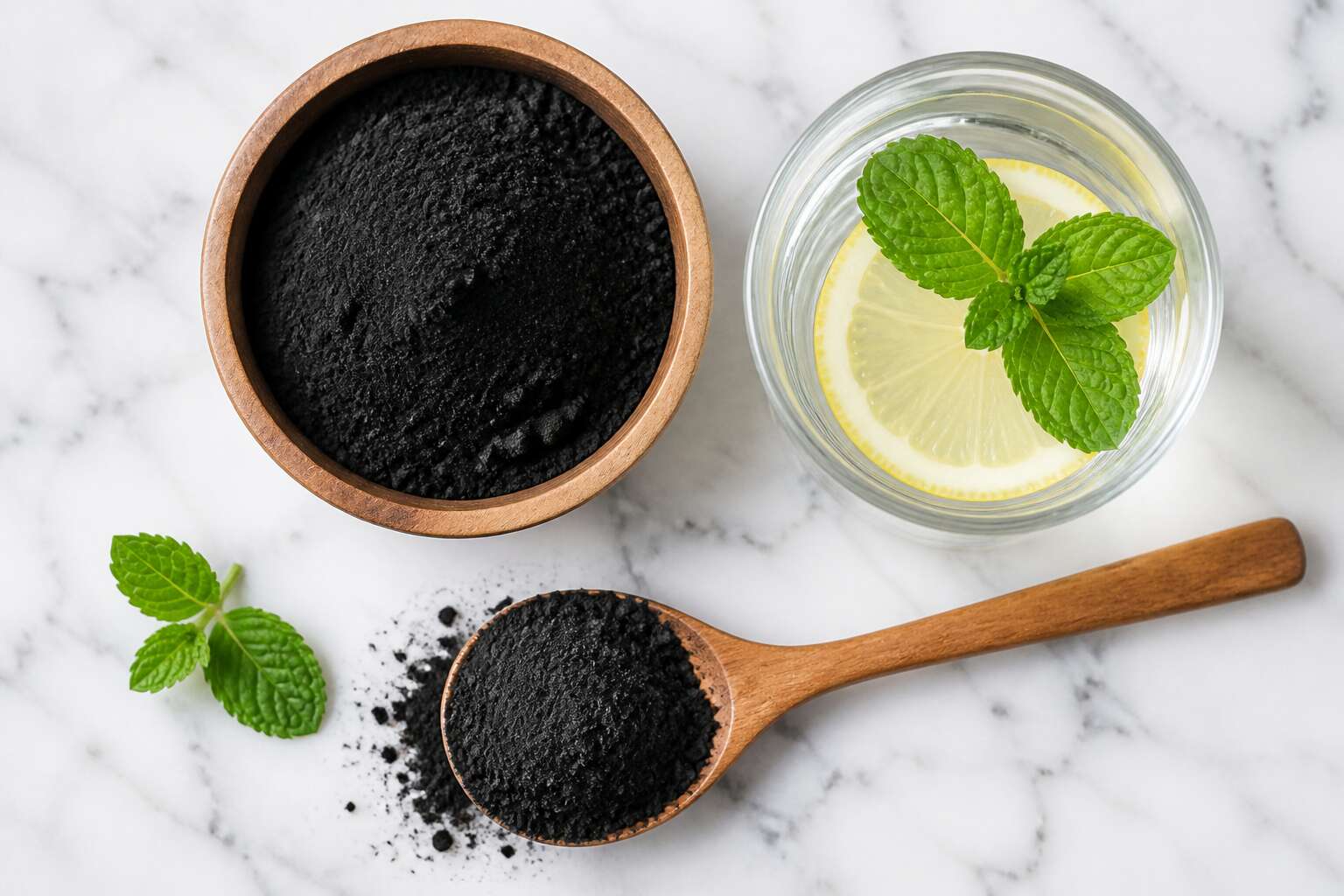
Skin and Beauty Applications
Acne and Blemish Control
The humid coastal air clings to the skin. Dead cells accumulate. Sebum hardens within the follicle. This cycle breeds persistent acne. The humid climate of the coast exacerbates this issue. Skin cells remain bound to the surface. The pore becomes a closed vessel, holding oil and debris.
Activated charcoal interrupts this process through adsorption. Its porous structure traps microscopic impurities. The surface area pulls excess oil away from the pore lining. It does not strip moisture. It removes the particulate matter that triggers inflammation. The charcoal binds to the sebum itself, altering the visible congestion.
This mechanism explains how activated charcoal helps regulate blemishes. The application is straightforward. A mask left for ten minutes draws out the residue. Rinse with cold water. The skin sheds the trapped residue. This approach works well across various skin types. Managing breakouts becomes more precise. Regular use reduces the frequency of inflamed nodules.
Reducing Body Odor Naturally
Human sweat has no smell. The sharp, sour character of body odour appears only when bacteria metabolise the lipids and proteins released by apocrine glands. Heat speeds the process. In the coastal cities of South Africa, where humidity keeps the skin damp long after activity, the reaction becomes constant.
This is how activated charcoal helps. Its microscopic pores trap the short-chain fatty acids and volatile sulphur compounds responsible for the scent. The binding is physical, not chemical. The molecules remain held inside the charcoal until water washes them away. No fragrance masks them. No aluminium salt obstructs the gland. That is a natural route to odour control!
The result changes the chemistry of the underarm. I have found that this mechanism leaves the skin surface drier and less hospitable to bacterial overgrowth, while the substances that cause odour are removed at their origin.
Detoxifying Face Masks for Glowing Skin
Nearly every skincare regimen now promises a glow, yet few formulations address the underlying dullness caused by environmental residue. On the Highveld, where dry air and airborne mineral dust settle into the skin, a simple wash often fails to dislodge the particles that cloud the complexion. The answer lies in a porous substance with a profound physical action. This is how activated charcoal helps restore luminosity; its fine matrix draws out the microscopic debris and residual oils that accumulate within the pores. The process is adsorption, a gentle pulling of impurities to the surface, leaving the skin texture visibly refined without abrasion.
The application transforms the ritual into a deep cleanse. After a week of city exposure, a mask of this nature works to lift the invisible film of pollution. The result is a clearer canvas, one that reflects light rather than absorbing it.
– Draws out particulate matter trapped by natural sebum
– Balances the skin’s surface without stripping essential moisture
– Prevents the dull, grey cast common in urban environments
For those living along the coast, the humid salt air leaves a fine residue that settles into the skin. A charcoal mask acts as a magnet for this film, restoring a smooth, polished surface. The glow emerges from this process of removal; it is a natural clarity, not a cosmetic shimmer. The skin looks like itself again, only cleaner.
Soothing Insect Bites and Stings
A mosquito’s bite in a Johannesburg summer is a study in misery; the itch arrives with an insistence that demands attention and often ends in scratched, inflamed skin. The swelling is the body’s histamine response, a chemical alarm that turns a minor puncture into a red, angry welt. Conventional creams offer temporary relief, but the source of the irritation often remains, festering beneath the surface. This is where the physical properties of a charcoal poultice become a practical remedy for the discerning traveler.
The application is a simple matter of preparation. Mix a small quantity of activated charcoal powder with a touch of water to form a thick paste, then apply it directly to the affected area. As the mixture dries, it exerts a gentle pull on the surrounding tissue, drawing out the residual saliva left by the insect. This action reduces the inflammation at its root, rather than merely numbing the nerve endings.
– Diminishes the urge to scratch by removing the irritant
– Reduces the raised bump without the use of astringent chemicals
– Provides a passive, hands-off treatment during a restless night
After an hour, rinse the paste away with cool water to reveal skin that is calm, rather than raw. The porous nature of the charcoal does the quiet work of extraction, a method that proves more effective than a topical steroid for many. On a weekend in Limpopo, where the tsetse fly is a persistent companion, this how activated charcoal helps approach is the difference between a ruined safari and a restful evening. The relief is not a mask but a removal, a return to a baseline state of comfort.
Digestive Wellness and Internal Detox
Relieving Bloating and Excess Gas
A single gram of activated charcoal offers over 3,000 square meters of surface area! This density proves invaluable for digestive wellness. When bloating and excess gas take hold, this substance acts as a binding agent. It traps the volatile compounds responsible for pressure and discomfort, preventing them from lingering in the intestinal lining.
For many South Africans, the appeal is immediate. How activated charcoal helps is by intercepting the fermentation process before it reaches its uncomfortable peak. It does not mask symptoms; it removes their source. This internal detox routine works with the body’s natural elimination pathways.
Consider the typical triggers:
– Beans and lentils that produce persistent gas.
– High-fiber vegetables that swell in the stomach.
– Carbonated drinks that introduce extra air.
I have found that a measured dose, taken with a full glass of water, often brings relief within hours. The abdomen settles, the bloated tightness fades, and the digestive system resumes its quieter rhythm.
Addressing Mild Food Poisoning Symptoms
The aftermath of a dodgy braai or a questionable street bunny chow is a uniquely South African form of misery. Sudden cramps, that unsettling cold sweat, and a desperate wish that you had chosen the chicken option. When mild food poisoning strikes, the body begins a frantic effort to eject unwelcome bacterial guests and their toxic byproducts. This is where the spotlight turns to the black powder in your supplement drawer.
The microscopic structure of activated charcoal carries a high negative ionic charge. Bacterial toxins and harmful chemicals often carry a positive charge. In the gut, they are drawn to each other like magnets. The charcoal traps these irritants before they can bind to the intestinal wall and trigger the full cascade of sickness. This is precisely how activated charcoal helps to neutralise the grim aftermath of a meal that did not go to plan.
Timing is the crucial factor here. The goal is to trap the offending matter during its transit through the gastrointestinal tract.
– Undercooked meats that harbor lingering pathogens.
– Dairy products left in the sun for too long at a festival.
– Unwashed produce from a roadside stall.
Taking a dose of activated charcoal at the first sign of trouble, and not after the vomiting starts, is the strategy. It offers a layer of defence, a bouncer for your bowels, working to ensure that one bad meal does not ruin your entire weekend.
Supporting Liver and Kidney Function
Activated charcoal binds to toxins in the digestive tract. When you suspect food poisoning, it can capture the irritants before they cause severe symptoms. The porous surface carries a negative charge, attracting positively charged toxins. This is how activated charcoal helps to reduce the absorption of harmful substances. For South Africans who enjoy a braai or street food, having a small dose on hand offers a practical safety net. It works best at the first sign of trouble, not after vomiting starts. The charcoal moves through the system, carrying the unwanted guests out with it. This process supports liver and kidney function by lessening the toxic load. It is a simple, cost effective measure against a bad meal.
Managing High Cholesterol Levels
Cholesterol management often begins in the gut. For many South Africans, a love for braaied meat can elevate cholesterol levels. The digestive process reabsorbs bile acids, which are built from cholesterol. Here is how activated charcoal helps: it binds to those bile acids in the intestines. This reduces their reabsorption, prompting the liver to draw more cholesterol from the blood to produce new bile. The result is a measurable drop in total cholesterol.
Internal detox also benefits. Activated charcoal traps metabolic waste and excess hormones before they recirculate. A clean digestive tract means less strain on your body’s filtering systems. Consider these effects:
- lower reabsorption of cholesterol rich bile
- reduced recirculation of digestive toxins
This binding action works quietly, without altering your daily rhythm. It offers a targeted approach for those who want to support heart health while maintaining a traditional South African diet.
Important Precautions and Medication Interactions
Many people ask how activated charcoal helps the digestive system beyond the obvious. It binds to residual endotoxins and fermentation byproducts lingering in the gut. This reduces the toxic burden on the intestinal lining.
Yet caution matters. Charcoal is non-selective. It will bind to nutrients and medications alongside unwanted compounds.
- Take it two hours apart from prescription medicine.
- Use it occasionally, not daily.
- Stay well hydrated.
This timing protects the efficacy of chronic treatments like antihypertensives or oral contraceptives. South Africans using charcoal should also note it can interfere with mineral absorption. A short course of use remains safer than a permanent habit.
Oral Health and Fresh Breath
Whitening Teeth Without Harsh Chemicals
Nearly 80% of South Africans buy whitening toothpaste, yet many rely on harsh chemical bleaches that can damage enamel over time. How activated charcoal helps is through adsorption, not abrasion. The fine powder binds to surface stains and volatile sulfur compounds lodged between teeth and along the gumline.
This process also shifts the oral microbiome. By removing the bacteria that produce malodorous gases, fresh breath becomes a natural consequence rather than a temporary mask. Unlike peroxide, charcoal does not cause sensitivity. Instead, it lifts coffee, tea, and red wine residues with a gentle physical action, preserving the integrity of your enamel while yielding a visibly brighter smile.
Fighting Bad Breath and Halitosis
Bad breath often traces back to volatile sulfur compounds released by anaerobic bacteria. These microbes thrive in the crevices of the tongue and along the gumline. Understanding how activated charcoal helps in this context requires a look at its porous structure. The charcoal physically traps these odor-causing molecules without masking the smell with artificial fragrances.
Instead, it adsorbs the toxins and bacteria themselves. This action shifts the oral ecosystem toward a healthier balance. Regular use reduces the bacterial load that produces halitosis. The result is a cleaner palate and sustained fresh breath. Effective charcoal formulations focus on gentle binding rather than harsh scraping, preserving the delicate tissues of the mouth.
- Reduces sulfur compound concentration
- Targets bacteria deep within the biofilm
- Neutralizes odors without artificial flavors
This mechanism differs from mouthwashes that merely kill bacteria temporarily. By binding to the volatile compounds directly, charcoal delivers a passive, continuous cleansing effect. Your breath reflects the internal state of your mouth, not just the last mint you consumed.
Improving Gum Health and Reducing Inflammation
Gum disease often begins as quiet inflammation. The tissues around the base of the teeth become swollen, tender, and prone to bleeding. Many people overlook these warning signs until the discomfort becomes impossible to ignore. Understanding how activated charcoal helps in this context requires a look at its surface charge. The charcoal attracts positively charged toxins and bacterial byproducts that trigger inflammatory responses. By binding to these molecules, it reduces the burden on the gums. The tissue then has room to heal without constant irritation.
The benefit extends beyond a single brushing. With repeated use, charcoal interrupts the cycle of bacterial accumulation and swelling. This is how activated charcoal helps maintain steadier gum health. Consider the mechanisms at play:
- Charcoal adsorbs lipopolysaccharides from bacterial cell walls, which are known drivers of gum inflammation.
- Its fine particles reach subgingival spaces where brushing often misses, offering a passive method of reducing irritation.
I find it genuinely satisfying that such a porous material can restore a sense of calm to the mouth. The shift is subtle, but the gums feel it immediately.
Choosing the Right Activated Charcoal Toothpaste
Tooth enamel is the hardest substance in the human body, yet it wears down faster than most people realise. Choosing the right activated charcoal toothpaste means balancing effectiveness with gentle care. Many commercial options use grit that is too coarse. A trustworthy South African brand grinds the charcoal finely, preserving the enamel’s mineral surface.
How activated charcoal helps in this selection is by filtering daily buildup. It binds to residual plaque before it hardens into tartar. The paste should list its charcoal content clearly and avoid artificial sweeteners that feed oral bacteria.
- Micronised or ultra-fine particle size
- A pH-balanced formula without harsh abrasives
Fresh breath follows when the mouth feels genuinely clean. This is how activated charcoal helps beyond the initial rinse. I prefer a mild mint or aniseed flavour, one that lingers without burning the tongue. Simple ingredients and a smooth texture produce the best result.
Water Purification and Filtration
Removing Chlorine and Heavy Metals from Tap Water
Tap water might be safe, but it is certainly not pristine. Municipal treatment processes leave behind residual chlorine, a necessary evil that can make your morning glass taste like a swimming pool. More concerning are the heavy metals like lead and copper that can leach from ageing pipes. This is where the porous nature of activated carbon becomes a practical solution. The extensive surface area acts like a microscopic sponge, trapping these impurities through adsorption. It is a simple physical process, not a chemical one, which is exactly why it is so effective.
The list of what it pulls out is genuinely impressive.
- Chlorine and chloramine, which affect taste and smell
- Lead and mercury, which are toxic even in small doses
- Volatile organic compounds that contribute to a chemical aftertaste
A block of activated carbon in a filter pitcher or an under-sink unit will strip these out, leaving you with water that is cleaner and far more palatable. This is how activated charcoal helps you avoid the metallic tang that ruins a good cup of coffee. The result is not just better hydration, but a noticeably fresher taste that makes you question what you were drinking before.
Emergency Water Treatment for Outdoor Adventures
When you’re hiking through the Drakensberg or camping along the Wild Coast, that crystal-clear stream isn’t always as pure as it looks. Runoff, decaying vegetation, and upstream animal activity can all compromise natural water sources. While boiling remains the gold standard for killing pathogens, it does nothing for unpleasant tastes or chemical residues. This is where how activated charcoal helps becomes your secret weapon for backcountry hydration.
Activated charcoal works through adsorption, a process where impurities stick to the vast surface area of the carbon. A single gram can cover over 3,000 square meters, trapping unwanted compounds like a microscopic net. Unlike chemical treatments that leave a distinct flavour, charcoal filters improve the palate of your water without introducing additional substances.
You likely already know the benefits for digestion or dental care, but its role in emergency preparedness is equally valuable. For any outdoor enthusiast, having a portable filter bottle or charcoal stick offers peace of mind. When you’re forced to drink from a dubious source, running it through a charcoal layer removes chlorine, pesticides, and even some heavy metals that might be present.
It also targets geosmin, the compound responsible for that earthy, muddy taste in pond water. This makes your hydration routine far more enjoyable during a multi-day trek. Simply drop a charcoal stick in your container or use a dedicated filter system. Let it sit for several hours, and you’ll notice a significant difference in clarity and odour. It is a lightweight, reusable solution that extends your ability to stay safe when adventure takes you far from the tap.
Improving Taste and Odor in Stored Water
Stored water, whether in a JoJo tank or a rain barrel, often develops a flat, musty taste. Algae growth and stagnant minerals are the usual culprits. This is where understanding how activated charcoal helps becomes practical. Adding a charcoal filter or a charcoal block to your storage system adsorbs the organic compounds responsible for earthy flavours and unpleasant odours. The result is water that tastes noticeably fresher, even after weeks of storage.
- Food-grade activated charcoal blocks are rated for continuous contact with potable water.
- Smaller carbon granules offer more surface area per volume, improving adsorption speed.
- Water temperature affects adsorption, with cooler water slowing the process.
While it does not remove dissolved salts or pathogens, charcoal filtration significantly improves the sensory quality of stored water for everyday drinking and cooking.
Building a DIY Charcoal Water Filter
I assembled a working charcoal filter in under twenty minutes. The materials cost less than a loaf of bread. This basic rig removes more gunk than you would believe.
Understanding how activated charcoal helps comes down to surface area. One gram of activated carbon can cover a football field. That is where the adsorption happens.
- Crush the charcoal into small pieces
- Wrap it in a cloth to keep it contained
- Pour water through slowly for best results
The filter does not kill bacteria. It does pull out pesticides, chlorine residue, and organic compounds that make water smell like a pond. For a weekend trip or emergency backup, this DIY solution holds up.
Understanding Filter Limitations and Replacement Cycles
Every filtration medium has a breaking point, a moment when its capacity to capture contaminants is exhausted. Understanding how activated charcoal helps requires acknowledging that this material is not a permanent solution. The adsorption sites, those microscopic crevices that trap impurities, fill up over time. Once saturated, the charcoal becomes a passive sponge, offering no additional benefit to your water quality. Worse, it can become a breeding ground for trapped organic matter.
The lifespan of a charcoal filter is dictated by several variables. The volume of water processed is the primary factor, followed by the initial quality of that water. Heavily chlorinated municipal water will exhaust the charcoal faster than relatively clean rainwater. As a general rule, you should consider replacing the media every two to three months of regular use. For a DIY rig, the signs of exhaustion are often sensory:
– A return of the musty or earthy smell in the filtered water
– A noticeable change in taste, often described as flat or slightly bitter
– A reduction in the water flow rate as the charcoal compacts
These indicators tell you the media has done its job and is now spent. The common misconception is that all filter media behaves identically. It does not. A simple carbon block and a granular activated charcoal bed have different flow dynamics and contact times. The water needs sufficient contact time with the charcoal to allow for adsorption to occur. Pouring water too quickly through a DIY filter reduces that contact, lowering the efficiency of the filtration process itself. Monitoring the flow rate and the sensory quality of the output is the only reliable way to gauge when a replacement is necessary. The system is only as effective as its most recent maintenance.
Emergency Medicine and Poison Control
Treating Drug Overdoses in Clinical Settings
In emergency rooms, the immediate response to a suspected overdose often hinges on a simple, porous powder. Understanding how activated charcoal helps in this high-stakes environment involves more than just the image of a black slurry. Its vast surface area adsorbs the offending drug before it can enter the bloodstream, effectively trapping it within the gut.
The clinical utility, however, is strictly time-dependent. It works best if administered within one hour of ingestion. For example, it is highly effective against molecules like tricyclic antidepressants and theophylline, but completely ineffective for corrosive acids, lithium, iron, or simple alcohols. The decision to administer it requires careful judgment regarding the patient’s airway.
- Timing matters more than dosage in many protocols.
- Multiple doses can enhance elimination of select drugs.
- Contraindications include bowel obstruction and caustic exposure.
Ultimately, how activated charcoal helps in poisonings is a precise, chemical intervention rather than a universal antidote, demanding rapid toxicological assessment during each critical minute.
First Response for Accidental Toxin Ingestion
Accidental toxin ingestion sends over 20,000 South Africans to emergency rooms yearly. The first call usually goes to poison control, not a doctor. Understanding how activated charcoal helps becomes urgent in those opening minutes, because it adsorbs toxins before they reach the bloodstream.
I have watched parents panic while a toddler coughs up blue dish soap. Charcoal can bind that soap, yet it cannot touch corrosive acids or lithium salts.
- Activated charcoal needs a breathing patient.
- It requires ingestion within sixty minutes.
- It fails against alcohols and metals.
The emergency team weighs these variables in seconds, and the poison control specialist guides every move.
Critical Situations When It Should NOT Be Used
In emergency medicine, timing determines outcomes. How activated charcoal helps depends on the toxin and the minutes since ingestion, yet its power has limits. Caustic acids and alkalis burn tissue on contact; charcoal cannot reverse that destruction.
- Unprotected airways or unconscious patients
- Ingestion of petroleum products or solvents
- Confirmed bowel obstruction or perforation
Poison control rejects charcoal in these cases because aspiration risk exceeds any benefit. Lithium and iron salts escape its surface entirely. The emergency team must assess the unseen chemistry quickly, recognizing when charcoal is unsuitable, not helpful.
Including Activated Charcoal in Your First Aid Kit
Every minute counts when a child swallows something dangerous or an adult grabs the wrong bottle. The window for effective intervention is brutally short, often under 60 minutes. That is precisely how activated charcoal helps in a crisis; it provides a rough, immediate option before professional help arrives. Its porous surface binds with certain toxins in the gut, preventing them from entering the bloodstream. This physical process, called adsorption, is a race against systemic absorption.
Keep a dedicated supply in your home emergency kit, but understand its purpose is temporary containment. You administer the slurry, and the toxin binds as it passes through. It is a blunt tool for the pre-hospital phase.
– Unconscious or semi-conscious individuals, who cannot protect their airway
– Anyone who has ingested a corrosive acid or alkali
– Cases involving petroleum distillates like kerosene or paraffin
Poison control centers see charcoal as a first-line adjunct, not a cure. They provide the dosage and confirm whether the ingested substance is actually adsorbed. For instance, it works on certain painkillers and sedatives, but does nothing for iron tablets or battery acid. In South Africa, where household chemicals and traditional remedies are common, the triage skill is knowing when to give charcoal and when to provide only supportive care until the ambulance arrives. The delay to call a professional or the misapplication of charcoal can easily overshadow any potential benefit.
Everyday Household and Lifestyle Uses
Dehumidifying Closets and Storage Spaces
Activated charcoal isn’t just for emergency medicine. It is a surprisingly effective tool for managing moisture at home. Placing a fabric pouch of it inside a musty closet or a damp storage box helps absorb excess humidity. This simple action prevents the stale, mildewy smell that ruins linens and winter coats over time. The charcoal works by trapping moisture and odor particles through adsorption. After a few months, you can recharge the pouch by leaving it in direct sunlight for a day. This makes it a reusable alternative to chemical dehumidifiers. You do not need to worry about spills or messy powders. It is a clean, low-maintenance way to keep your stored items feeling fresh and dry, making it a worthwhile addition to any home.
Natural Air Purification for Small Rooms
Indoor air in many South African homes carries more pollutants than the outdoor breeze, especially in rooms that stay closed for long stretches. A small bedroom or home office can hold onto cooking smells, pet odors, and the faint dampness that comes from daily living. Placing a fabric sachet of activated charcoal on a shelf or windowsill addresses this quietly.
The material works through adsorption, pulling odor molecules and airborne impurities into its porous surface. This is how activated charcoal helps maintain a cleaner atmosphere without electricity, filters, or fragrances. It simply sits and works.
- A single 250 gram pouch can handle a compact study or ensuite bathroom.
- Sunlight revives the charcoal’s capacity over time, making it a lasting household item.
The difference is noticeable within days. Air feels less heavy, and stale corners lose their clinging smell. For small South African homes where space is limited, this subtle method offers a practical route to fresher indoor air.
Eco-Friendly Cleaning and Scrubbing Applications
A stubborn coffee ring on granite need not spark panic. A pinch of activated charcoal powder mixed with water creates a mild abrasive that lifts grime without scratching. Many South African households repurpose spent charcoal for this chore.
How activated charcoal helps in daily cleaning lies in its porous structure, which absorbs sticky buildup better than plain detergent. For glass stovetops, a gentle scrub gives a streak free finish. Polishing silver with a damp charcoal cloth restores shine without chemical polish. Useful tasks include:
- soaking oven racks in charcoal water to loosen baked on food
- scrubbing cutting boards to neutralise odours
The result is a clean sink and fewer plastic bottles!


0 Comments