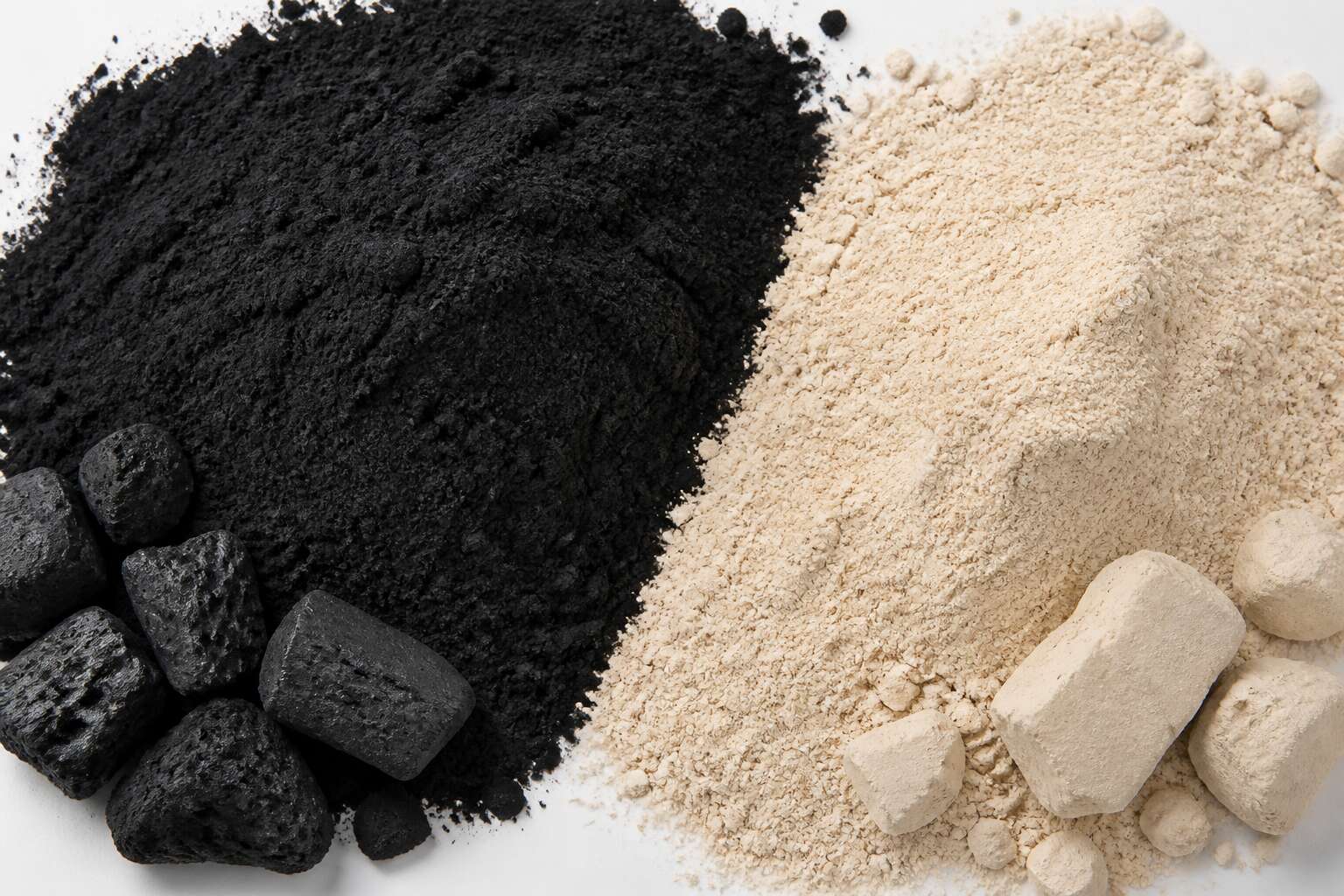
Understanding the Two Detoxifying Agents
What Is Activated Carbon?
Roughly 1.5 million South Africans use some form of detox product each year. Activated charcoal or fuller’s earth are two common agents, yet they work differently. Activated carbon is created by heating carbon-rich materials, like coconut shells, to create a vast internal surface area. That surface traps impurities through adsorption, a physical bond.
Fuller’s earth, by contrast, is a clay mineral that absorbs toxins through a chemical charge. It pulls oils and heavy metals from the skin or gut. I have seen both used in face masks and emergency poison treatments.
One key distinction: activated carbon excels at capturing gas and small molecules. Fuller’s earth handles larger particles and excess moisture. That difference matters for practical use!
What Is the Mineral Clay?
The clay in your detox mask has a history that predates modern chemistry. Fuller’s earth earned its name from the wool trade, where workers used it to “full” or clean raw fleece of its heavy oils. That ancient practice still informs how we use it today.
Fuller’s earth is a mineral clay with a strong ionic charge. Its particles bind to positively charged molecules, including toxins, sebum, and heavy metals, through absorption. This chemical attraction differs from the physical adsorption of activated carbon. So when you choose between activated charcoal or fuller’s earth, you are really choosing between two different mechanisms of cleansing.
The clay offers several practical benefits:
- It absorbs excess oil without stripping the skin’s natural barrier.
- It binds to heavy metals in the gut, aiding elimination.
- It draws moisture from inflamed tissue, reducing swelling.
Key Chemical and Structural Differences
One gram of activated carbon contains roughly 400 square metres of internal surface. That surface is a dense lattice of pores, and hydrophobic molecules collect there through physical retention. Fuller’s earth is a layered clay with a charge pattern across its sheets, attracting ionic metals and polar compounds through chemical affinity.
This is the deciding point between fuller’s earth and activated charcoal or fuller’s earth: the site of the reaction inside the bar of the material.
For water treatment in South African sectors, the route to choice flows from the exposed load:
– Activated carbon handles volatile organics, phenols, and non-polar gases.
– Fuller’s earth operates where cations, heavy metals, and sebum need a charge-based split.
– A serial combination serves mixed inflows, where both hexane and soluble metals exist.
The active surface dictates the correct material, not the other way around.
Sourcing and Production Methods
The most overlooked variable in water treatment is geological. Source deposits set the performance ceiling. Coconut husks from Mozambique arrive at South African ports, while local coal feeds domestic processing lines. The choice between activated charcoal or fuller’s earth often reduces to supply geography.
Activated carbon production follows a strict sequence: carbonisation in an oxygen-free retort, steam activation above 800 degrees Celsius, then sizing through mesh screens. Fuller’s earth requires no kiln. Acid washing expands the clay’s interlayer spacing in hours, a cheaper route that suits its ionic affinity.
I have watched operators weigh these differences on plant floors in Gauteng. The price per tonne, the freight distance, and the batch consistency matter more than any marketing narrative. Both materials purify, but only one will clear the hexane, and only the other will pull the lead. The plant manual never says this, but the procurement file shows it.
Comparing Their Skincare Benefits
Oil Absorption and Sebum Control
A single gram of activated charcoal flaunts a surface area exceeding 3,000 square meters, a figure that dwarfs a standard suburban Johannesburg plot. This staggering porosity is why, in the bustling skin landscape of Cape Town, activated charcoal acts like a precision vacuum, drawing out excess oils that clog pores. However, its mineral cousin, fuller’s earth, operates on a different physical principle entirely.
When formulated for skincare, fuller’s earth relies on a powerful ionic charge to latch onto positively charged impurities. It is less about microscopic tunnelling and more about a broad-spectrum absorption that naturally exfoliates the surface. For someone navigating South Africa’s humid summers, the real distinction surfaces in post-cleansing sensation. Charcoal tends to minimise without stripping essential ceramides, which is crucial for combination skin types.
– Fuller’s earth can rapidly mattify an oily T-zone within minutes.
– It often leaves a slight tightening effect that requires immediate moisturising.
– Its clay composition is exceptionally efficient at binding to environmental grime.
Where the duel becomes interesting is in sebum regulation. Charcoal excels in halting oxidation, the process that turns surface oil black. In contrast, fuller’s earth can draw out oil deeper from within the follicle, potentially impacting future breakouts. I have found that those in Durban’s humidity often require the mineral’s stronger draw, while Joburg’s drier climate calls for the charcoal’s more balanced intervention. Ultimately, your choice hinges entirely on your skin’s ambient moisture requirements.
Facial Masks and Pore Cleansing
In the theatre of a weekend facial, the mask is the dramatic reveal, the moment of truth for congested skin. Here, activated charcoal or fuller’s earth determines the final act. The black mask paints a striking picture, pulling its weight through gentle persuasion, lifting the day’s grime without a fight. It leaves the skin feeling calm, a quiet canvas ready for serums. The mineral mask, however, performs a more vigorous extraction.
When the clay dries, it creates a suction that visibly clears out the pore’s vestibule. The immediate results are undeniable, with the skin’s surface appearing more refined. After rinsing, you can see the evidence of its work in the mirror, a clarity that charcoal sometimes takes longer to achieve.
– The tighten-and-lift effect is immediate.
– It smooths out rough, textural irregularities.
– It reduces the appearance of pore size for a full day.
For those with chronic congestion, the mineral mask offers a deeper purge. I find the visual proof of a fresh, unclogged pore is a powerful motivator, and fuller’s earth offers that undeniable proof with a greater removal efficiency.
Treating Acne and Blemishes
When inflamed breakouts take center stage, the choice between activated charcoal or fuller’s earth becomes a practical decision. These two ingredients offer distinct approaches to clearing congested skin, and understanding their differences helps you select the right treatment for your specific concerns.
Fuller’s earth operates through a powerful drawing action. It acts as a magnet for sebum, pulling excess oil from the follicle and absorbing surface impurities that contribute to blackheads and whiteheads. Its high absorbency makes it particularly effective on active, angry pimples where oil and bacteria are trapped beneath the skin. For someone dealing with a sudden flare-up, this clay provides a deep cleanse that reduces the visibility of a blemish within a single application.
Activated charcoal, in contrast, functions more like a fine filter. Its porous structure is designed to bind to toxins and larger particulate matter sitting on the skin’s surface. It excels at decongesting the area around the pore, but it does not penetrate as aggressively as fuller’s earth. This makes charcoal a superior option for those who need to manage oily skin without triggering additional irritation or redness.
The key differences in treating acne often come down to the type of blemish you are facing:
1. For cystic or deep, painful lumps, fuller’s earth offers the necessary pull to draw the blockage toward the surface.
2. For non-inflamed blackheads or daily oil control, activated charcoal gently lifts debris without stripping the skin barrier.
While both ingredients can soothe inflammation, their mechanisms differ. Fuller’s earth reduces swelling through its absorbent nature, while charcoal focuses on purifying the skin’s outer layer. Incorporating either into a weekly routine allows you to address blemishes at different stages. A clay mask targets the source, while a charcoal-based cleanser prevents buildup before it starts. Neither can solve chronic acne alone, but used correctly, each provides a meaningful step toward a clearer, more balanced complexion.
Gentle Exfoliation vs. Deep Detox
In the pursuit of clear skin, understanding how your chosen ingredients interact with your complexion is paramount. When the goal is surface refinement, reaching for activated charcoal or fuller’s earth offers a distinct advantage. Both materials work to physically dislodge dirt, but their methods and intensity differ significantly.
Activated charcoal excels as a gentle mechanical exfoliant. Its porous texture creates a mild friction that sweeps away dead skin cells without causing micro-tears. This makes it a suitable weekly option for those with sensitive or reactive skin. On the other hand, fuller’s earth functions as a deeper resurfacing agent. It adheres to the upper dermis with a stronger grip, pulling away stubborn debris and excess oils that sit deeper within the pore lining.
This difference in action dictates their best use cases. If you are looking for a regular treatment to maintain a smooth texture, activated charcoal is the safer bet. For a more intensive reset, particularly to combat the dullness that follows a week of heavy pollution or sunscreen buildup, fuller’s earth provides that deep draw. A quick way to decide is based on your skin’s tolerance:
– For sensitive or dry complexions, choose activated charcoal.
– For oily or combination skin needing a strong cleanse, choose fuller’s earth.
Ultimately, using either for gentle exfoliation or deep detox is less about the ingredients themselves and more about the frequency. With activated charcoal, you can cleanse the surface without disturbing the acid mantle. With fuller’s earth, you achieve a thorough purge but should follow with immediate hydration. By matching the product to your immediate skin state, you avoid the irritation that comes from over-stripping and instead encourage a clearer, more resilient appearance.
Impact on Skin Tone and Texture
Visible evenness across the face depends on the micro-relief of the stratum corneum. When dead cells accumulate unevenly, small shadows form and tone reads as dull. Activated charcoal or fuller’s earth both correct this, though the outcome differs. Charcoal collects the loose keratinocytes that interrupt light reflection, so repeated application produces a level plane. Fuller’s earth, being finer and more absorbent, draws out oxidised sebum that creates dark specks along the follicle rim. That action erases the mottled appearance before texture evens out. The order of change carries meaning! Consider what the morning mirror reveals:
- Charcoal smooths the texture first; tone clarity follows.
- The clay removes patchiness first; tactile evenness arrives later.
Eventually, both leave the surface predictable enough for sunscreen to spread without streaking. That uniform spread is the practical measure of good tone and texture under South African light.
Use Cases Beyond the Face
Body Soaps, Deodorants, and Shampoos
The body’s largest organ is often neglected in our rituals of care. A soap fused with activated charcoal or fuller’s earth draws out impurities from the neck to the soles, leaving clean skin. Deodorants leverage the same adsorbent capacity, capturing odor molecules before they spread. Shampoos clarify the scalp, dissolving product buildup and excess oils.
I have discovered unexpected applications for these minerals. Their utility extends beyond the shower:
- Foot powders that neutralize stubborn perspiration
- Body butters for post-sun relief
- Rinse-off treatments for sensitive underarms
Each use reveals another facet of versatility. Whether in a bar or a bottle, activated charcoal or fuller’s earth works quietly, efficiently, without fuss!
Hair Masks and Scalp Treatments
Hair retains styling products long after their purpose is gone. A mask with activated charcoal or fuller’s earth absorbs residual oil and clears buildup from roots to tips. The minerals work without harsh detergents, which matters for dry or sensitive skin.
Scalp treatments go deeper. A paste of the clay lifts dead skin and softens the follicle bed. This is not about stripping hair down to a bare state. It’s about resetting the environment for healthier growth. The change appears within a single use:
- Less grease before the next wash
- Reduced itching around the crown
- Hair that holds a style without sliding off
The mineral does the hard work, then rinses away.
Bath Soaks and Foot Detox
A single bath can undo what a week of urban grime builds up. When you dissolve activated charcoal or fuller’s earth in hot water, the minerals bind to ammonia, heavy metals, and other cellular waste that regular washing leaves behind. Soaking for fifteen minutes softens the skin’s outer layer, making the process more thorough without abrasion.
For the feet, the ritual is simpler. A basin with a handful of activated charcoal or fuller’s earth, hot water, and your feet resting still. The clay penetrates the thick calloused areas where sweat glands are dense. It draws out uric acid and old deodorant residue, which explains the sudden freshness that lasts past midnight.
Here is what a typical foot soak lifts:
- Swollen inflammation from standing
- Lingering odour from synthetic shoe linings
- Dead cells that block moisture absorption
The water turns murky within minutes. That is proof of transfer, not a marketing trick.
Oral Care and Teeth Whitening
Some toothpastes rely on abrasives to scrub stains away. The result is often a roughened enamel surface that collects new discoloration quickly. Activated charcoal or fuller’s earth works differently. Both materials possess a high surface area that adsorbs tannins from coffee, tea, and red wine directly from the saliva before they can settle into the enamel’s microscopic pores.
The procedure is straightforward for the mouth. You dip a damp brush into the powder, or mix it with a drop of water to form a paste. Two minutes of gentle brushing is all that is required. Rinsing thoroughly afterwards prevents any gritty residue from lingering between the teeth.
– Neutralises volatile sulphur compounds responsible for halitosis
– Leaves a clean, alkaline environment hostile to bacterial plaque
– Removes the sticky biofilm that traps future stains
The same slurry works for gum health. Massaging the mixture along the gumline with a soft brush tip helps break down the calculus that forms below the margin. Swishing the diluted mix as a rinse for sixty seconds reaches the crevices a brush cannot. It is not a replacement for a professional cleaning, but it reduces the frequency of visits needed to maintain a bright, healthy smile.
Household Odor Control and Filtration
There is a particular shame in opening the fridge while a guest hovers nearby, as the air fills with last week’s curry. Good manners dictate silence. Good chemistry offers a cure. Activated charcoal or fuller’s earth draws the volatile molecules out of the air and holds them fast, no perfume required.
A small muslin pouch of either powder, tucked behind the bread bin or inside the shoe rack, quietly does its work, even in a Durban summer. It does not mask. It removes!
For larger spaces, consider the following:
- A shallow dish of activated charcoal or fuller’s earth beside the litter tray
- A sachet inside the gym bag, refreshed weekly
- A jar in the pantry, where spices and onions share space
The same powder can filter the water for the garden or the aquarium, trapping heavy metals and chlorine before they settle. I keep a pouch in my own linen cupboard. It is humble work, and the household benefits daily.
Safety, Side Effects, and Interactions
Potential for Over-Drying and Irritation
Over-drying sits at the top of the list of problems people encounter. Using activated charcoal or fuller’s earth as a mask removes more than surface grime. It strips the lipids that keep skin supple. The damage is quiet at first. Leave the mask on too long and you will feel the difference. A tight, stinging sensation follows. Flaking shows up days later.
Interactions are another quiet risk. Active ingredients like benzoyl peroxide and retinoids already thin the skin’s outer layer. Adding activated charcoal or fuller’s earth to that routine turns mild exfoliation into raw irritation. Watch for these signals:
- Redness that spreads beyond the mask area
- A burning feeling that does not fade after washing
- Excess oil production, which is the skin trying to compensate
None of this means avoiding these ingredients entirely. It means respecting their strength and treating them with caution.
Recommended Usage Frequency
The quest for clearer skin often leads people to powerful ingredients, yet the path is rarely a straight line. Most routines treat each product as a separate tool, but the skin reads them as one continuous story. When you introduce a strong absorbent like activated charcoal or fuller’s earth into that narrative, you are rewriting the rules of engagement, often without realizing it until your skin rebels.
Safety begins with understanding your skin’s current state. If your moisture barrier is already compromised, showing signs of redness, peeling, or a persistent tight feeling, this is not the moment for clay. Wait until the skin has recovered its baseline resilience. The simple act of pre-wetting your face with lukewarm water before application can reduce the aggressive pull on your skin’s outer layers. Dry skin, on the other hand, magnifies the stripping effect.
Side effects often manifest as a delayed reaction, not an immediate one. The skin may look flawless for an hour, only to develop a swollen, itchy response by evening. This is why a patch test on your jawline, a small and hidden area, is non-negotiable. For those already using prescription retinoids or a benzoyl peroxide wash, the introduction of activated charcoal or fuller’s earth requires a strategic pause in your routine. Alternate the days you use them, giving your skin time to recover between sessions.
When it comes to frequency, less is genuinely more. You can build a sustainable schedule using these simple guidelines:
1. Limit clay masks to one 15 minute session per week for normal skin.
2. Reduce to every other week if you have combination or sensitive skin.
3. Discontinue use entirely during any active breakout that shows open wounds or weepiness.
Do not chase faster results by layering multiple masks. The skin does not work on a demand schedule. Treat the mask as a conditional intervention, not a weekly ritual. Listen to the signals of dehydration and oiliness, and let those signals dictate your next move.
Risks of Medication and Nutrient Absorption
Few anticipate the betrayal. Activated charcoal or fuller’s earth, praised for pulling impurities from the skin, performs the same work inside the body. If you ingest it, or remnants linger on your hands and lips, it seizes the medication you swallowed hours ago.
I have seen the fallout firsthand. Blood pressure medication, antidepressants, even oral contraceptives lose their power when activated charcoal or fuller’s earth enters the gastrointestinal tract. The same binding that purges pores sequesters iron, calcium, and magnesium.
- Minerals taken within hours of exposure may never reach your bloodstream.
- Thyroid medication becomes unreliable when clay disrupts the digestive timeline.
- Deficiencies appear weeks later as fatigue or brain fog.
Do not assume safety because the mask stays on your face. Particles migrate. Residue clings to cuticles, pillows, and dinner plates. The worst side effects are invisible, building until a blood test reveals the loss. I would spare you that discovery!
Sensitivity and Allergic Reactions
Activated charcoal or fuller’s earth, despite its celebrated reputation, can unsettle skin that seemed resilient. I have watched a patient develop urticaria, a raised hive, after a single mask session! The reaction rarely announces itself beforehand.
Sensitivity often emerges after repeated use. The stratum corneum thins, and what once felt soothing begins to sting. Redness, pruritus, and burning are signals to stop. Interactions also occur with other active ingredients. Layering retinoids or alpha hydroxy acids with clay intensifies penetration, which amplifies irritation.
For those with rosacea or eczema, caution is paramount. Patch testing on the inner forearm remains the only reliable predictor. Consider these warning signs:
- Immediate itching or swelling
- Dry patches that crack or flake
- Recalcitrant redness beyond 24 hours
Safe Use During Pregnancy and Sensitive Conditions
Pregnancy turns your skin into a moody roommate, and activated charcoal or fuller’s earth may not smooth things over. Hormonal shifts alter barrier function, so what once felt calming can suddenly sting. Dermatologists often advise skipping clay masks while expecting, purely out of caution. No one needs a hive outbreak at 2 a.m.
Sensitive conditions like eczema also demand hesitation. Broken skin absorbs more, including whatever minerals activated charcoal or fuller’s earth carries.
Here is what pregnancy does to skin:
- Blood flow increases, causing flushing.
- Sebum production goes haywire.
- Immune responses become exaggerated.
The result is unpredictable reactions to products that previously behaved themselves. Patch test behind the ear for three days if you insist. Then still expect the unexpected. Your face can survive nine months without a clay mask. Trust me, it has done so for centuries.
Choosing the Right Option for Your Needs
Skin Type Considerations and Matching
Choosing the right detoxifying agent for your face is less about trends and more about diagnosing your skin’s immediate physical state. Your skin, as a living barrier, reacts violently to inputs it perceives as threats, and both activated charcoal or fuller’s earth can be perceived as threats depending on your sebum production. For those with an oily T-zone that becomes slick by midday, the potent adsorption of charcoal is often the necessary intervention. Conversely, if your skin feels taut after cleansing or flakes around the chin, the aggressive pore vacuums will strip the minimal lipid barrier you have left.
The texture of the ingredient is your first visual clue. Charcoal powders tend to be finer and denser, creating a paste that hardens quickly, whereas fuller’s earth has a silkier, more pliable consistency that feels like a cool clay slip. Your skin’s reactivity dictates your choice:
– If you suffer from inflammatory pustules, choose activated charcoal for its ability to pull debris from deep follicles.
– If you deal with surface-level blackheads and mild congestion, opt for fuller’s earth to gently draw out impurities without triggering a purge.
– If you have combination skin, use charcoal on the nose and forehead, but reserve the mineral clay for the cheeks.
Matching these absorbents to your skin’s needs also hinges on the pH level of your water and the mineral content of the earth. Fuller’s earth often contains varying levels of magnesium and silica, which can either soothe or irritate sensitive dermis, depending on your personal chemistry. Charcoal, being carbonized organic matter, is largely inert chemically, making it a safer bet for those who react unpredictably to metal ions. However, the drying timeline matters too. If you enjoy a gradual hardening mask, the earthy clay fits; if you prefer a quick-drying, tightening sensation, the carbon product wins.
Specific Concerns: Oil, Toxins, or Fullers’ Earth Benefits
The real difficulty emerges when you cannot separate oil from toxin overload. Sebum itself is not the enemy. The issue is whether the sebum carries environmental particulate matter deep into the follicle, where it oxidizes and hardens. If your complexion feels gritty to the touch, even after cleansing, your immediate concern is foreign debris, not just lipid volume. In this case, activated charcoal or fuller’s earth both offer salvation, but through different mechanisms.
Applying the wrong one here triggers a defensive response. Your skin will push out moisture to dilute the adsorbent, leaving you with a red, stinging flush that mimics an allergy. The mineral clay is gentler on the moisture barrier, making it suitable for removing superficial toxins without stripping the interstitial lipids. The carbonized option, however, is the superior choice for penetrating the pore lining to neutralize the bacteria that thrives on trapped dirt. I have found that a layer of fuller’s earth left on the skin until it cracks into a fissured shell will lift the day’s pollution from the surface, while leaving the deeper enzymatic processes untouched.
Some practical markers guide this decision:
– If your skin produces a dull, grey film by late afternoon, use activated charcoal or fuller’s earth to bind the particulate pollution, but apply the clay first and charcoal only on the forehead.
– If your pores appear as small dark dots rather than raised bumps, the metabolic waste is shallow, so a single fuller’s earth application suffices.
– If you are under stress and experiencing hormonal surges, the toxin load is internal, not surface borne, and neither mask will resolve the issue.
The fuller’s earth benefits appear most distinctly when your water is hard, meaning it contains dissolved calcium and magnesium. These minerals alter the paste’s ionic charge, changing how the clay binds to the sebum. In regions with soft water, the clay releases from the skin too easily, leaving a slick residue. Charcoal, being inert, holds its charge regardless of the water source. This makes the carbon option more predictable, but the clay offers a softer detox for daily urban exposure. You can feel the difference during the rinse cycle, the clay leaves a dusty chalkiness, the charcoal a clean squeak.
Reading Labels, Purity, and Additives
The label is the only evidence you have. In South Africa, where water hardness varies dramatically between municipalities, the purity of your chosen powder determines whether it behaves predictably. Cosmetic grade activated charcoal or fuller’s earth should list only the mineral itself, without flow agents or synthetic fragrances.
I check for additives that alter ionic behaviour. Calcium bentonite is common in fuller’s earth blends, and it changes how the clay binds to sebum. Likewise, activated charcoal must be derived from a stated source, usually coconut shell or pine, because raw wood sources vary in pore size.
- INCI name that matches the intended use
- Absence of paraben preservatives
- Milled particle size, indicated by mesh count
A mask powder that omits its source material cannot guarantee consistent adsorption, so the distinction between activated charcoal or fuller’s earth matters only when the label is honest.
DIY Recipes vs. Commercial Products
Once the label passes scrutiny, the next decision is whether to mix your own mask or buy a commercial formulation. DIY recipes give you control over particle size and source material, but they require fresh ingredients and precise measurements. Commercial products offer convenience, yet they often include binders that dilute the active mineral.
Consider your routine. A single-ingredient activated charcoal or fuller’s earth powder suits a weekly ritual. Commercial masks work better for travel or rushed evenings. The trade-off is predictability against immediacy. When choosing, weigh these factors:
- Time available for prep and cleanup
- Skin sensitivity to unpolished particles
- Storage life of opened powders
Your water hardness and climate shift how each option performs, so test small batches before committing to a full jar.
Cost, Availability, and Sustainability
In South Africa, the cost difference between activated charcoal or fuller’s earth comes down to logistics. Fuller’s earth is mined locally, so transport stays cheap. Activated charcoal often arrives from overseas, which raises the retail price.
Availability follows a similar pattern. Fuller’s earth appears in health stores and some supermarkets. Activated charcoal shows up more often in pharmacies and online shops. Rural customers face delivery fees that can exceed the product price.
- Compare price per kilogram, not package size
- Confirm the supplier’s source country
- Ask about waste from production and packaging
Sustainability also matters. Fuller’s earth extraction disturbs topsoil, though rehabilitation is possible. Charcoal production burns biomass, adding carbon concerns. Choose activated charcoal or fuller’s earth based on travel distance and waste handling, not the label alone.
Final Decision Criteria for Your Routine
The final choice comes down to your daily rhythm, not product marketing. I have seen people buy the priciest jar and then let it sit unused. Activated charcoal or fuller’s earth can both clear your skin, but one will suit your habits better than the other. Ask yourself how much patience you have for a drying paste and how often you actually wash your face.
Set your own decision criteria before you buy. Keep the list short.
- Your skin’s sensitivity level
- Your weekly time for masks
- Your budget for maintaining the routine
Test whichever product you choose for two weeks. Observe your pores and oil production. If the routine feels like a chore, the product has failed, regardless of its source. That is the final test!


0 Comments