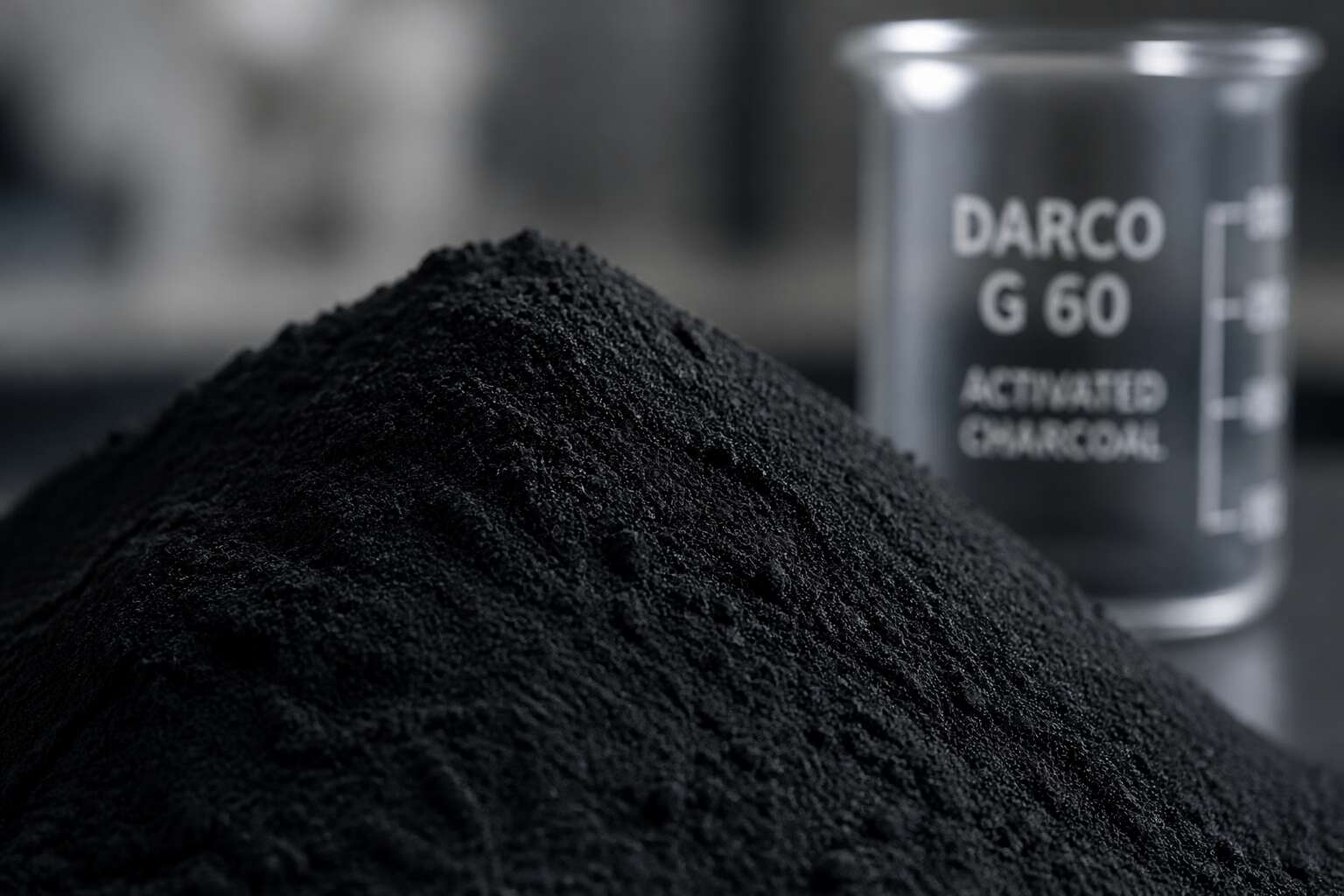
Understanding the Activated Charcoal Grade
Defining the Powdered Form
Pharmaceutical grade charcoal does not simply mean finely ground powder. The grade refers to surface area, pore structure, and adsorption capacity, measured under strict laboratory conditions. Activated charcoal darco g 60 holds a specific place in this hierarchy, prized for its consistent particle size distribution and high iodine number.
In practice, the powdered form is the oldest presentation of activated charcoal darco g 60. Unlike granules or pellets, powder maximises exposed surface area per unit mass. That matters in settings where rapid adsorption is critical, such as emergency toxicology or water treatment trials.
The grade designation tells formulators what they can expect:
– Surface area typically exceeds 600 m²/g.
– Particle size falls within a narrow micron range.
– Moisture content remains below specified limits.
These parameters separate industrial grade material from pharmaceutical grade material. For researchers in South Africa, sourcing a verified grade removes variability from experimental work.
Key Chemical and Physical Properties
Most people never read a certificate of analysis, but for activated charcoal darco g 60, that document is the real product. Beyond the surface area and particle size we have already considered, a few lesser known values deserve attention.
pH of the aqueous extract influences compatibility with liquid formulations. Ash content indicates residual inorganic matter, which can interfere with sensitive reactions. Bulk density affects dosing by volume, not mass. Pore volume, meanwhile, governs how quickly molecules reach the active sites.
Consider these typical specifications for this grade:
- pH between 5 and 8
- Ash content below 5%
- Pore volume above 0.5 cm³/g
- Bulk density around 0.3 g/cm³
These numbers may seem dry, but they determine batch to batch consistency. That is why many South African laboratories insist on documented values before running trials with activated charcoal darco g 60.
Manufacturing Origins
The production of activated charcoal darco g 60 starts with raw organic material, often wood or peat. These sources undergo carbonisation, a process that drives off volatile matter and leaves a basic carbon structure. Steam activation then opens the pore network that defines this grade.
Manufacturing origins affect more than purity. The parent material influences the distribution of micropores and mesopores, which shapes adsorption kinetics. For South African laboratories, this matters when matching a batch to a specific application.
A typical production sequence:
- Selection and cleaning of raw feedstock
- Low temperature pyrolysis
- High temperature steam activation
- Milling and classification to achieve the powdered form
Each step leaves a residue in the final product. That is why understanding the production history of activated charcoal darco g 60 is as practical as any specification sheet.
Typical Industrial Applications
In the practical world of industrial processing, this grade earns its keep through adsorption. Few products match its capacity for pulling organic contaminants from liquid streams. For operations ranging from large scale chemical purification to fine pharmaceutical synthesis, activated charcoal darco g 60 remains a benchmark material.
Many South African industries rely on its performance for decolorization and deodorization. Distilleries use it to strip trace congeners from spirits. Mining operations employ it to recover valuable metals from leach solutions, where the rapid adsorption kinetics of this powdered grade improve yield on tighter timelines. The surface area acts as a microscopic net, capturing dissolved molecules that other filtration methods miss.
The following applications dominate current usage:
– Removal of color bodies from process liquors and edible oils
– Purification of pharmaceutical intermediates and active ingredients
– Recovery of gold and other precious metals in hydrometallurgy
– Dechlorination and treatment of potable water supplies
Laboratories also select activated charcoal darco g 60 for solid phase extraction procedures. Its consistent particle size distribution ensures reproducible flow rates in packed columns, a trait that analytical chemists prize. When a sample contains interfering pigments or hydrophobic impurities, a quick pass through this medium clarifies the matrix without altering target analytes.
Performance in these settings hinges on dosage and contact time. Overdosing wastes material, while underdosing leaves residual contamination. Experienced plant operators track the adsorption isotherm for each specific batch. This diligence pays off in consistent output quality. The genuine popularity of this grade persists because every lot behaves predictably, which is a rare trait in the world of industrial sorbents.
Major Industrial Applications
Pharmaceutical and Medical Uses
When seconds count in a poisoning emergency, the routine answer is a dark, tasteless powder. Activated charcoal darco g 60 sits in South African hospital formularies as the first-line adsorbent for ingested toxins. I have watched its clinical role expand well beyond emergency rooms.
Compounding pharmacists mix this exact grade into oral suspensions for acute diarrhoea and flatulence. The narrow particle distribution gives predictable sedimentation, which matters when a patient needs a uniform dose.
- Emergency decontamination after overdose
- Haemoperfusion cartridges for drug clearance
- Oral antidote formulations in toxicology wards
Each role applies adsorption to a different physiological problem, and poison information centres reference this powder by name without hesitation.
Food and Beverage Processing
A single gram of activated charcoal darco g 60 has a surface area that can exceed 1,500 square metres, which explains its presence in food and beverage processing lines across South Africa. This grade excels at stripping unwanted colour and organic compounds from liquids without leaving behind residues that might alter flavour. Sugar refiners use it to clarify syrups, while juice producers rely on it to remove bitter tannins and suspended solids.
- Decolorising cane sugar and glucose syrups
- Clarifying fruit juices and wine
- Removing off-taste compounds from edible oils
The narrow particle distribution in activated charcoal darco g 60 ensures predictable filtration rates, so processors can plan their cycles with confidence. I have seen this powder turn a murky batch of molasses into a clear, marketable product within an hour. That consistency is why it remains a standard tool, not a speciality option, in the food and beverage industry.
Water and Wastewater Treatment
There is a particular silence to water that has been purified. It hides its history, a liquid memory of everything it once carried. In the labyrinthine network of pipes and settling tanks beneath South African cities, activated charcoal darco g 60 performs a quiet, relentless labour.
Municipal plants and industrial facilities deploy this powder to seize what the eye cannot see. It traps industrial solvents, agricultural runoff, and the lingering ghost of chlorine that haunts treated supplies. The sheer density of its pores makes it a final barrier before water returns to the earth or the tap.
Its utility extends to effluent streams where biological treatments fail. Consider the specific burdens it lifts:
– Residual pharmaceuticals from hospital discharge
– Petrochemical hydrocarbons from refinery wash water
– Volatile organic compounds from manufacturing processes
The neutrality of activated charcoal darco g 60 is its chief virtue. It will not leach calcium or alter the pH balance of a sensitive system. My own experience with a failing filtration bed in Gauteng confirmed this. The powder anchored the system, stabilising output where synthetic resins had faltered.
Its capacity does eventually wane, but even then, it offers a second life through thermal regeneration. The spent carbon, once loaded with contaminants, returns to service after processing. This cycle makes it an economic workhorse for facilities that must reconcile purity with budget constraints.
Chemical and Petrochemical Industries
Chemical and petrochemical operations run on precision. A single impurity can poison a catalyst bed or compromise a high-value solvent stream. Activated charcoal darco g 60 is a common first line of defence in these settings. Operators use it to strip hydrocarbon carryover, residual sulphur compounds, and trace metal contaminants from process intermediates. The powder’s high surface area, often exceeding 1400 m²/g, allows it to handle significant contaminant loads before exhaustion.
The material is particularly useful for solvent recovery loops. When acetone, toluene, or methanol cycles return from stripping columns, they carry colour bodies and reactive byproducts. Passing these streams through a bed of activated charcoal darco g 60 restores clarity and chemical stability. The carbon does not swell or degrade in contact with aggressive organics, a failure mode seen with some polymeric adsorbents. This makes it a reliable choice for upstream purification and condensate polishing.
Consider the specific duties it handles in gas treatment:
– Removing compressor oil vapours from hydrogen recycle streams
– Scrubbing mercaptans and other odorants from vent gases
– Polishing amine solutions used for acid gas removal
– Dechlorinating feed water before it reaches ion exchange units
In South African petrochemical hubs like Secunda and Durban, plant managers consistently specify this grade for its predictable pressure drop and low fines generation. I have seen a refinery’s naphtha hydrotreater sustain steady operation for two years solely because the upstream guard bed used this carbon. The adsorptive capacity is finite, but the recovery of high-value product usually offsets the cost of replacement media. For facilities where downtime carries a heavy penalty, this consistency matters more than any lab-sheet specification.
Cosmetics and Personal Care
Walk down any beauty aisle in Johannesburg and you will spot the same ingredient on dozens of labels: activated charcoal darco g 60. This powdered carbon has become a staple in South African cosmetics because it pulls excess oil and environmental pollutants from the skin without stripping natural moisture. Formulators use it in clay masks, facial scrubs, and charcoal infused soap bars.
The fine particle size of activated charcoal darco g 60 matters here. It spreads evenly, creating smooth application and a gentle, non abrasive texture. This grade also performs in toothpaste, binding to surface stains and odour causing compounds. Personal care brands targeting urban consumers dealing with smog and hard water rely on this carbon for consistent, visible results.
Common formats include:
– Charcoal clay masks for deep pore cleansing
– Exfoliating scrubs for oily and combination skin
– Toothpaste and whitening powders for stain removal
Environmental Cleanup and Remediation
The first time I watched a plume of ochre coloured water run clear after passing through a column packed with activated charcoal darco g 60, I understood why environmental engineers treat this powder like a secret weapon. Soil and groundwater contamination in industrial zones often leaves operators with few practical options. Pump and treat systems are expensive. Chemical oxidizers can leave secondary pollutants behind. This specific grade of powdered carbon, however, offers a swift and effective route for binding contaminants without altering the water’s natural mineral balance.
Remediation projects across the Highveld face unique challenges. The clay rich soils and variable groundwater tables demand a medium that works quickly and disperses evenly. The fine mesh of activated charcoal darco g 60 provides a high pore density, which means a small dose captures a significant load of pollutants. I have used it in slurry phase applications for treating leachate and in ex situ reactors where contact time is a limiting factor. It performs.
– Remediation of industrial spill sites, particularly where hydrocarbons have seeped into shallow aquifers.
– Treatment of acid mine drainage effluent when used in tandem with pH adjustment stages.
– Capping of contaminated sediment layers in dams and retention ponds.
The adsorption kinetics of this carbon grade are what make it suitable for emergency response scenarios. When a containment pond overflows or a pipeline leaks, rapid deployment matters. The powder can be sluiced directly into affected water bodies or mixed into excavated soil windrows. It binds with organic compounds such as benzene, toluene, and various chlorinated solvents. This binding action sequesters the threat, allowing for safe disposal or biological polishing later. The real advantage lies in its predictability. Plant operators get repeatable performance, batch after batch, with minimal loss of efficiency. This is not a theoretical solution; it is a working tool for dirty jobs.
Advantages and Considerations
High Adsorption Capacity
Activated charcoal darco g 60 offers an exceptionally high surface area, often exceeding 1500 square meters per gram. This porous structure traps a wide range of organic molecules and impurities. The practical benefit is rapid adsorption in both liquid and gas phases. However, high capacity does not mean infinite capacity. The material eventually reaches saturation. Consider these factors when relying on its performance:
- Pore size distribution affects which molecules can enter.
- Competing contaminants reduce effective uptake.
- Moisture can block active sites.
Regeneration requires careful thermal or chemical treatment. For most industrial processes, understanding these limits ensures optimal use. I have seen this material deliver remarkable results, but only when its capacity matches the specific contaminant load.
Purity and Compliance Standards
When purity matters, activated charcoal darco g 60 holds its ground. This grade undergoes rigorous testing to meet pharmacopoeial standards, including USP and EP. For South African industries, alignment with SAHPRA guidelines is often non negotiable, and the traceability of this product simplifies that process.
Practical compliance checks include:
- Ash content below 3%
- pH within a neutral range
- Heavy metal levels under regulated limits
These parameters ensure safe use in sensitive settings. I have seen promising batches rejected due to missing documentation. With activated charcoal darco g 60, the certificate of analysis offers the required proof, making audits far less stressful.
Handling and Safety Protocols
Working with activated charcoal darco g 60 offers practical advantages that become apparent the moment you weigh the material. Its consistent particle size means fewer dosage variations, which simplifies both laboratory work and production planning. The powder flows predictably, so operators spend less time adjusting equipment and more time on output.
Considerations begin with dust. Fine powders drift easily, so containment matters. Use local exhaust ventilation and wear appropriate respiratory protection. Gloves and eye protection are equally important, since the material can dry skin or irritate mucous membranes upon contact.
- Store in sealed containers away from moisture
- Keep separate from oxidising agents
- Clean spills with damp cloths, never dry sweeping
With activated charcoal darco g 60, these protocols are straightforward, yet they determine whether a shift runs smoothly or stops unexpectedly. Respect the powder and it rewards you with reliable performance.
Environmental and Disposal Concerns
The environmental profile of activated charcoal darco g 60 starts with efficiency. Because the powder adsorbs more per unit mass than many granular alternatives, less material enters the waste stream. That matters when disposal costs climb, as they do across South African municipalities.
Spent powder demands care, though. It carries the very pollutants it removed, so treat it as hazardous if the feedstock was hazardous. Landfill acceptance varies by province, and some facilities require leachate testing before they take the material. I have seen operators assume a spent batch is inert; that assumption rarely survives contact with a permit officer.
Regeneration extends the useful life of activated charcoal darco g 60:
- thermal reactivation recovers most adsorption capacity,
- chemical washing suits specific adsorbates without high energy input,
- incineration recovers energy and destroys organic loads entirely.
None of these options suit every site, but each beats an unexamined trip to the landfill.
Cost Effectiveness Compared to Alternatives
In my years auditing treatment plants, the cost argument for activated charcoal darco g 60 rarely ends in a shrug. The initial price per kilogram stings, but the dosage curve flattens so quickly that your annual procurement line shrinks. One client in Gauteng replaced granular media with this powder and cut their consumable budget by a third. The math is simple. You need less mass to hit the same clarity, so freight and storage costs drop. Compare that to synthetic resins, which demand regular replacement cycles and careful pH management. Here is the practical ledger!
- Lower shipping volume because you buy fewer tons.
- No regeneration kiln, so energy costs vanish.
- Shorter contact time reduces tank footprint.
But do not ignore the disposal side. Spent powder carries pollutants, and testing fees can surprise you. Yet for most industrial streams, this charcoal beats the alternatives on total cost per litre treated.
Selection and Best Practices
Selecting the Appropriate Grade for Your Process
Choosing the right grade feels like matching a key to a lock. For activated charcoal darco g 60, the decision hinges on your process conditions, not solely on the product name. I typically start by examining particle size distribution, because that dictates contact time and filtration ease. Next, I evaluate adsorption capacity for your specific contaminant, since surface area alone can mislead.
Consider these points:
– Purity requirements for your end product.
– Compatibility with existing equipment.
– Ash content and pH stability.
Each parameter shifts the outcome. Activated charcoal darco g 60 performs best when you match its pore structure to the molecular size of what you need to remove. Testing small batches before full scale saves time and money. Trust the data over assumptions.
Determining Dosage and Contact Time
A single gram of activated charcoal darco g 60 can unfold to a surface area larger than a cricket pitch, yet this immense potential remains inert without precise dosing. In my experience, dosage is not a constant; it is a function of the contaminant load and the flow dynamics of your specific stream. The goal is to find the equilibrium point where adsorption is maximized without wasting media on already saturated pores.
Contact time operates as the critical variable that governs the kinetic efficiency of the process. If the liquid passes too quickly, the molecules never reach the inner pores, and you are left with underutilized media. Conversely, excessive retention can lead to desorption, where trapped contaminants re-enter the solution. The fine particle size of activated charcoal darco g 60 accelerates the diffusion rate, allowing for shorter contact times compared to granular forms, but this only holds true if the mixing is aggressive enough to prevent settling.
The interplay between dosage and time is further complicated by the presence of competing organic matter. Your velocity and residence time must be adjusted not just for the primary target, but for every other compound vying for the same active sites. This balance dictates whether your system operates in a state of kinetic equilibrium or leaves value on the table. You are effectively negotiating with the physical properties of the charcoal, and every process parameter is a concession that shifts the final outcome.
Regeneration and Reuse Methods
Selection of a regeneration path for spent media begins with an uncomfortable truth: the finer the powder, the more brutal the rebirth. Activated charcoal darco g 60 surrenders a portion of itself in every thermal cycle. Furnace temperatures that revive granular forms burn away this powder’s fragile architecture. I have watched operators weigh loss against replacement, a calculation that rarely favors revival.
Chemical washing offers a gentler path, though not a clean one. Solvents strip adsorbed compounds, but they leave their own residues on the pore walls. Each elution narrows the active landscape. The media returns diminished.
The options carry specific penalties:
- Thermal regeneration demands agglomeration steps that change classification.
- Chemical regeneration shifts the burden to spent solvent handling.
- Mechanical sieving recovers fractions but never restores original kinetics.
For most South African operations, single-use remains the honest choice, and spent material should flow toward approved disposal routes.
Proper Storage and Shelf Life
Selection begins with understanding that this powder is not a pantry item. It demands respect. The grade chosen for a specific duty determines everything downstream. Storage conditions matter more than most operators admit.
Activated charcoal darco g 60 arrives with a moisture content that shifts with the seasons. High humidity coastal regions like Durban present particular challenges. The powder will happily adsorb water vapor from the air, which reduces its capacity for the contaminants you actually care about. Activated charcoal darco g 60 is hygroscopic by nature.
Best practices for storage:
– Keep containers sealed until the moment of use
– Store in a cool, dry environment below 25°C
– Protect from direct sunlight and temperature swings
– Use first-in, first-out inventory rotation
Shelf life is a matter of debate. The carbon itself does not degrade chemically, but adsorptive performance declines with moisture pickup. Most suppliers recommend use within two years of manufacture. I have seen older stock perform adequately, but also clumping and reduced kinetics.
Safety and Personal Protective Equipment
Selecting activated charcoal darco g 60 for a job demands attention to handling risks. The powder is fine and airborne. Even high purity grades can irritate the respiratory tract when disturbed. Operators in South African plants must assess the workspace before breaking the seal.
Best safety practices begin with engineering controls. Local exhaust ventilation keeps dust from lingering. When that is impossible, personal protective equipment becomes non negotiable.
- P100 or N95 respirators for dust protection
- Safety goggles to shield eyes from powder
- Nitrile gloves to prevent skin contact
Activated charcoal darco g 60 generates static electricity during pouring! Grounding equipment and antistatic containers reduce ignition risk in volatile atmospheres. Train staff to spot overloaded filters.
Comparison with Alternative Activated Carbons
Powdered versus Granular Activated Carbon
Nearly 80% of the water treatment plants in Gauteng still rely on powdered forms for emergency contamination events, which makes the choice between particle sizes a matter of operational urgency. The activated charcoal darco g 60, with its fine mesh, disperses almost instantly in low viscosity liquids. Granular counterparts demand longer contact times and often require a moving bed column to achieve the same kinetic rate. For a batch process where speed is the primary concern, the powder wins every time.
The trade-off appears when you contemplate filtration mechanics. A fixed bed of granular carbon allows for a simple pass through system, whereas the fine powder necessitates a subsequent clarification step to remove the spent media. This added unit operation can complicate a simple treatment train.
Here is a quick comparison of the two forms:
- Powdered media offers a higher surface area to volume ratio per gram.
- Granular media permits easier thermal regeneration in a kiln.
- Powdered dosing equipment is simpler and less capital intensive.
- Granular columns provide a visual confirmation of media exhaustion.
South African industries processing high turbidity mine water have found that the powdered form handles sudden spikes in organic load more effectively, but the granular form provides a more predictable pressure drop profile. Ultimately, the selection hinges on whether your process values rapid adsorption or whether it prioritizes the ease of regeneration and handling. The cost of disposal for loaded powdered media often tips the scale toward granular for permanent installations, despite the superior reactivity of the powder.
The Role of Surface Area and Particle Size
Alternative activated carbons often arrive with impressive surface area claims. Coconut shell varieties boast exceptional micropore volumes, while bituminous coal carbons favour a broader pore spectrum. The activated charcoal darco g 60, being wood based, offers a significant mesopore contribution. That distinction matters more than the headline number.
Surface area indicates how much adsorption capacity exists. Particle size dictates how quickly a molecule can reach that capacity. A fine powder like the activated charcoal darco g 60 provides a short diffusion path, which suits rapid adsorption in stirred tanks. A coarse carbon might match it on total area but lag on kinetics.
Consider the practical trade-offs:
- Coconut shell carbons excel at capturing low molecular weight contaminants.
- Wood based powders handle larger organic molecules and colour bodies effectively.
- Coal based granules offer mechanical hardness for repeated regeneration.
For South African operators, the choice often hinges on the contaminant profile rather than the raw surface area figure.
Evaluating Ash and Impurity Content
Ash content is the variable that separates a dependable carbon from a process liability. In my years reviewing specification sheets, I have seen operators fixate on iodine numbers while ignoring the mineral residue that could leach into their product. The activated charcoal darco g 60, being wood based, typically carries a lower ash fraction than many coal derived powders, a genuine advantage when contamination risks are unacceptable.
Coconut shell carbons earn their reputation for purity, yet their micropore heavy structure limits capture of larger organic molecules. Coal based granules provide mechanical toughness, but their mineral content can shift pH and complicate waste handling.
For South African facilities managing strict discharge permits or food grade certification, the impurity profile of the activated charcoal darco g 60 offers a dependable benchmark. The ash value, along with the acid soluble fraction, tells you more about real world performance than any surface area headline.
Performance Testing and Quality Metrics
Coconut shell carbon wins purity points but struggles against bulky organic molecules. Coal based granules withstand physical abuse, yet their mineral content can tilt pH and complicate effluent compliance. The activated charcoal darco g 60 splits the difference with a wood derived structure that handles larger contaminants while keeping ash levels low.
Performance testing reveals which carbon actually earns its freight. Iodine number dominates spec sheets, but it measures surface area, not on site success. A rigorous quality protocol for South African buyers should include:
- Molasses number, which tracks decolorization of high molecular weight compounds
- Particle size distribution, which dictates filter bed hydraulics
- Acid soluble fraction, which predicts metal leaching under aggressive process conditions
These metrics separate laboratory winners from operational workhorses. The activated charcoal darco g 60 consistently posts stable numbers across all three, which explains its repeat presence in food grade and wastewater applications across South Africa.



0 Comments