Overview: Activated Charcoal (Activated Carbon)
What is Activated Charcoal?
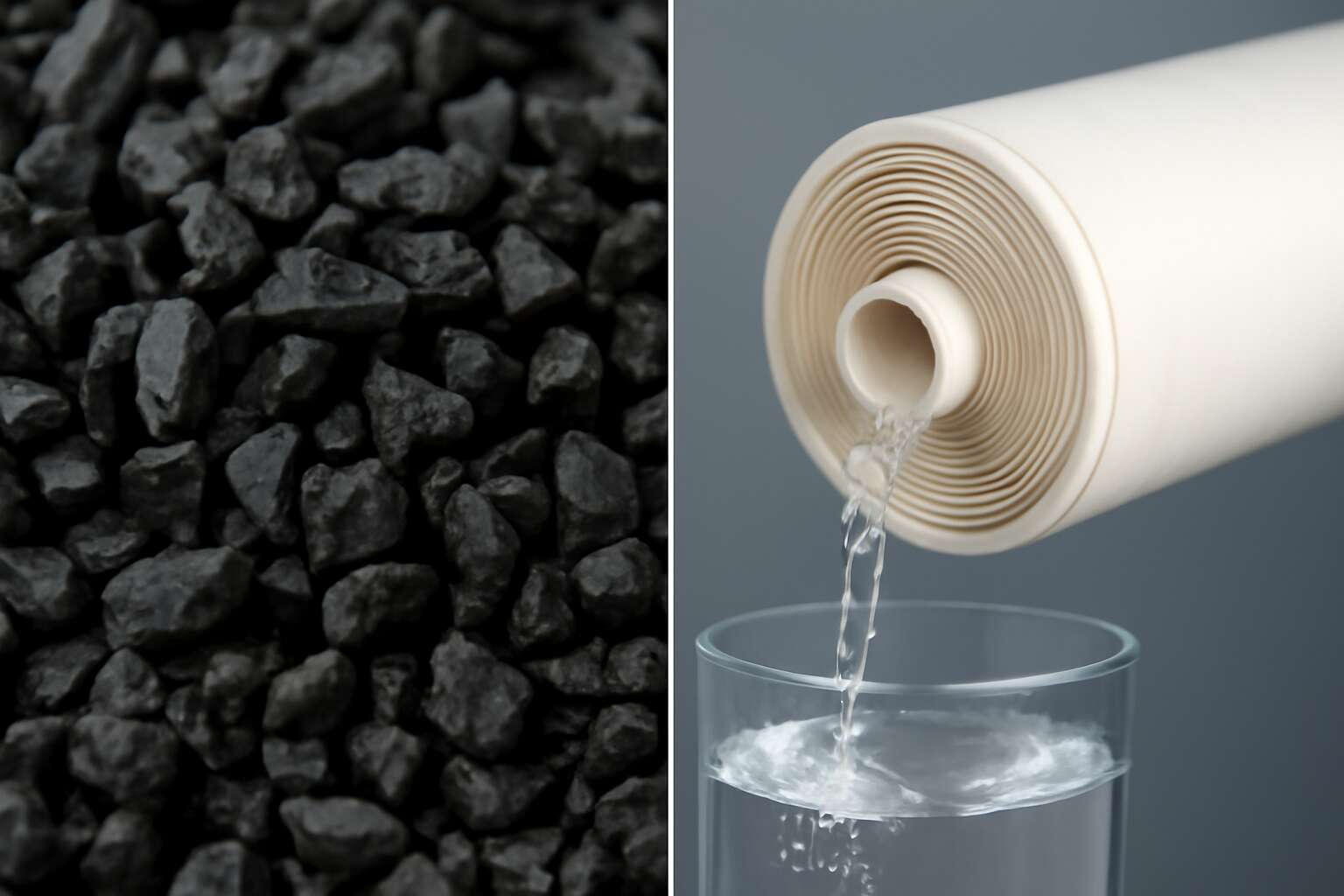
In South Africa, over 60% of households filter their tap water, turning a basic necessity into a daily adventure. Activated charcoal is a surprisingly humble hero in this landscape. What is activated charcoal? It’s ultra-porous carbon, often derived from coconut shells, engineered to trap organic compounds that dull taste and odor. This humble agent is a staple in kitchen filters, offering a straightforward way to improve sipping water. Readers frequently weigh activated charcoal vs reverse osmosis when choosing how to purify their supply.
- Adsorbs chlorine, pesticides, and unpleasant smells
- Improves taste by removing organics without stripping minerals
- Requires periodic replacement as the pores fill
Handled with care, activated charcoal offers a friendly entry into filtration—a quiet, almost alchemical way to taste cleaner water. In South Africa, the choice hinges on taste, upkeep, and the magic at the tap.
How Activated Charcoal Works
Activated charcoal, or activated carbon, is the quiet hero of South Africa’s taps. Its ultra-porous structure traps organic compounds that dull taste and odors, while minerals stay largely intact. It works by adsorption, not chemistry, so you sip cleaner water without a mineral purge. When weighing activated charcoal vs reverse osmosis, taste and upkeep often decide the day.
- Adsorbs organics and chlorine to improve taste
- Preserves minerals and keeps maintenance reasonable
It won’t tackle dissolved salts alone, but it shines when taste is the goal. For deeper purification, RO or hybrid systems complement charcoal well.
Common Uses and Applications
Overview: Activated Charcoal (Activated Carbon) has quietly redefined South Africa’s taps, delivering cleaner taste without melodrama. In kitchens nationwide, seven in ten filtration setups report a noticeable lift in flavor within days. When weighing activated charcoal vs reverse osmosis, taste, upkeep, and cost become the deciding factors!
Common uses and applications include:
- Filtering municipal tap water to reduce chlorine and organic compounds that dull flavor
- Enhancing the taste and aroma of coffee, tea, and other beverages
- Serving as a practical pre-filter in under-sink or countertop systems
Its charm lies in practical, taste-forward filtration. Use it as a pre-filter or in hybrid systems to prepare water before it meets more exacting purification stages, preserving routine ease while inviting everyday freshness.
Limitations and Considerations
Seven in ten filtration setups report a noticeable lift in flavor within days, and that taste payoff is why many turn to activated carbon. Overview: Activated Charcoal (Activated Carbon) Limitations and Considerations reveals a few realities behind the shine: taste isn’t the sole arbiter of value.
Activated charcoal shines as a pre-filter, yet it’s not a silver bullet. It struggles with dissolved minerals and some metals, and its effectiveness depends on contact time and saturation. In isolation it won’t deliver the full purification of a well-designed system. Many engineers weigh activated charcoal vs reverse osmosis to match a water profile.
- Limited scope: targets organics and chlorine, not all dissolved contaminants.
- Saturation matters: benefits fade as media fouls.
- Hybrid advantage: pairing with RO can balance taste, cost, and maintenance.
Overview: Reverse Osmosis System Fundamentals
What is Reverse Osmosis?
In South Africa, where tap water quality can vary by region, water purity is a daily conversation. “Water is life,” a refrain many South Africans carry through their taps. What is Reverse Osmosis? It is a pressure-driven process in which water is forced through a semi-permeable membrane, leaving dissolved salts and many contaminants behind. The result is a clearer, more predictable baseline for drinking and cooking.
- Pre-filtration to remove sediment and chlorine that prematurely age membranes
- Reverse osmosis membrane stage that strips dissolved substances while allowing clean water to pass
- Post-treatment options such as remineralization or carbon polishing to improve taste
When you weigh activated charcoal vs reverse osmosis, the comparison unfolds differently: charcoal excels at adsorbing volatile compounds and organics, while RO tackles dissolved minerals and a broad spectrum of contaminants. In SA homes, this translates to choices shaped by space, energy, and serviceability.
How RO Filtration Works
South African tap water dances between predictability and surprise—an observation many of us share as seasons shift. I hear that refrain in kitchens across the country. The Reverse Osmosis idea resonates with clarity: a disciplined, pressure-driven process that renders water purer, yet remains elegant in its simplicity. From start to finish, the architecture whispers: guard the membranes with pre-filtration, push water through a semi-permeable barrier, and refine taste in a post-treatment finale.
- Pre-filtration to guard membranes against sediment and chlorine (activated charcoal vs reverse osmosis)
- RO membrane stage that rejects dissolved salts and most contaminants
- Post-treatment options to polish flavour and remineralize gently
When weighing activated charcoal vs reverse osmosis, RO handles minerals and a wide contaminant spectrum—while charcoal targets organics and volatile compounds. In SA homes, size and serviceability steer the balance, and the choice remains a quiet conversation between purity and practicality.
Typical RO System Configurations
At the kitchen sink, purity has a personality. In the debate of activated charcoal vs reverse osmosis, RO emerges as a measured, engineering-driven approach—clear, efficient, and quietly confident. The overview that follows cuts through jargon to the heart of the system.
Think of RO as a three-act sequence: a protective pre-stage, a demanding membrane that earns its keep, and a finishing touch that rebalanced the palate. The emphasis, for SA homes, is on reliability, practical maintenance, and predictable taste.
Typical RO configurations that SA households gravitate toward balance footprint with performance. Here are common arrangements:
- Under-sink RO with a post-filter remineralizer for bite and brightness
- Countertop RO units for portable, quick installs
- Whole-house RO systems paired with storage tanks for steady pressure
Key Maintenance Factors
Overview: Reverse Osmosis System Fundamentals and Key Maintenance Factors anchors this look at purity as a practice, not a promise. In the debate activated charcoal vs reverse osmosis, RO earns its stripes as a measured, engineering-driven approach—clear, efficient, and quietly confident. For SA households, the focus is reliability and predictable taste, grounded in a simple truth: performance begins with the right pre-stage, a fine-tuned membrane, and a finishing touch that balances minerals.
- Pre-filtration guards against chlorine and sediment that foul membranes
- Regular membrane maintenance preserves efficiency and contaminant rejection
- Post-treatment adjustments balance taste and remineralization
- Routine monitoring of pressure, flow, and storage maintains system reliability
Discipline in maintenance is the quiet guardian of consistent purity for SA homes.
Filtration Capabilities: Toxins and Contaminants
What Activated Charcoal Removes
In South Africa, clean water is a daily necessity, and taste matters. Studies suggest up to 60% of taste-and-odor issues stem from organic compounds in tap water. Activated charcoal opens a doorway to purer flavor, quietly catching the hidden saboteurs that cloud your glass.
Activated charcoal vs reverse osmosis is not a competition but a map of strengths. Charcoal excels at removing chlorine and chloramines, volatile organic compounds (VOCs), pesticides, and odor-causing compounds.
- Chlorine and chloramines
- Volatile organic compounds (VOCs)
- Pesticides and herbicides
- Odor-causing organic compounds
This makes charcoal a smart choice for taste and aroma in many South African homes, where quick, approachable filtration is valued.
What Activated Charcoal Does Not Remove
Some contaminants slip past carbon’s reach. Activated charcoal is a fierce attacker on organics and taste, yet it isn’t a universal shield. The comparison between activated charcoal vs reverse osmosis makes the limits clear: carbon traps many odors and solvents but leaves dissolved inorganic loads largely untouched.
- Nitrates and nitrites
- Dissolved minerals and salts
- Fluoride
- Bacteria and viruses
These gaps explain why SA water filtration often pairs carbon with a second stage. This pairing shows how carbon handles organics while RO catches inorganic contaminants, keeping taste and clarity aligned with reality for homes across South Africa.
What RO Removes
In SA kitchens, clean water isn’t a luxury—it’s essential! More than 60% of households report concerns about taste or mineral content in taps, a reminder that filtration must address more than clarity. The debate between activated charcoal vs reverse osmosis shapes real-world choices for homes across South Africa.
RO’s strength lies in dissolving inorganic contaminants. It uses a semipermeable membrane to reject salts, metals and small ions, delivering water that’s clearer and less mineral-heavy.
- Nitrates and nitrites
- Dissolved minerals and salts
- Fluoride
- Heavy metals such as arsenic, lead, and chromium
Everything else, including tastes and odors, often benefits from a carbon stage to restore balance. The comparison activated charcoal vs reverse osmosis continues to guide buyers toward a system that respects both purity and palate.
Combine for Comprehensive Filtration
Filtration capabilities hinge on a single truth: toxins and contaminants don’t travel alone; activated charcoal vs reverse osmosis each attack different foes, and when used in concert they deliver comprehensive filtration that respects health and palate. A carbon stage neutralizes tastes and odors, while RO’s membrane keeps dissolved salts and heavy metals in check. In South African homes, where water profiles vary by region, this duo offers resilience against both organic compounds and inorganic troublemakers—activated charcoal vs reverse osmosis is a pragmatic path for many households.
Think of it as a two-step guard for your tap water!
Beyond clarity, the combination tackles the contaminants that slip through a single system.
- Organic compounds, tastes and odors, and micro-pollutants that carbon handles best
- Inorganic salts, heavy metals, and nitrates that the membrane reduces
Together, they offer a practical path for households across SA.
Performance, Cost, and Space Considerations
Initial and Recurring Costs
In the arena of activated charcoal vs reverse osmosis, performance is the compass guiding choice. RO reliably removes dissolved minerals and a broad spectrum of chemicals, delivering crisp, consistent taste and clarity. Activated charcoal handles odors and organics swiftly, but its reach is more selective for everyday tap water.
Cost is the hard metric that surfaces in real life. RO systems demand a higher upfront investment and ongoing membrane and filter replacements, while activated charcoal setups tend to be cheaper to install and maintain. Recurring costs still matter—water usage, filter life, and the quality you expect influence the long-term spend.
- Initial system price and installation
- Regular filter and membrane replacements
- Operating costs including electricity and water waste (where relevant)
Space considerations also shape the decision. RO setups usually require under-sink cabinets and a storage tank; activated charcoal units can be compact, portable, or integrated at the faucet. For South Africa, the choice often boils down to footprint versus the level of purity you truly need in everyday life — activated charcoal vs reverse osmosis.
Space and Installation
In the arena of activated charcoal vs reverse osmosis, performance is the compass guiding choice. RO reliably strips dissolved minerals and a broad spectrum of chemicals, delivering crisp, consistent taste and clarity. Activated charcoal fights odors and organics swiftly, yet its reach is notably selective for everyday tap water. The result is a balance between robustness and nuance, particularly relevant for South Africa’s varied water sources.
Cost is the hard metric that follows reality. RO systems demand a higher upfront investment and ongoing membrane and filter replacements, while activated charcoal setups tend to be cheaper to install and maintain. Recurring costs—water usage, filter life, and the level of purity you expect—shape the long-term spend.
Space considerations also shape the decision. RO setups usually require under-sink cabinets and a storage tank, while activated charcoal units can be compact, portable, or faucet-integrated. In South Africa, footprint versus purity often tips the balance.
Energy Usage and Efficiency
Performance matters. The choice between activated charcoal vs reverse osmosis shapes taste, clarity, and upkeep. RO removes dissolved minerals and a broad range of chemicals for a crisp, reliable profile; charcoal targets odors and organics with speed, though less breadth.
Cost is the hard metric that follows reality. RO requires higher upfront investment and ongoing membrane replacements. Activated charcoal setups are cheaper to install and maintain.
- Upfront system cost
- Replacement schedules
- Purity expectations
Space considerations follow, with RO usually under-sink with a storage tank, while charcoal options can be compact or faucet-integrated. In South Africa, footprint versus purity often tips the balance.
Energy usage and efficiency favor charcoal in many setups. RO relies on pump pressure, which uses more energy. In South Africa, where power supply can be unreliable, a compact charcoal unit offers resilience and simplicity. I’ve seen this play out in real installs.
Longevity and Replacement Needs
Performance in daily use hinges on taste, clarity, and flow. When you compare activated charcoal vs reverse osmosis, you’ll notice charcoal pruning odors and organics with quick turnover, while RO delivers a steadier, mineral-free bite and a crisper finish.
Cost is tangible: reverse osmosis demands a higher upfront outlay and ongoing membrane replacements, while activated charcoal systems are cheaper to install and service.
Space matters: RO setups usually tuck under-sink with a storage tank; charcoal options can be compact, faucet-mounted, or inline. In South Africa, real-world kitchens show footprint vs purity as a common tipping point.
Longevity and replacement: RO membranes wear and clog, needing periodic swaps; charcoal cartridges require scheduled changes but tend to hold steady with simple maintenance.
- Upfront investment trajectory
- Replacement schedules
- Purity expectations over time
Practical Guidance on Choosing Between Them
Situations Where Activated Charcoal is Preferred
Water filtration in South Africa isn’t one-size-fits-all; households tune in to taste, maintenance, and cost. The practical question remains, activated charcoal vs reverse osmosis, not as abstract theory but as real-life choices for daily life and well-being.
Here are practical situations where activated charcoal is preferred:
- Rapid taste and odor improvement in kitchens with limited space
- Low ongoing cost and simpler maintenance for flat or rental homes
- Protection of downstream filters by acting as a pre-filter
- Filtering common organic compounds and chlorine byproducts in municipal supply
For homes that demand deeper contaminant removal, pairing activated charcoal with other technologies offers a balanced approach. In the broader filtration journey, choosing the right mix means understanding your water, your space, and your daily needs—with clarity and confidence.
Situations Where RO is Preferred
Water in South Africa is a shifting canvas—60% of households report taste or odor issues at some point each season. When you compare activated charcoal vs reverse osmosis, the choice isn’t abstract theory; it’s daily life, balancing space, maintenance, and the quiet confidence of clean sips.
For homes demanding deeper removal, RO shows its strengths in specific situations. Consider these RO-preferred scenarios:
- Dissolved salts and metals that blunt taste or threaten safety
- Under-sink space where a compact system fits without crowding the kitchen
- Regular, predictable purity for appliances and drinking water
Hybrid and Multi-Stage Solutions
How to Evaluate Your Water Quality
Your water is telling a story—minerals doing the samba, chlorine notes lingering like a bad perfume, and the occasional rogue contaminant trying to crash the party. When weighing activated charcoal vs reverse osmosis, aim for clarity over bravado: what you actually want removed, plus how much space and maintenance you’re prepared to tolerate in a South African kitchen.
- Taste and odor sensitivity (city supply vs borehole scenarios)
- Target contaminants (chlorine, pesticides, minerals)
- Maintenance, running costs, and space constraints
In practical terms, a lab report that flags hardness, chlorine, and trace organics helps illuminate whether activated charcoal vs reverse osmosis is the better fit for your home.




0 Comments