The Raw Materials Behind Activated Charcoal
Common Plant-Based Sources
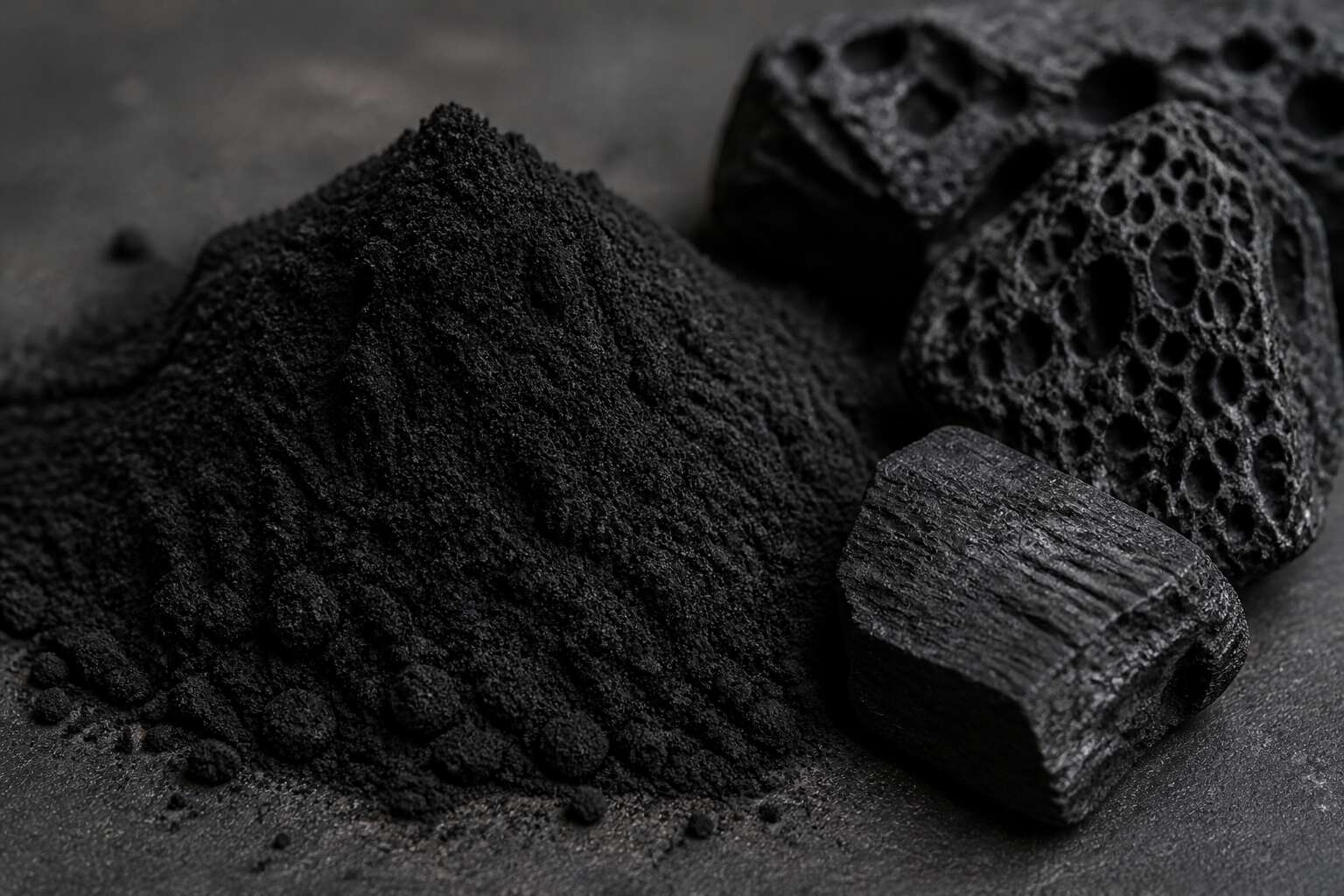
More than a few braais have been lit using a bag of charcoal that came from somewhere far away. But when we ask what is activated charcoal made of, we are not looking at briquettes for cooking. The answer lies in a much more careful process, starting with the humble bones of plants: coconut shells, bamboo, and various hardwoods. These materials are chosen for one main reason, their density and structure. They hold up during the intense heating process that follows.
Coconut shell is a favorite, especially in places like Sri Lanka and Southeast Asia. It is a byproduct of the coconut industry, which keeps costs down and makes the product a bit more sustainable. In South Africa, local woods like marula and acacia are also suitable. The raw material must first be charred, which means burning it in a low-oxygen environment. This step alone is not enough to create the porous, effective material we need; it is only the starting point.
The common plant sources can vary, of course, but they all share a similar fibrous backbone. For instance:
– Coconut shells, which are hard and have a high carbon content
– Bamboo, which is fast growing and renewable
– Sawdust and other wood byproducts from timber mills
– Peach pits and olive stones, which are a more unusual option
After the initial charring, the real work begins. The charred plant material is crushed down into a fine powder. Then it goes through an activation step, usually with high-pressure steam or a chemical bath. This is what creates the millions of tiny pores that give the charcoal its ability to trap impurities. The entire transformation is a long way from its origin in the fruit of a tree. This is what we are actually describing when we talk about what is activated charcoal made of; it is a plant, refined and transformed, yet still carrying the memory of its original form.
Mineral and Fossil Sources
In our previous discussion, we traced activated charcoal back to its botanical roots. But what happens when we turn from the orchard to the quarry? The question of what is activated charcoal made of takes a geological turn with mineral and fossil sources. A significant portion of the global supply comes from coal, specifically lignite and bituminous types. This is not the shiny anthracite used for heating; it is a softer, younger coal with a structure that is surprisingly receptive to activation.
South Africa, with its rich mining history, has a vested interest in this process. The coal is first crushed and then treated with steam or chemicals to create the necessary porous network. This transformation is effective, yet it lacks the renewable sheen of its plant-based cousins. The carbon content is high, but the process is fossil fuel intensive, which puts a different spin on the sustainability conversation.
The geological alternatives can be broken down as follows:
– Lignite, often called brown coal, which retains a high moisture content and is easier to activate
– Bituminous coal, which offers a denser carbon structure
– Peat, the youthful precursor to coal that still carries plant fragments
Each source yields a charcoal with distinct characteristics. The lignite-based product is softer and breaks down faster, while bituminous coal provides a harder, more durable grain. These differences influence their use in industrial filtration versus personal care products. So, the answer to what is activated charcoal made of is not singular. It is a substance with a dual ancestry, one arboreal and one carboniferous. The coal-derived material may not carry the memory of a coconut shell, but it carries the weight of millions of years.
The Importance of Source Purity
A single gram of activated charcoal exposes over 3,000 square meters of surface area. But what is activated charcoal made of determines whether that surface acts as a filter or a hazard. Source purity is the quiet gatekeeper. Plant-based charcoals carry trace minerals from the soil. Coal-derived charcoals absorb heavy metals during formation. If the precursor is contaminated, activation cannot fix it.
- Low ash content, meaning fewer inorganic leftovers.
- Consistent pore structure from careful steam activation.
- Absence of chemical residues from the activation process.
South African manufacturers know this well. We test every batch for arsenic and lead. The purity of your raw material is not a detail. It is the difference between a detoxifier and a poison.
Sustainability of Raw Materials
For every tonne of activated carbon produced, the source material loses roughly half its mass during processing. That reality makes sustainability a practical concern, not a marketing badge.
I have watched South African producers test their incoming biomass for moisture and metal content. The ones who last choose feedstocks that regenerate quickly and need no long distance shipping.
- High carbon yield after pyrolysis
- Minimal inorganic contaminants
- Replenishment within a human lifetime
So when someone asks what is activated charcoal made of, the deeper answer includes the source’s renewability. A fast growing crop returns in seasons, while a fossil deposit takes epochs. The wise buyer asks about the timeline behind the carbon.
The Journey From Charcoal to Activated
Step One: Carbonization
Carbonisation is where the answer to what is activated charcoal made of truly begins. Raw plant material, such as coconut shells or pinewood, enters a kiln with no oxygen. Temperatures exceed 500 degrees Celsius, forcing volatile gases and tars out of the material. What remains is a brittle, black char with a porous internal structure.
The process demands precision:
1. Slow heating to control moisture release.
2. Sustained heat to drive off non-carbon elements.
3. Cooling in an inert atmosphere to prevent ash formation.
At this stage, the char is still inactive. Without this carbon framework, no amount of activation can produce usable material. I have seen poor carbonisation ruin entire batches, leaving the char too dense or overly fragile. The importance of this first step cannot be overstated! But what is activated charcoal made of after this step is not yet activated charcoal; it is merely charcoal, waiting for the activation to follow.
Step Two: Activation via Gases
No amount of heat in the first kiln prepares you for the violence of activation! The char, still fragile from carbonization, enters a second chamber where superheated steam and carbon dioxide assault it at temperatures between 800 and 1000 degrees Celsius. These gases strip away residual atoms, etching pores and channels into the carbon mass. What emerges is no longer mere charcoal.
Consider what is activated charcoal made of after this gas assault. The plant structure has vanished, replaced by a skeleton of pure carbon with an internal surface area exceeding 1000 square meters per gram.
Gas selection changes everything. Steam yields fine micropores. Carbon dioxide opens wider channels. Temperature and exposure time determine whether the batch survives or crumbles. I have lost runs to a few careless minutes, watching perfect carbon turn to useless ash.
Step Three: Chemical Activation Methods
If gas activation is a tempest, chemical activation is a slow, deliberate alchemy. Here, the char from Step One meets a bath of acids, most often phosphoric acid or zinc chloride, before it ever sees a kiln. This is a crucial distinction in understanding what is activated charcoal made of; the activation agent is infused into the raw material itself.
The impregnated char is then heated to a gentler 500 to 700 degrees Celsius. The chemicals dehydrate the carbon structure, preventing the formation of tars and forcing open a labyrinth of pores from within. This method often yields a higher total pore volume and allows for finer control over micropore distribution than gas activation alone. South African producers, utilising local macadamia nut shells, find this method effective for producing specific grades.
The final product is never immediate. A thorough washing with acid and water follows to remove the activating agents, ensuring the charcoal is safe for its intended use. This step determines the ash content and pH, both critical for applications from water filtration to medicine. The chemicals must be recovered or neutralised, adding a layer of complexity and cost to this path. Here is what remains after the washing:
– Pure carbon latticework with a defined, consistent pore size.
– A material with a higher density and hardness than gas-activated char.
– A product often preferred for decolourising solutions or recovering gold from cyanide leach circuits, a major industry in this country.
The Role of Temperature and Time
Temperature and time perform the critical work in this transformation. In the kiln, every degree shifts the balance between carbon preservation and burn-off. Too little heat leaves pores stubbornly sealed. Too much collapses the lattice into ash.
The soak time at peak temperature matters equally. A brief residence yields a surface with limited adsorption. A longer dwell opens deeper channels, creating the intricate sponge that defines a functional product.
When asking what is activated charcoal made of, I find the answer lives in these variables. The operator’s skill lies in reading both dials together.
- A slow temperature ramp allows even internal development.
- A rapid ramp causes thermal shock and structural fractures.
South African producers tune these parameters for each specific grade, whether for municipal water plants or specialty food processing!
How Activation Creates Porosity
A single gram of activated carbon packs over 1,000 square meters of surface area. That number starts with ordinary charcoal. Activation reshapes the char, stripping residual tars and disrupting the crystalline structure. This leaves countless microscopic chambers, each one contributing to the total.
So what is activated charcoal made of, once this journey completes? It remains carbon, but carbon with internal architecture. The pores fall into three categories:
- Micropores capture small molecules like chlorine and solvents.
- Mesopores handle larger organic compounds.
- Macropores serve as entry routes for rapid adsorption.
What is activated charcoal made of, after activation, is carbon with a massive internal surface. Every pore type affects how the material binds impurities. This is why South African water treatment plants and food processors specify particular grades. The internal structure turns a simple filter into a precision tool.
The Chemical Anatomy of Activated Charcoal
The Predominance of Carbon
Carbon is the very soul of the material, the answer to what is activated charcoal made of when stripped to its essence. After the fiery alchemy of pyrolysis and the subsequent gas treatments, what remains is a skeleton of nearly pure carbon. This unadorned element forms the foundation for the extensive internal surface that defines its character. The trace ash and volatile compounds have been expelled, leaving a lattice that is both stark and purposeful.
This structure is a landscape of phantoms, the empty spaces left behind by the original plant matter. The carbon atoms arrange into disordered, graphite-like layers, creating a labyrinth of microscopic fissures. The magic lies not in the element itself, but in the absence of the other elements. For the substance to function as a powerful adsorbent, it must be nearly elemental in its purity:
– The process removes hydrogen, nitrogen, and oxygen molecules.
– It eliminates residual tars and oils from the char.
– It leaves a framework that is over 90 percent carbon.
When you ask what is activated charcoal made of, you are asking about this clarified, concentrated form of carbon. This stark architecture is the reason it holds toxins so effectively. The material is a testament to the power of subtraction, a whisper of its former botanical self, now transformed into a potent, silent force.
Surface Area and Pore Size Distribution
A single gram of activated charcoal can pack in over three thousand square metres of internal surface area. That number only makes sense when you consider the pore architecture. The question of what is activated charcoal made of becomes a study of empty spaces, not solid mass. The activation process creates a network of voids across different size scales.
- Micropores, smaller than 2 nanometres, capture most toxins.
- Mesopores, between 2 and 50 nanometres, move larger molecules toward the interior.
- Macropores, exceeding 50 nanometres, serve as entry channels to the deeper structure.
Each pore size has a distinct job, and their distribution determines how effectively the carbon works. Without this precise layout, the material would be just another lump of char. So the real answer is a carefully engineered void.
Functional Groups and Surface Chemistry
A single gram rests light in the hand, yet its internal landscape is a labyrinth of electrostatic intent. While carbon forms the skeletal bulk, the true identity of what is activated charcoal made of emerges from the atoms clinging to the pore walls. These are the functional groups, atoms of oxygen, hydrogen, and nitrogen that bind to the carbon edges after the brutal heat of activation. They are the grails of chemical reactivity.
These surface complexes determine how the char interacts with its environment. A polar group might draw in a waterborne contaminant, while a non-polar site could snare an organic compound. The balance between them dictates whether the material acts as an adsorbent or a catalyst.
The surface chemistry is a mosaic of various sites:
– Carboxyl groups contribute acidic character, often capturing basic toxins.
– Phenolic groups offer sites for ion exchange and hydrogen bonding.
– Lactone structures decompose upon heating, altering charge states.
– Carbonyl and ether linkages influence the overall polarity of the surface.
This chemical weave dictates a practical tension: heavily oxidized surfaces crave water, yet they repel the oily, non-polar molecules they are meant to trap. Therefore, the final question of what is activated charcoal made of is not solely about carbon content. It is about the orchestration of these chemical handholds, a microscopic battlefield where capture or release is decided. The genesis of its power is this surface state, a balance of elemental carbon and its reactive borderlands.
The Role of Ash Content
The ash content is the silent remainder. When asking what is activated charcoal made of, most people picture pure carbon, but the reality includes these mineral residues: silica, calcium, magnesium, and trace metals from the original plant material. The activation process cannot erase them. They persist as oxides and salts within the pore structure. High ash concentrations physically block micropores, reducing the available surface area. They also alter the surface charge, affecting adsorption of polar compounds.
For some applications, this matters profoundly. Water treatment operators in South Africa routinely test ash content because it predicts performance. Low ash material, often from coconut shells, behaves differently from high ash wood-based chars.
A simple breakdown:
1. Acid-washed chars contain less than 3% ash, ideal for pharmaceutical use.
2. Steam-activated variants retain 5% to 12%, acceptable for industrial filtration.
The question of what is activated charcoal made of therefore includes this inorganic residue, a stubborn memory of the source material that shapes every interaction.
Adsorption vs. Absorption Explained
Adsorption and absorption are two words that differ by a single letter, yet the chemistry behind them is entirely distinct. Adsorption is a surface phenomenon. Molecules adhere to the pore walls of the carbon through weak van der Waals forces. Absorption involves molecules moving into the bulk volume of a material. Activated charcoal operates almost exclusively through adsorption. Its entire architecture, the network of micropores created during activation, exists to maximize surface contact.
Consider the practical difference:
- Adsorption allows for regeneration because the molecular bonds are relatively weak.
- Absorption alters the absorbent material’s structure, often permanently.
When asking what is activated charcoal made of, remember that the answer determines which phenomenon dominates. A highly porous carbon with a large internal surface area favours adsorption. A dense, non-porous material would favour absorption. The same chemical element, carbon, can behave in opposite ways depending on its physical form.
Different Forms and Their Composition
Powdered Activated Charcoal
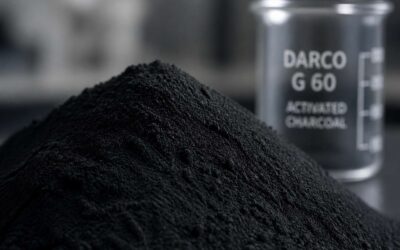
Powdered activated charcoal is simply the same base material ground into a finer consistency. So what is activated charcoal made of? In this form, it is still mostly elemental carbon, but the smaller particle size changes how it works in practice.
This powder often comes from re-milling granular charcoal, which preserves the mineral traces of the original source. In South African water treatment plants, it is chosen for rapid adsorption in batch processes. The composition retains small amounts of oxygen and hydrogen, usually below ten percent.
- Particle diameter under 0.1 millimetres
- Higher external surface area per gram than granules
- Same carbon purity as the parent charcoal
Granular and Pelletized Varieties
Granular activated charcoal is the workhorse of municipal water treatment in South Africa. It shares the same base source as powder, so what is activated charcoal made of remains the same: mostly elemental carbon. This form is simply sieved to a larger particle size, typically 0.2 to 5 millimetres.
Pelletized varieties take the same crushed carbon and add a binder, usually clay or a synthetic polymer, to press it into uniform cylinders. The binder alters the final composition:
- Carbon content drops by up to ten percent by mass
- The binder can block a portion of the micropores
- The cylindrical shape reduces pressure drop in columns
For fixed-bed adsorption, that trade-off matters more than the original source of the charcoal.
Impregnated Activated Charcoal
Impregnated activated charcoal starts with the same base carbon as other forms. The question of what is activated charcoal made of expands here because manufacturers deposit reactive chemicals onto the internal pore surfaces. Silver imparts antibacterial action. Potassium permanganate removes hydrogen sulphide. Phosphoric acid binds ammonia.
Common industrial impregnants in South Africa cover a narrow range of threats:
- Hydrogen sulphide and volatile sulphur compounds
- Acid gases such as hydrochloric and sulphur dioxide
- Low molecular weight amines and ammonia
The additive typically constitutes 5 to 10 percent of the total mass. That small load changes exactly which contaminants the charcoal will hold, often for specialised respirator cartridges or gas scrubbers!
Specialty Composites and Cloths
When engineers need adsorption in a flexible shape, they turn to woven activated charcoal cloths. These textiles start as viscose rayon, which is carbonized and then activated in a furnace. The resulting fabric retains the porous structure, but it bends and drapes like ordinary cloth. I have seen this material used in high-end respirators and wound dressings, where powder would simply fall away.
Specialty composites push the definition further. Activated carbon particles are embedded into polyurethane foams, non-woven felts, or paper sheets. The binder affects surface chemistry, so a cloth intended for iodine might differ from one made for chlorine. This variability means “what is activated charcoal made of” has no single answer, only a family of engineered answers.
- Viscose rayon cloths for protective garments
- Carbon-loaded foams for air filters
- Activated carbon paper for food packaging
Influence of Composition on Practical Uses
Medical Applications and Poison Control
In the shadowed realm of toxicology, the origin of a remedy dictates its power. The raw materials behind what is activated charcoal made of are not mere trivia; they are the silent architects of its clinical efficacy. A carbon derived from coconut shell, with its intricate labyrinth of micropores, excels in trapping small molecules, while a pine-based precursor offers a different porosity, changing the speed at which a poison is sequestered. This variance in source translates directly to performance in the emergency ward.
The composition influences how the sorbent interacts with the gut’s bitter chemistry. A higher carbon purity ensures a stronger Van der Waals force, which is the ghostly pull that binds toxins to the surface. This physical interplay defines the success of medical applications and poison control, where every second matters. The mineral ash left behind from a low-quality source can leach into the patient, turning a curative ritual into a secondary harm.
– The carbon skeleton determines the specific surface area, often exceeding 3,000 square meters per gram.
– The pore size distribution, whether microporous or mesoporous, profiles which molecular weights are adsorbed effectively.
– The external surface charge, shaped by trace minerals, can either enhance or inhibit the binding of charged toxins.
For the poisoned patient, this means the difference between life and a lingering demise. Activated charcoal does not discriminate; it is an indiscriminate host for whatever fits within its porous embrace. Yet, the composition dictates the guest list. A material rich in oxygen functional groups will attract polar compounds, whereas a pristine, graphitic carbon favours non-polar structures. Thus, the clinical formula is a gamble on the unseen, where the source of what is activated charcoal made of becomes the deciding factor in the theatre of urgent care.
We must view this not as a single antidote but as a spectrum of possible interventions, each shaped by its earthy beginnings. The matter of its making is not a footnote but the very heart of its utility, a truth that compels manufacturers to pursue precise, uncontaminated precursors.
Water Filtration Systems
For water filtration, the source behind what is activated charcoal made of decides how a filter performs in a Cape Town household. Coconut shell carbons excel at removing volatile organics, while bituminous coal variants handle larger industrial contaminants.
My own filter relies on a granular mix. The pore structure directs which molecules linger and which pass through. A high surface area catches microbes, yet the functional groups determine whether heavy metals bind strongly. Water treated with a low ash carbon tastes cleaner, because mineral residues do not seep into the glass.
- Microporous active carbon targets smaller chlorine byproducts.
- Mesoporous structures trap humic acids common in dam water.
- Impregnated varieties use silver to inhibit bacterial growth.
Thus, a filter’s effectiveness follows from its raw material, from the precursor to the pour.
Air Purification and Odor Control
The olfactory memory of a Cape Town home often hinges on what is activated charcoal made of, particularly when tackling air purification. A coconut shell carbon, with its intricate labyrinth of micropores, proves adept at capturing the volatile organic compounds that off-gas from new paint or furniture. Conversely, a coal-based granule offers a broader, more robust structure suited for filtering larger airborne particulates in industrial settings.
The selection of the precursor material determines the affinity for specific odor molecules. For persistent smells like those from pets or kitchen waste, a chemically activated carbon with a high density of functional groups binds to sulphur compounds more effectively than a purely steam-activated variant. The practical application guides the necessary chemistry.
– Coconut shell carbon excels at removing formaldehyde and light molecular weight gases.
– Wood-based charcoals feature larger pores for trapping heavier, odorous hydrocarbons.
– Impregnated media, often with potassium iodide, enhances the capture of ammonia and other reactive gases.
The source material’s pore architecture, whether it is a fine powder used in a thin filter or a pelletized form for a deep bed scrubber, directly influences the airflow resistance and contact time. Ultimately, the origin story of the carbon determines its capacity to return the air in your living space to a neutral, clean state, making the question of what is activated charcoal made of a matter of daily atmospheric quality.
Skin Care and Oral Health
The answer to what is activated charcoal made of directly influences whether it ends up in your bathroom cabinet or your skincare routine. For oral health, a finely ground coconut shell carbon is the preferred choice. Its dense porosity creates a high surface area for binding to tannins and stain precursors on enamel, without the abrasive grit of coarser wood-based powders.
In skincare, the composition takes on a different role. A wood-based charcoal, often from pine or oak, carries a larger pore structure. This architecture allows it to draw out sebum and hydrophobic impurities from the skin’s surface more effectively than a fine coconut powder. The presence of residual mineral ash, typically 3% to 5%, also impacts pH balance when formulated in a mask or cleanser.
– Coconut shell carbon offers a gentle abrasion for daily toothpaste formulations.
– Wood-based charcoal provides a deeper cleanse for oily or combination skin.
– Activated carbon with high silica content suits sensitive skin, reducing irritation.
The activation method also dictates the outcome. Steam-activated charcoal retains a neutral surface chemistry, ideal for a gentle facial scrub. A chemically activated variant, laden with oxygen functional groups, increases electrostatic attraction for charged particles in a purifying clay mask. Your choice in selecting what is activated charcoal made of ultimately shapes the texture and efficacy of every product you apply to your body.
Potential Risks and Contaminants
The composition of your charcoal determines whether it rescues your emergency or ruins your afternoon. A batch sourced from waste timber can harbour heavy metals, while high purity coconut carbon handles poison control with clinical precision. Suppliers who cannot document their feedstock deserve your suspicion.
Potential risks:
- Heavy metals from industrial scrap wood
- Residual chemical activators left behind
- Mycotoxins from mouldy source material
Knowing what is activated charcoal made of separates a sound purchase from a regrettable one. For water filtration, granular coal based carbon pulls chlorine efficiently. For medical use, only steam activated coconut carbon passes the sniff test. Choose accordingly. Your gut and your filtration system will both appreciate the discernment.


0 Comments