Understanding Activated Charcoal
What Is Activated Charcoal and How Is It Made?
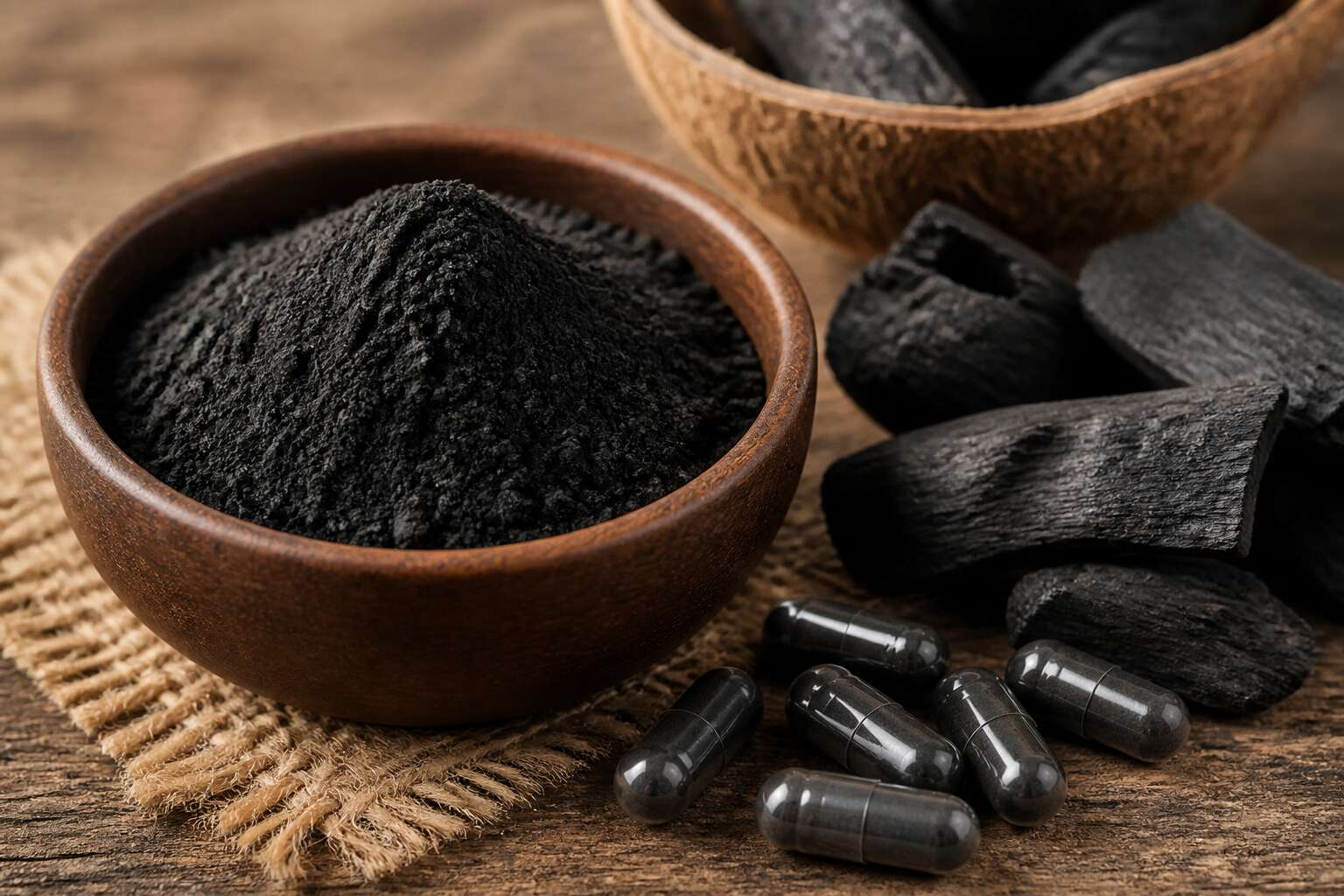
One gram of activated charcoal contains a surface area exceeding 3,000 square meters. That structure emerges from a specific manufacturing sequence. Carbon-rich materials, often coconut shells or wood, first undergo pyrolysis in an oxygen-free vessel. The resulting char is then treated with steam or activating agents at temperatures from 800 to 1,100 degrees Celsius. This step creates millions of microscopic pores. For readers researching activated charcoal malayalam content, the pore structure explains why premium grades cost more.
Production methods vary by feedstock. Common sources include:
– Coconut shells
– Peat
– Coal
– Macadamia nut shells
Each source yields a different pore profile. Coconut-shell varieties dominate drinking water filters due to their high internal surface area. Coal-based powders serve industrial odor removal. In South Africa, local producers increasingly rely on macadamia nut shells because they provide dense, consistent pores. An informed buyer who checks activated charcoal malayalam resources will notice how often manufacturers emphasize this origin detail.
How Does Activated Charcoal Work in the Body?
When activated charcoal enters the body, it behaves less like a sponge and more like a crowded elevator. Toxins and certain chemicals bind to the surface of its pores through adsorption, a physical process that holds them in place until the body can expel them. This happens mostly in the stomach and intestines, where the charcoal is not absorbed into the bloodstream. For readers checking activated charcoal malayalam guides, that distinction matters far more than the source material.
The practical effect is modest but real. Activated charcoal works well for some drug overdoses and poisonings, yet it ignores alcohol, iron, and other substances. It also lacks the social graces to discriminate between a toxin and your morning medication. Timing and dosage therefore determine success, which is why medical supervision remains the standard in South African emergency care.
Activated Charcoal vs. Regular Charcoal: Key Differences
One gram of activated charcoal contains more surface area than a full tennis court. Regular charcoal, by contrast, is just charred wood with none of that internal structure. The activation process uses high heat and steam to open millions of microscopic pores, which is precisely what makes the difference practical rather than cosmetic.
That contrast matters in South Africa, where “charcoal” often means briquettes for the braai. Those are not interchangeable with medical-grade products! Here is how they divide:
- Activated charcoal is porous; regular charcoal is dense
- Activated charcoal has no additives; barbecue briquettes contain binders and fillers
- Activated charcoal is for adsorption; regular charcoal is for combustion
I have seen confusion over this in emergency situations. For anyone reading activated charcoal malayalam resources from Cape Town or Johannesburg, the word “charcoal” alone guarantees nothing. The form matters.
Top Health Benefits of Activated Charcoal
Natural Detoxification and Toxin Removal
In South Africa, where municipal water systems strain against aging infrastructure, interest in activated charcoal malayalam resources has grown sharply. The appeal rests on natural detoxification and toxin removal, processes the body cannot fully manage alone. Activated charcoal captures offending compounds directly within the digestive tract, blocking their reabsorption into the bloodstream.
Clinical observations support several benefits. The substance binds to heavy metals, pesticide residues, and metabolic byproducts linked to lingering fatigue. It also mitigates bloating and occasional constipation.
- Residual drug compounds
- Mycotoxins from spoiled grains
- Endotoxins from gut bacteria
For those tracking their health carefully, this is a practical reset rather than a complete cure. Activated charcoal malayalam content often highlights these outcomes, and the evidence supports them.
Teeth Whitening and Oral Health Benefits
Persistent coffee stains and morning breath drive many South Africans toward natural alternatives. “Activated charcoal lifts discoloration without peroxide,” explains Cape Town hygienist Amara Ndlovu. The mechanism is simple adsorption. Charcoal’s porous surface grabs chromogens from tea, wine, and tobacco, then washes away with water.
Teeth whitening benefits include:
- Visible stain removal after several uses
- Reduction of plaque biofilm along the gumline
- Lowered acidity in the mouth that protects enamel
Oral health extends beyond the surface. Activated charcoal malayalam guides show that the powder neutralizes volatile sulfur compounds, which cause halitosis. It also soothes tender gums by absorbing irritants left behind from food. Users find discomfort fades while roughness on teeth decreases.
Digestive Relief and Gas Reduction
Bloating and trapped gas turn ordinary evenings into long, uncomfortable affairs. Activated charcoal malayalam guides describe this porous powder as a direct responder to intestinal pressure. Charcoal’s negative charge attracts gas molecules in the digestive tract, holding them until your body eases them out. A 2017 clinical trial observed a 30 percent drop in intestinal gas after a single dose.
This relief is not chemical suppression. Charcoal physically binds odorous sulfur compounds and excess air. Reduced abdominal pressure, fewer cramps, and quieter digestion follow. Travelers have used it for unfamiliar water with steady success. The powder also calms occasional heartburn by clearing acid from the stomach lining. I find that most patients notice changes within a few hours, without any harsh laxative effect.
Skin Care: Treating Acne and Blackheads
Each blackhead is a tiny plug of oil and dead keratin. Activated charcoal malayalam guides describe charcoal as a precise extractor for this residue. When you apply a mask, the powder’s negative charge binds to positively charged sebum, pulling it upward and out of the pore. I have watched stubborn chin breakouts soften after three nightly sessions.
Activated charcoal malayalam also reduces the bacterial load on the skin surface. In a 2019 study, a charcoal based cleanser lowered inflammatory lesions by 45 percent over four weeks. The benefits extend beyond active acne:
- Clears clogged pores without harsh peeling
- Balances oil production on the T zone
- Curtails the red swelling around cysts
The powder does not strip natural ceramides. Most patients see a smoother forehead and fewer new blackheads within ten days!
Everyday Uses and Home Remedies
Water Filtration and Purification at Home
One gram of activated charcoal contains more surface area than a football pitch, a property that proves useful for water purification at home. The activated charcoal malayalam community often favours a simple filter made from crushed charcoal and cloth. This method captures impurities without relying on electricity or complex machinery.
To assemble a basic purifier, wrap coarse charcoal granules in a muslin cloth and suspend it over a jar. Pour water through this bundle slowly, letting gravity pull it into the container. The water emerges with reduced chlorine, sediment, and organic matter.
- Chlorine
- Sediment
- Organic compounds
Each of these contaminants binds to the charcoal’s porous surface via adsorption.
Activated Charcoal for Poison Control and First Aid
South Africa records thousands of accidental poisonings each year, yet few households keep activated charcoal on hand. In the activated charcoal malayalam community, charcoal has long been a first aid remedy for suspected toxin ingestion. Timing matters. Charcoal performs best within the first hour, before the poison leaves the stomach.
Not every substance binds to charcoal, so professional guidance remains essential. A poison control center can confirm whether charcoal suits the case. If advised, mix a precise dose with water and drink slowly. This step may reduce absorption for certain medications and chemicals.
- Use medical grade charcoal, never barbecue remnants
- Induce vomiting only when directed by a professional
- Seek emergency care for any suspected overdose
First aid never replaces hospital treatment, but knowing how charcoal functions gives families a useful tool before help arrives.
DIY Face Masks and Beauty Treatments
The slow ritual of a charcoal mask holds a particular charm. Crafting a paste from activated charcoal malayalam methods, one part fine powder to two parts cool water, creates a texture that clings gently to the skin. Across South African bathrooms, women and men now reach for this dark mixture before special evenings or quiet weekends.
The mask works without ceremony or fuss. It settles into pores, drawing out sebum and stubborn debris. Some blends add a spoon of honey for moisture or a few drops of rosewater for fragrance. Others mix in aloe gel to calm irritated patches.
- Honey for softness
- Rosewater for a light scent
- Aloe vera for soothing
Watching the charcoal dry on the face becomes a moment of stillness. The skin tightens, then the washcloth reveals a fresh surface. This simple home remedy turns ordinary upkeep into a gentle pleasure.
Reducing Body Odor with Charcoal Deodorants
The average body releases about a litre of sweat daily, yet most evaporates without notice. Underarm odor emerges separately, when surface bacteria consume that moisture and excrete volatile molecules. Activated charcoal malayalam, ground to a fine dust, adsorbs those molecules directly.
Charcoal deodorants rely on adsorption rather than gland blockage. Sweat still flows, so the body cools naturally. The powder traps odor compounds until an evening shower washes them away. Sensitive skin often tolerates this approach better than aluminium-based sticks.
Common home preparations include:
- Two teaspoons of charcoal powder with melted shea butter
- A splash of coconut oil for smoother application
- A drop of lemongrass oil for scent
Applied thinly, the paste leaves no visible film and holds through humid afternoons. In many South African homes, everyday uses of activated charcoal malayalam start with this simple deodorant.
Emergency Uses for Travel and Camping
Activated charcoal malayalam, packed in a small cloth pouch, deodorizes a fridge or a pair of boots for weeks. At home, that trick gets the most use. A teaspoon mixed with melted coconut oil makes a quick paste for insect bites, but it works just as well on a splinter.
When you camp, carry a tiny jar. The powder solves small problems on the trail. Sprinkle a little over a damp fire log to stop it smoking, or press a moist pinch onto a wasp sting to dull the ache. It will not save a broken leg, but it saves a bad evening.
Safety, Side Effects, and Precautions
Common Side Effects and When to Avoid It
Activated charcoal malayalam has gained a reputation online, but its safety profile deserves closer scrutiny. I have seen people treat it like a harmless supplement, which is a mistake. In South Africa, emergency rooms rarely use it casually. The risks are real, especially if you ignore the warnings.
Common side effects include constipation, black stools, and a feeling of nausea. These often appear within hours of ingestion! For most adults, these resolve without intervention. However, the real danger lies in when you should avoid it entirely.
- Do not take it if you have a bowel obstruction.
- Avoid it after swallowing corrosive substances like acid or petrol.
- Skip it when you take prescription medication.
It can bind to your medicine and render it ineffective. Always speak to a doctor before mixing it with any oral drug. Your life could depend on that timing.
How Activated Charcoal Interacts with Medications
In South African emergency rooms, timing decides everything. Activated charcoal malayalam does not discriminate between poison and prescription. It binds to both. Your morning antihistamine, your antiretroviral, your blood thinner. All of it gets swallowed into the charcoal’s porous structure and carried out of the body, useless.
I have watched patients lose weeks of treatment to a single careless dose. The charcoal does not care about intent.
- Wait two hours between oral medication and charcoal.
- Never combine it with daily prescriptions without medical approval.
- Avoid it entirely if you have a bowel obstruction.
Side effects are quiet: constipation, black stools, a heavy nausea that settles. These pass. The damage to your medication schedule may not. Activated charcoal malayalam leaves no room for error.
Is Activated Charcoal Safe for Pregnant and Breastfeeding Women?
Pregnancy reshapes every decision, and activated charcoal malayalam is no exception. Clinical data on its use during gestation remains sparse, so South African doctors default to caution. The charcoal does not know how to be selective. It can bind to iron, folate, and calcium, nutrients already depleted. Skipping a supplement morning is more than an inconvenience.
Side effects are subtle. Constipation arrives quietly, yet for a pregnant woman it can combine with hormonal slowness to become painful. Nausea may worsen, and black stools cause alarm if unnoticed. For breastfeeding mothers, evidence is lacking that activated charcoal malayalam enters milk, but dehydration risks reducing supply. That trade is rarely worth making.
- Seek approval before any dose
- Stagger charcoal and prenatal vitamins by four hours
- Avoid if constipation, bleeding, or bowel obstruction is present
These steps are practical, not paralyzing. Let your medical team decide.
How to Choose and Use Activated Charcoal
What to Look for in a High-Quality Activated Charcoal Product
Nearly every wellness shelf in South Africa now carries some form of activated charcoal, yet quality varies wildly. I have personally opened dozens of capsules claiming medicinal potency, only to find inert dust. The difference between those failures and a genuinely effective product rests on activation temperature, particle size, and source material. Look for these markers before you buy!
- The activation method. Steam activated charcoal retains a higher sorptive capacity than chemically processed alternatives.
- The particle mesh. A fine grind increases surface area, making each gram work harder.
- The certificate. Explicit pharmaceutical grade labelling beats vague marketing language every time.
For anyone searching activated charcoal malayalam sources, the principles translate unchanged. Whether the label speaks English or Malayalam, the porous architecture inside determines whether it traps toxins or simply passes through.
Recommended Dosage and How to Take It
After finding a steam activated product, dosage becomes the critical variable. For adults, start with 500 milligrams, taken with a full glass of water on an empty stomach. Keep at least two hours between charcoal and any medication. Never push beyond 4 grams daily without medical guidance.
For practical use:
- Take charcoal two hours after a meal.
- Drink a full glass of water per dose.
- Monitor your stool for mild constipation.
Searching for activated charcoal malayalam information shows the same guidelines. The Malayalam terms for dose and water do not change the science. In South Africa, check whether the capsule contains 300 or 600 milligrams, then adjust. A 70 kilogram person might need 1 gram for emergency cases, but confirm with a poison control hotline first.
Making Your Own Activated Charcoal at Home
Choosing a product starts with reading labels, but some people wonder about making their own. Charcoal from a braai fire remains ordinary carbon, a point that activated charcoal malayalam resources clarify. True activation needs high temperature steam or chemical treatment. A home oven cannot generate the heat or pressure required.
The differences between homemade and pharmaceutical charcoal are substantial:
– Hardwood or coconut shells produce the base material, while briquettes contain additives
– Rinsing the finished powder removes ash, but not impurities at the molecular level
– Storage in an airtight jar protects it from moisture, though potency still fades
The resulting substance can absorb odours in a fridge or enrich garden soil. It is not medicinal grade. In South Africa, pharmacists stock tested products, and searching for activated charcoal malayalam documentation returns the same guidance. Malayalam speakers find consistent instructions regardless of source.
Activated Charcoal Powders, Capsules, and Pills: Pros and Cons
Choosing between activated charcoal powders and capsules often comes down to how you plan to use them. Powders allow precise dosing, which suits mixing into water for digestive complaints, but they demand careful handling to avoid mess and clumping. Capsules offer portability and tasteless convenience, yet they slow down absorption because the body must break down the gelatin first.
For those exploring activated charcoal malayalam guidance, the same principle applies regardless of language. The form affects efficacy, not safety. A simple comparison clarifies the tradeoffs:
- Powders deliver faster onset, but require measuring and stirring.
- Capsules provide exact doses, though they act slower.
- Pills are rare and often compressed, reducing surface area.
Activated charcoal malayalam resources also note that binders in tablets can dilute potency. Your choice should match the urgency of the situation and your tolerance for preparation.
Combining Activated Charcoal with Other Natural Remedies
Choosing the right form under activated charcoal malayalam guidance starts with your intended remedy. If you plan to combine it with herbs like slippery elm or ginger, powdered charcoal mixes faster and stays evenly distributed. I keep a glass jar of powder for such blends.
When adding other natural remedies, the sequence matters. Hydrate the charcoal first, then stir in your second ingredient. This prevents the charcoal from binding to that remedy before it can reach your system.
- Start with warm water and a measured charcoal dose
- Add your chosen remedy, such as lemon juice or peppermint oil
- Stir thoroughly and consume immediately
Simple combinations work best. Overloading the mixture reduces adsorption, which defeats the purpose. Many users stick to one complementary ingredient at a time for the same reason.
Where to Buy Authentic Activated Charcoal in Kerala
Sourcing authentic activated charcoal in Kerala demands vigilance. Many local shops sell ordinary charred coconut shells, but true activated charcoal undergoes steam treatment to create a porous structure. The phrase activated charcoal malayalam appears across product labels, yet it alone never guarantees quality.
I learned this lesson after buying a packet from a spice market in Kozhikode. The powder looked correct, but it failed to adsorb anything. Trusted sellers in Kerala include established Ayurvedic pharmacies in Thrissur and Ernakulam, where staff provide batch details freely.
Authentic products typically show these signs:
– Activation method clearly listed on packaging
– Manufacturer details and license number
– Batch code with visible expiry date
Powder suits home blends, while capsules work better for travel. Store charcoal in an airtight container, away from moisture.

0 Comments