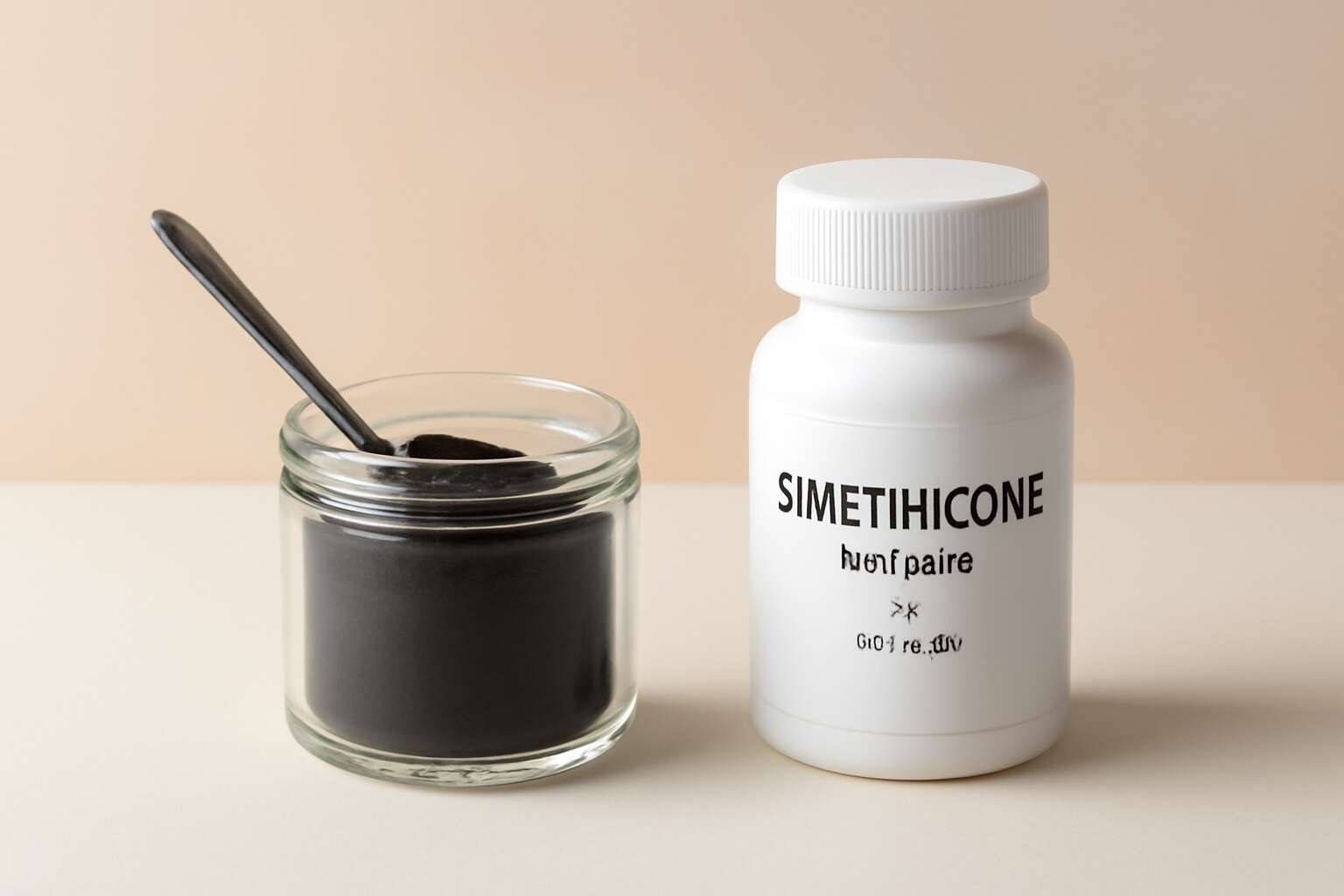
Foundational overview of the ingredients behind gas relief
Components and definitions of the two ingredients
Gas relief begins with two tiny powerhouses that do the heavy lifting inside the gut. I’ve seen how small shifts in gut tempo can calm a storm. “Tiny changes, big relief,” a clinician once noted. Their actions complement one another, providing gentle relief without overwhelming the system.
Taken together, activated charcoal and simethicone form the backbone of this relief.
- Activated charcoal: a porous carbon that adsorbs gases and irritants, helping bloating settle by binding substances in the gut.
- Simethicone: a silicone-based anti-foaming agent that lowers surface tension, causing gas bubbles to coalesce and pass more easily.
In the South African context, this balanced approach offers practical, accessible relief for daily discomfort.
Individual mechanisms and how they complement each other
Foundations of relief hinge on a deliberate pairing. activated charcoal and simethicone address two sides of gut discomfort: one leans into adsorption, pulling irritants from the digestive tract; the other hushes gas bubbles so they can pass more smoothly. The result is a careful, balanced response that avoids overloading the system.
- The charcoal acts as a porous sponge, binding gases and irritants to reduce bloating.
- Lowering surface tension, the anti-foaming agent helps bubbles merge and exit more easily.
In South Africa, this practical pairing fits daily routines—from office breaks to family meals—offering accessible relief that respects the body’s rhythm.
Common OTC forms and product categories
“Relief is a quiet triumph,” a South African clinician once said, and in our daily lives that moment arrives with two familiar allies. I witness it daily. Across South Africa, gas discomfort nudges us toward lunch breaks and late meetings, where trusted OTC options offer steady relief.
At its core, the ingredients behind gas relief combine in forms designed for daily life. activated charcoal comes as capsules and tablets, convenient for a pocket or desk. simethicone appears in liquid suspensions and chewables, chosen for ease of ingestion and quick action. Across South Africa, pharmacists stock a spectrum of options—from single-ingredient remedies to combination products that pair both ingredients for streamlined relief.
- Activated charcoal capsules
- Simethicone suspensions
- Combination products
In the SA shelf, product categories echo an ethos: clear labeling, dosages, and reliable packaging. The result is a measured approach to relief that respects the body’s rhythm.
Indications and practical scenarios for use
In a country where lunch breaks double as field tests for comfort, gas relief sits quietly on the shelf. A recent SA chat hints bloating touches a third of adults weekly—a reality that keeps pharmacists busy and conversations lively. Activated charcoal acts like a kitchen sponge in the gut, catching gas, while simethicone lowers bubble surface tension to help them disperse. Together, they offer a pragmatic duo for daily life.
Indications and practical scenarios for use span everyday life and travel, where a moment of calm saves the day.
- post-meal bloating from rich foods
- long travel or crowded spaces
- before important meetings or events
Across SA shelves, you’ll find activated charcoal in capsules and tablets, simethicone in suspensions and chewables, and simple combos for streamlined relief. Labeling is clear, and packaging reliable, supporting the rhythm of daily life.
Mechanisms of action and evidence
Activated charcoal: adsorption properties and limitations
In the gut, timing is everything. Timing matters! The duo of activated charcoal and simethicone shows promise, but their power hinges on when they’re used. The bottom line: activated charcoal and simethicone work best when used early, trapping substances before absorption.
Activated charcoal’s mechanism is adsorption: a highly porous surface draws compounds in, limiting their passage into the bloodstream. Evidence supports this for certain ingested toxins, though it is not a universal fix and won’t bind every substance or gas effectively.
Limitations include potential binding of medicines and nutrients, variable effectiveness by toxin, and the timing requirement. In South Africa, OTC formulations featuring activated charcoal and simethicone are often used for relief, not a cure.
Simethicone: anti-foaming action and how it relieves gas
Gas is a daily disruptor, and timing matters in the gut. As one clinician puts it: “In the gut, timing is everything.” In South Africa, many reach for activated charcoal and simethicone for relief, hoping for calmer digestion and less discomfort.
Simethicone acts as an anti-foaming agent in the GI tract. By lowering surface tension, it helps gas bubbles merge and rise, making them easier to pass. It stays in the gut and is not absorbed, giving local, targeted relief.
- Breaks gas bubbles by lowering surface tension
- Acts locally in the gut without systemic absorption
The anti-foaming action helps with discomfort but is not a universal fix; results vary.
Synergistic potential when combined
Mechanisms of action and evidence hint at a duet between activated charcoal and simethicone. In the gut’s subtle theatre, activated charcoal acts by adsorption, trimming stray compounds, while simethicone lowers surface tension to marshal gas bubbles upward. Across South Africa, responses vary; many find relief, others report only modest changes.
- Synergistic mechanism: the partner helps reduce irritants while the other targets remaining bubbles
- Local GI action: both exert effects within the gut, with minimal systemic absorption
- Evidence landscape: mixed but supportive signals for certain gas-related symptoms
Such a pairing embodies a dual-pathway approach—calming surface foam and moderating the gut milieu—appealing where daily rhythms clash with discomfort.
Clinical evidence: efficacy, safety, and research gaps
Gas can crash a day faster than a bad meme, but the gut has a clever duo: activated charcoal and simethicone. Activation charcoal adsorbs stray compounds, while simethicone reduces surface tension so gas bubbles rise and exit. Both act locally in the gut with minimal systemic absorption—precision theater, no dispatch from the bloodstream.
- Clinical evidence is mixed but often signals relief for specific gas-related symptoms
- Safety is generally favorable for short-term use, with common tolerability issues
- Research gaps include standardized dosing, long-term effects, and product variability
Across the evidence landscape, the narrative leans toward a dual-pathway approach—calming surface foam while moderating the gut milieu—mirroring how South Africans experience varying levels of relief, from noticeable to modest.
Practical usage and dosing
Typical dosing guidelines for adults and children
Relief travels on a quiet tide when the right duo—activated charcoal and simethicone—stare down discomfort. These allies work in concert: one adsorbs, the other dissolves foamy mischief, offering a calm pause between meals and restless nights. Across South Africa’s kitchens and clinics, their quiet efficiency feels almost lyrical—an understated promise of relief.
Practical usage hinges on product form and age. Typical dosing guidelines vary, so always read the label and consult a clinician for children. To aid readability, consider these factors:
- Age and weight
- Formulation type (capsule, chewable, liquid)
- Timing relative to meals and other medicines
Adults generally tolerate higher per-dose amounts than youngsters, but never exceed the daily maximum on the package. For safety, keep both products separate from other medicines unless advised by a clinician and choose reputable OTC forms to maintain the gentle, steady relief promised by activated charcoal and simethione.
Timing with meals, medications, and alcohol
Across South Africa, roughly 30% of adults report post‑meal heaviness—a stubborn tide that the right duo can quiet: activated charcoal and simethicone. They work in concert: one binds, the other disperses foamy mischief, creating a calm pause between meals and restless nights.
Practical usage hinges on product form and age; always read the label and consult a clinician for children. In general, adults tolerate higher per‑dose options, but safety comes from following the package maxima and keeping the two remedies separate from other medicines unless advised. The combination of activated charcoal and simethicone offers a gentle counterpoint to discomfort.
Timing with meals and alcohol is a delicate balance. Consider these flow moments:
- Timing relative to meals and digestion
- Separation from other medicines as a general caution
- Alcohol use can influence digestion and must be weighed when planning use
How to read labels and identify reliable formulations
Practical usage hinges on what the label promises. Across South Africa, activated charcoal and simethicone earn trust when the label is clear about ingredients and doses. Forms vary from capsules to liquids, and the label should spell out the active ingredients and the dose per unit in plain language. I value packaging that keeps the two components honest—no vague jargon, no hidden additives!
- Active ingredients and amounts per dose
- Clear dosage form and serving size
- Inactive ingredients and potential allergens
- Expiry date and storage requirements
- Manufacturer details and quality assurances
In South Africa, brands often highlight SAHPRA compliance, visible expiry dates, and accessible contact details. If anything feels murky, choose formulations that emphasize transparency and minimize room for misinterpreting activated charcoal and simethicone.
Tips to maximize effectiveness and minimize side effects
In a crowded medical aisle, a crystal-clear label is a compass. A South African shopper study shows about 60% of buyers trust products more when the dose and ingredients are stated plainly. For the duo best known as activated charcoal and simethicone, transparency on the label helps you see how they work together and individually.
Practical usage here hinges on reading the label as a map—what active ingredients exist, what the dose per unit is, and how to store it. Consider these checks:
- Active ingredients and amounts per dose
- Clear dosage form and serving size
- Expiry date and storage requirements
The aim is to keep the two components honest, avoiding vague jargon and hidden additives, so you can navigate with confidence on South Africa’s shelves. When used thoughtfully, activated charcoal and simethicone can complement a clear-label approach.
Situations when you should avoid use
On South Africa’s crowded shelves, a crystal-clear label is as telling as a heartbeat. Activated charcoal and simethicone, when listed plainly, invite you to judge both function and safety at a glance.
Practical usage hinges on treating the label like a map. You don’t need a pharmacology degree—clear language about what’s inside and how it’s meant to work helps you navigate with confidence. Also keep an eye on expiry dates and storage directions to preserve the product’s integrity.
Situations to pause use are plain enough:
- If there’s a known bowel obstruction or other intestinal issue
- If you have allergies to charcoal, simethicone ingredients, or additives
- During pregnancy or breastfeeding without medical guidance
When used thoughtfully, activated charcoal and simethione combine to offer reassurance on SA shelves, especially when the label tells the full story.
Safety, interactions, and precautions
Common side effects and safety considerations
Safety first, in the quiet theater of relief: activated charcoal and simethicone do their job, but they are not a substitute for caution. Charcoal can bind certain medicines and reduce their absorption, so stagger dosing if you are on prescription therapy. Simethicone is generally gentle, yet if pain is severe, persistent, or accompanied by fever, seek care rather than self-treat.
- Space dosing from other medications to avoid interactions.
- Avoid use in children without professional guidance.
- Discontinue if you develop severe abdominal pain, vomiting, or signs of an allergic reaction.
- Consult a clinician if you have kidney disease or are pregnant or breastfeeding.
When considering activated charcoal and simethicone together, always follow product labels and seek professional advice if symptoms persist beyond a day.
Drug interactions and absorption considerations
Gas, bloating, and the ache of discomfort touch modern life hard. In South Africa, more than 25% of adults report monthly gas or upset stomach—that’s a reminder relief must be mindful as well as swift. Activated charcoal and simethicone offer a quiet kind of relief, but safety matters. Charcoal can bind certain medicines and blunt their absorption if timing isn’t spaced; simethicone is generally gentle, yet persistent or severe pain deserves medical attention rather than self-treatment. The choice to take either should mirror a patient’s broader carefulness with other drugs and health conditions.
- Spacing doses from other medications reduces the risk of adsorption–related interference with absorption.
- Special populations—children, pregnancy, or kidney concerns—should seek professional guidance before use.
- Medical attention is advised for severe abdominal pain, vomiting, or any allergic reaction.
Always read product labels; if symptoms persist beyond a day, consult a clinician—especially for anyone with kidney disease or during pregnancy.
Guidance for pregnancy, breastfeeding, and special populations
Relief with safety matters: activated charcoal and simethicone are handy allies, but they’re not free passes to ignore timing and warnings. Charcoal can bind certain medicines and blunt their absorption if you take it too close to other drugs; spacing doses away from meals, supplements, and other meds is wise. Simethicone tends to be gentler, yet persistent or severe pain deserves medical attention rather than a quick self-treatment fix.
In South Africa, juggling medications is common, and pregnancy, breastfeeding, or kidney concerns heighten the need for prudent guidance. Always read labels and consult a clinician if in doubt.
- Pregnant or breastfeeding: consult a clinician before use
- Kidney disease or renal concerns: discuss with a healthcare professional
- Severe abdominal pain, vomiting, or signs of an allergic reaction: seek urgent medical care
Storage, disposal, and product safety
Safety hinges on timing, dosage, and listening to your body. The combination of activated charcoal and simethicone can offer relief, but it’s not a free pass to ignore warnings. Activated charcoal can bind medicines and blunt their absorption if taken too close to other drugs; spacing doses away from meals, supplements, and prescriptions is wise. Simethicone tends to be gentler, yet persistent or severe pain deserves medical attention rather than a quick self-treatment fix. In South Africa, guidance for pregnancy, breastfeeding, and kidney concerns matters—always read labels and consult a clinician if in doubt.
Storage, disposal, and product safety are essential to real-world effectiveness. Keep products in their original packaging, store at room temperature away from moisture, and out of reach of children. Do not transfer to unlabelled containers. When disposal is due, follow local guidelines, or ask your pharmacist about safe take-back options.
- Original packaging and label intact
- Room-temperature, dry storage away from moisture
- Out of reach of children and pets
- Dispose of per local guidelines; use pharmacist take-back programs if available




0 Comments