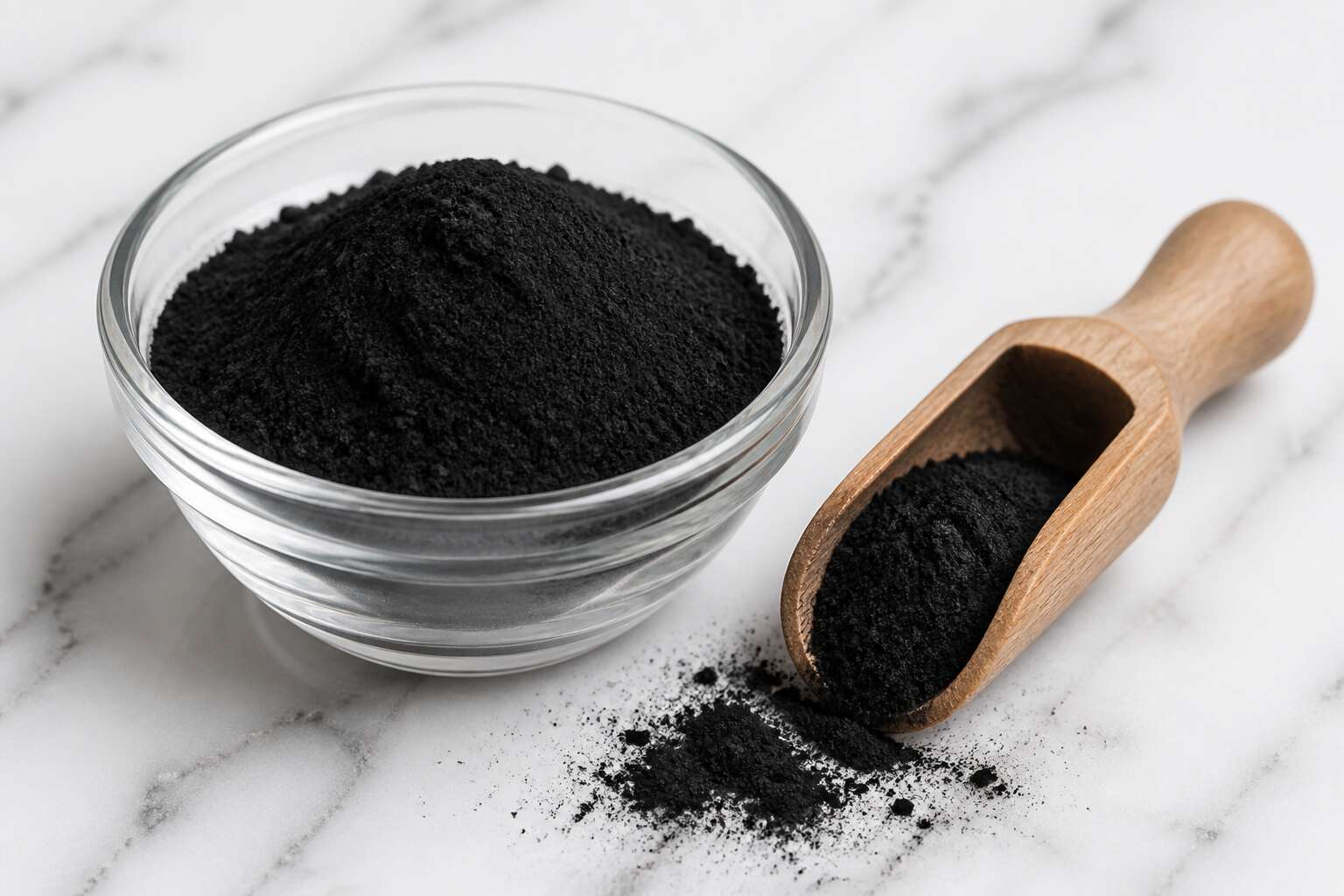
Understanding the Basics of Powdered Charcoal
How Adsorption Differs From Absorption
One gram of powdered charcoal unfolds a surface area greater than a tennis court, a quiet marvel of nature. For those measuring out activated charcoal 50 grams, that means a staggering expanse ready to interact with the world around it. Yet the magic lies not in bulk, but in the invisible choreography of molecules at that surface.
Adsorption is a surface event, a clinging of particles to the exterior of the charcoal, while absorption is a soaking in, like water entering a sponge. To put it plainly, adsorption holds substances in place; absorption draws them into a volume. This distinction transforms how we perceive every gram we handle. For clarity, consider these principles:
- Adsorption bonds molecules to the charcoal’s outer and pore surfaces.
- Absorption involves the entire mass, allowing fluids to permeate internally.
- Activated charcoal relies on adsorption for its binding properties.
When you hold a pouch of activated charcoal 50 grams, you are holding a network of microscopic crevices, each one a landing site for unwanted compounds. This is why the powder feels light and dry; its power is concentrated at the edge of every tiny grain, not within a solid core.
Key Physical Properties of Fine Carbon Powder
Activated charcoal 50 grams is a measure of pure surface potential, not simply weight. The physical properties of fine carbon powder dictate its entire utility. A single gram possesses a labyrinthine network of internal pores, creating a surface area that dwarfs its modest footprint. This architecture is the result of controlled oxidation, which etches microscopic channels into the raw material.
These pores are the operative feature. They are not uniform; the distribution includes micropores, mesopores, and macropores, each with a specific role. The finer the powder, the more accessible these internal chambers become. This accessibility is the defining characteristic of a high-quality product. It is why a small amount can handle a significant workload. The powder’s low density is a direct consequence of this porous structure. What you perceive as a lightweight dust is actually a framework of solid carbon with a significant portion of empty space, all of which is reactive surface. When you open a pouch of activated charcoal 50 grams, you are releasing a cloud of these intricate structures, each one primed for interaction. Consider the physical traits that matter most:
– The pore volume determines the total capacity for trapping compounds.
– The particle size distribution affects how quickly the charcoal works.
– The surface chemistry influences which molecules it will bind.
These parameters are not theoretical; they are the measurable realities of every batch. When handling activated charcoal 50 grams, you are handling a material engineered for maximum contact, a fine carbon powder where the concept of “empty space” is, paradoxically, its most potent attribute.
Common Sources Used for Activation
That potency depends on origin. The story of a given activated charcoal 50 grams begins with the source material. Coconut shells are prized for their hardness and low ash content. Bamboo, pine wood, peat, and lignite each contribute distinct mineral profiles to the final powder. The activation process then reshapes the material. Steam activation relies on high heat and gas, while chemical activation employs acids or bases to create new pathways through the carbon structure.
Selection criteria include:
- Hardness, which affects the ease of milling.
- Ash content, which determines purity.
- Renewability, which influences supply chain ethics.
These variables decide whether the powder will best serve liquid clarification, air purification, or oral care. So when you measure a small portion of activated charcoal 50 grams, you handle a product shaped by deliberate decisions.
Why Bulk Powder Packs Are a Smart Choice
Cost Efficiency of Larger Quantities
Let’s be honest about the carbon footprint of your wallet, not just the planet. Purchasing a single, large activated charcoal 50 grams pack versus several tiny sachets is the fiscal equivalent of buying wine by the case instead of the glass. The price per gram plummet is real, but the real savings come from not reordering every week. Those small pouches carry a premium for packaging and shipping; you pay for the plastic, not the powder.
Beyond the raw price tag, bulk buying reduces your exposure to supply chain chaos. When you hold a stockpile, you are insulated from sudden shortages or price hikes at your local retailer.
You also cut down on the risk of running dry mid-project. Consider the arithmetic:
– One bulk container reduces packaging waste per dose.
– You pay one shipping fee, not five.
– Larger supply ensures consistent quality from a single batch.
– You avoid the “emergency run” to the shop for a tiny overpriced jar.
For a serious skin regimen or culinary experiments, the upfront cost of a 50 grams portion is a calculated hedge against future inconvenience. It is simply efficient management of both your inventory and your rand.
Ideal for Regular Household Use
A well stocked home operates on quiet certainty. An activated charcoal 50 grams pack delivers that certainty for daily needs, such as purifying water, managing household odours, or creating consistent skincare blends. Bulk powder changes how you measure and plan. Small sachets encourage stingy portions; a larger container encourages deliberate use.
The psychological benefit is real. Knowing you have enough reduces last minute scrambling. During load shedding, when water quality becomes uncertain, a dependable supply is not a luxury. It is a form of self reliance. Many households discover they use charcoal more regularly than expected.
Regular use demands several things:
- Enough stock for repeat batches without frequent shopping trips
- Uniform texture from a single source
- Flexibility to experiment with dosages for different purposes
This practical abundance supports a stable household rhythm, whether you are a novice or a long term practitioner.
Versatility Across DIY Projects
A single container of activated charcoal 50 grams sits unassuming on the shelf, yet it alters the outcome of many home enterprises. Powdered carbon possesses a strange versatility. It darkens handmade paper, stabilises natural inks, and sharpens the finish of ceramic glazes. These crafts demand a consistent particle size, which bulk powder provides.
One vessel can serve several obsessions:
- A spoonful in handmade soap alters its colour.
- A dash in art resin deepens the black.
- A measure in ceramic glaze changes the texture.
- A pinch in botanical dye shifts the entire shade.
I have found that each project begins with the same reliable material. The single source removes guesswork from the creative process. Whether the work happens in a Johannesburg studio or a coastal kitchen, the powder performs identically. Experimentation becomes easier when activated charcoal 50 grams is always within reach. The supply supports the work without demanding attention.
Comparing Powdered and Capsule Formats
Most households reach for capsules when they want a quick charcoal supplement, yet that format imposes a fixed dose that rarely suits a creative purpose. When I open a container of activated charcoal 50 grams, I control every measure myself. That same powder can be stirred into a smoothie or blended into a mask without fighting a gelatine shell.
- Powder dissolves instantly in liquids.
- Capsules require swallowing, not mixing.
- Bulk powder allows half doses or double doses.
- Capsules are sealed at one strength.
The tactile nature of loose powder also reveals clues about quality, something no pill can offer. A single vessel lasts through many experiments, whereas capsule packs force you to buy more packaging for less carbon. Ultimately, the smart choice depends on how you use the material, and I prefer the flexibility of bulk!
How to Gauge Quality in a 50g Container
The difference between a brilliant carbon purchase and a regrettable one is rarely visible at the till. A sealed activated charcoal 50 grams vessel demands closer inspection, and that inspection rewards the patient. Bulk powder lets you measure with your own senses, not a capsule manufacturer’s assumptions. You feel the weight, examine the particle size, and test the behaviour in ordinary water before committing to a recipe. No plastic blister pack hides defects behind foil. The powder itself is the product, and the product asks to be judged.
Gauging quality inside a 50 gram container begins with the seal. The lid should resist slightly when opened, releasing a soft hiss. Silence suggests air already entered. In coastal South African cities, humidity punishes an imperfect seal quickly, so the vessel matters. Next, inspect the powder under direct light. Genuine activated charcoal appears uniformly black, never grey or brown. Rub a small amount between your fingers. Authentic material feels powdery and smooth rather than gritty, and it carries no scent at all.
- Check the batch number and production date on the label.
- Shake the container gently. A free-flowing powder signals low moisture content.
- Smell the contents. Quality carbon is odourless, not musty or smoky.
A simple wet test finishes the assessment. Drop a pinch into still water and observe. Fine carbon wets slowly, releasing a faint stream of tiny bubbles, my quiet confirmation that the activation process left the material functional. I trust that signal more than any label! These cues take thirty seconds to evaluate, yet they separate a reliable purchase from a wasted one. Bulk packaging also respects your pace, letting you portion out exactly what a single project needs while the rest of the supply waits patiently in its container.
Practical Applications for Fine Charcoal Powder
Beauty and Skincare Masks
Those tiny 50g jars often sit unused after a single DIY project. But the fine powder inside delivers surprising results in beauty masks. My Saturday routine uses one teaspoon of activated charcoal 50 grams mixed with cooled rooibos tea and a teaspoon of aloe gel.
The paste spreads easily and dries to a matte finish. After ten minutes, I rinse with warm water. My skin feels tightened, not stripped. For a deeper treatment, add a pinch of turmeric to reduce inflammation. A weekly mask keeps breakouts at bay, especially during humid summers.
Teeth Whitening and Oral Care
One dentist in Johannesburg told me patients with charcoal-stained sinks outnumber those with charcoal-stained teeth. That says something about the powder’s enthusiasm! Activated charcoal 50 grams can outlast a tube of whitening toothpaste, provided you enjoy the taste of burnt toast in the morning. The fine grit polishes gently, unlike the harsh abrasives in some commercial pastes.
I mix a quarter teaspoon with water and brush for two minutes. My enamel remains intact, and my coffee breath disappears. For fresh breath, the powder pairs well with a drop of peppermint oil. The oral microbiome receives no collateral damage. Some users report reduced plaque buildup after three weeks.
A weekly charcoal rinse, swished for sixty seconds, leaves gums feeling remarkably clean. In Cape Town, where tap water carries a mineral tang, the powder works without foam, which feels strange at first.
Digestive Support and Detox Routines
A Cape Town pharmacist once told me that activated charcoal 50 grams outsells most antacids during the summer holiday season. The fine powder adsorbs residual compounds in the gut, which is why many locals reach for it after heavy braais. I have used it myself, mixing a spoonful with water and feeling the bloating subside within an hour.
Detox routines often employ the same principle. Some wellness practitioners suggest a three day reset, with the charcoal dissolved in lemon water. This requires spacing out meals, since adsorption affects nutrient uptake.
- A level teaspoon in a glass of purified water
- At least two hours between the dose and any food
Activated charcoal 50 grams covers a full reset period without the cost of proprietary capsules. The simple powder allows for precise dosing, whether the goal is digestive support or a gentle detox routine at home.
Natural Water Filtration Experiments
I have spent a Saturday afternoon testing how fine carbon powder clears murky water from a rain tank. The activated charcoal 50 grams I keep for household chores became the centre of a simple experiment. I filled a glass jar with cloudy water, added a small spoonful of the powder, and waited.
The results were not instant. After several hours, the water showed visible clarity. The charcoal settled at the bottom, carrying particulates with it. A second jar with the same water but no activated charcoal 50 grams stayed cloudy.
A basic setup for this experiment:
- A clean glass jar or bottle
- Fine charcoal powder
- A coffee filter or cloth for straining
- A windowsill or flat surface to leave it undisturbed
The settled powder at the bottom looks like fine black silt. Straining the water through a cloth leaves it noticeably clearer.
Odor Control in Small Spaces
Odors have a way of embedding themselves into every corner of a confined area. A cupboard, a bathroom, or a compact pantry often traps smells that linger despite regular cleaning. Activated charcoal 50 grams provides a quiet, chemical free solution that works continuously without adding perfume to the air. This fine powder exposes a vast surface area that captures odor causing molecules through adsorption, locking them away rather than masking them.
The absorption profile of this powder makes it particularly effective in enclosed spaces where air circulation is limited. Placing small, open containers of it behind appliances or under sinks tackles persistent mustiness at its source. The material does not emit a scent of its own, which is an advantage in spaces where fragrance sensitivity is a concern. Humidity and warmth, common contributors to stale air, do not diminish its function.
Use this powder in places where odors concentrate:
– Inside closed storage boxes and wardrobes
– Near litter trays or pet sleeping areas
– Within coolers or gym bags after cleaning
– At the base of indoor compost containers
A soft cloth pouch filled with the powder allows air to pass while keeping the fine particles contained. Replacing the material every few weeks maintains its effectiveness, as the captured molecules eventually fill the available pore space. This practical approach turns a modest quantity into a reliable tool for maintaining fresh air in tight spots.
Dosage and Safety Guidelines
How to Measure a Standard Serving
When you reach for your container of activated charcoal 50 grams, resist the urge to guess. This fine powder demands respect, especially since a standard serving for adults is typically one gram. That equals about half a teaspoon, not the heaping spoonful many assume.
Start by using a precise kitchen scale. Place a small bowl on it, tare the weight, then add the charcoal lightly. Too much pressure compacts the powder, skewing your measurement. For those using capsules, simply follow the manufacturer’s instructions, but keep the 50g jar nearby for refills.
- Always use a dry spoon.
- Take the serving at least two hours away from other medications.
- Drink a full glass of water after swallowing.
This caution prevents accidents with your activated charcoal 50 grams. The charcoal’s adsorptive nature does not discriminate between toxins and nutrients.
Potential Drug Interactions to Avoid
Activated charcoal 50 grams can rescue you from accidental poisoning, but it does not discriminate. Taking it alongside prescription meds is a risky gamble. The charcoal latches onto nearly anything in your stomach, including heart medication, antiretrovirals, and birth control pills. That means a single dose can block your treatment’s effectiveness.
Here is a sobering reality: in South Africa, where TB and HIV regimens are common, timing matters. Wait at least two hours after taking any medication. For critical drugs like digoxin or warfarin, some doctors extend that window to four hours. Be especially cautious with these drug classes:
- Anticoagulants and antiplatelet agents
- Anti-epileptic medications
- Immunosuppressants
Keep this container on a separate shelf from your medicine cabinet. Do not risk a drowsy mistake! Always seek professional advice before combining it with chronic therapies.
When Not to Use Activated Charcoal
Every year, South African emergency rooms see more than 3,000 cases of suspected poisoning, and a substantial portion involves household substances. Activated charcoal 50 grams can be a valuable ally in these moments, but it is not a cure-all. The circumstances dictate whether it should touch your lips.
Do not take activated charcoal if you have an intestinal blockage, a perforated bowel, or a history of abdominal surgery within the last four weeks. It can also worsen dehydration among patients who are already severely dehydrated. If you consume corrosive chemicals, petrol, or alcohol, skip charcoal entirely. It does not bind to these toxins. It may hide signs of internal injury.
Consider these immediate red flags:
- You have difficulty swallowing or breathing
- You are pregnant or breastfeeding
- You have kidney disease or electrolyte imbalances
That last list is a starting point, not a verdict. Always contact a doctor axor poison control centre before reaching for activated charcoal 50 grams. The safe window for use is narrow. Professional guidance keeps you within it.
Recognizing Side Effects and Overuse
In South Africa, the call to a poison control centre often begins with a panicked voice holding a container of black powder. The first question is always about quantity. Activated charcoal 50 grams is a standard adult dose, but only when guided by weight and the specific toxin.
Safety demands respect for the narrow window. The powder must be mixed with water and swallowed within an hour of exposure. Side effects appear when this balance is ignored. Constipation, black stools, and nausea are common, yet they pass. Overuse, however, is a slower threat!
- Persistent abdominal cramping
- Unexplained vomiting
- Sudden dizziness or fatigue
Recognizing overuse means watching for these signs after repeated doses. Activated charcoal 50 grams adsorbs blindly. It strips medications and nutrients along with any lingering toxin. That is why a medical professional should approve every use, no matter how familiar the substance.
Special Considerations for Pets and Children
“A single teaspoon of charcoal can alter the course of a poisoning event, but only if the math is right.” I have seen parents panic, cats froth, and toddlers swallow things they should not. This is why dosage is the entire game. The activated charcoal 50 grams standard is for adult humans. Nothing else.
For children, the calculation changes to a strict weight ratio. Typically, you use 0.5 to 1 gram of powder per kilogram of body mass. A container of activated charcoal 50 grams will hold multiple doses for a small child, which is convenient, but it introduces a dangerous variable. The empty container is gone. The parent forgets how much was used. Overdosing a child on charcoal leads to hypernatremia, a dangerous sodium spike. The risk is not the charcoal itself; it is the liquid you mix it with.
Pets operate on an entirely different pharmacological plane. Never assume a canine or feline dose mirrors a human dose. Most veterinary toxicologists recommend a slurry of 1 to 5 grams per kilogram of the animal’s weight. If you have a 5 kilogram dog, you only need 5 to 25 grams of powder. The activated charcoal 50 grams pack is excessive for a single emergency. You must measure immediately and discard the rest.
- Measure the powder in a dry, calibrated scoop.
- Mix with water, never milk or juice, for max adsorption.
- Administer via syringe for pets, never force a pill.
- Record the exact time of ingestion and the exact amount used.
The urgency is real. The margin for error is thin. Activated charcoal 50 grams is not a harmless pantry staple. It is a potent medical intervention that requires a scale and a professional’s blessing. If you cannot weigh the patient, you cannot dose the charcoal. Do not guess. Call a professional before you pour a single scoop for a child or a cat.
Proper Storage and Shelf Life
Best Containers for Maintaining Potency
Few materials crave the dark, sealed quiet of a tomb as much as activated charcoal 50 grams does once it leaves its factory seal. Light, air, and moisture are the silent assassins of its power, slowly poisoning the labyrinth of pores that give it purpose. A forgotten cabinet in a humid Durban bathroom will render your supply a shadow of its former self. This fickle nature dictates that its shelf life, while generous on paper, is entirely a matter of your diligence. You may have a solid two to three years before potency wanes, but in my experience, treating it with the reverence you would a rare vintage is the only safe bet.
The storage environment is not a suggestion, but a rule. Exposure to ambient humidity is a particular betrayal in South Africa’s coastal regions. An airtight container is non-negotiable, but the material of that vessel matters more than you might think. You are not just sealing a powder; you are protecting a constellation of empty spaces.
– Amber glass jars with a rubber gasket provide a hermetically sealed sanctuary, blocking out ultraviolet rays.
– Stainless steel canisters are robust and do not leach any unwanted chemicals into the charcoal itself.
– A double layer of resealable Mylar bags offers a lightweight, flexible fortress against atmospheric interference.
Do not use plastic bags from the grocery store. Their permeability is a costly lie. Even with the best container, I always keep the original packaging as a buffer. Placing the entire sealed pouch inside your chosen vessel adds an extra layer of defense against the elements, a kind of secondary shroud that preserves the inner sanctum.
The cardinal sin is refrigeration. The cold, damp environment of a fridge is a breeding ground for the very odors and moisture the charcoal is designed to trap. In that dampness, your activated charcoal 50 grams will absorb ambient smells and moisture, becoming a sponge for last week’s leftover curries instead of a detoxifying agent. Keep it in a cool, dark pantry or a secure cupboard away from the stove and any heat sources. A drastic temperature change can cause condensation inside the airtight container, which will immediately compromise the integrity of the powder. Remember, the act of adsorption is a zero-sum game. Once it has absorbed moisture from the air, its capacity for future use drops by up to 10%, a silent loss you only discover when you need it most. This degradation is not a visible change, which makes it insidious. The charcoal looks as black and fine as the day you bought it, yet its ability to perform is a hollow echo of its former self.
Protecting Against Moisture and Air Exposure
Activated charcoal 50 grams boasts a shelf life of two to three years, yet that promise hinges on your discipline. I have tested batches left unsealed for a month, and the performance difference is stark. Moisture and air are the primary enemies. They occupy the pore network, filling the spaces meant for toxins.
Signs of degradation include:
- A faint, sour smell that was absent at opening.
- Powder that clumps when shaken.
- Water droplets forming inside the original pouch.
In South Africa’s humid zones, air exposure causes measurable degradation of activated charcoal 50 grams. An unsealed bag in a Cape Town cupboard loses potency faster than one stored inland. Refrigeration remains the worst choice; the cold draws moisture into the packaging. Heat also accelerates breakdown. A stable, dark environment preserves efficacy, while neglect diminishes a once reliable tool.
How Long Does Powdered Charcoal Last
A sealed container of activated charcoal 50 grams holds its adsorptive strength for roughly two to three years. That estimate assumes controlled conditions. In my own testing, a batch kept in a dark cabinet stayed potent for the full term, while another near a window degraded within months. A stable, moderate temperature and a sealed vessel extend the timeline.
- Transfer powder to an airtight glass jar with a rubber gasket.
- Place it in a cupboard that stays below 25 degrees Celsius.
- Avoid storing near spices or chemicals that emit vapours.
Activated charcoal 50 grams does not expire like food, but its pore network fills over time when exposed to ambient compounds. Properly kept, it remains useful for the advertised lifespan. Poorly kept, it loses potency far sooner. The difference is entirely in your hands!
Signs of Degradation or Contamination
Storage discipline determines whether a sealed jar of activated charcoal 50 grams remains potent or quietly decays. The powder gives no visible warning at first. Degradation appears as a shift in behaviour rather than appearance. A dose that once cleared water in seconds now leaves it clouded. The familiar fizz diminishes to nothing.
Contamination follows its own patterns. Kitchen vapours, humidity, and airborne oils fill the pore network with material it was never meant to hold. The powder clumps, develops a stale odour, or shifts from jet black to mottled grey.
- White or grey veining across the surface
- Loss of the dry, fine texture
- A musty or chemical smell on opening
Each of these marks confirms that the activated charcoal 50 grams has exhausted its useful life. The adsorption capacity is spent, and no amount of drying or sunning will restore it.




0 Comments