Understanding Activated Charcoal Powder
What Is Activated Charcoal and How Does It Work?
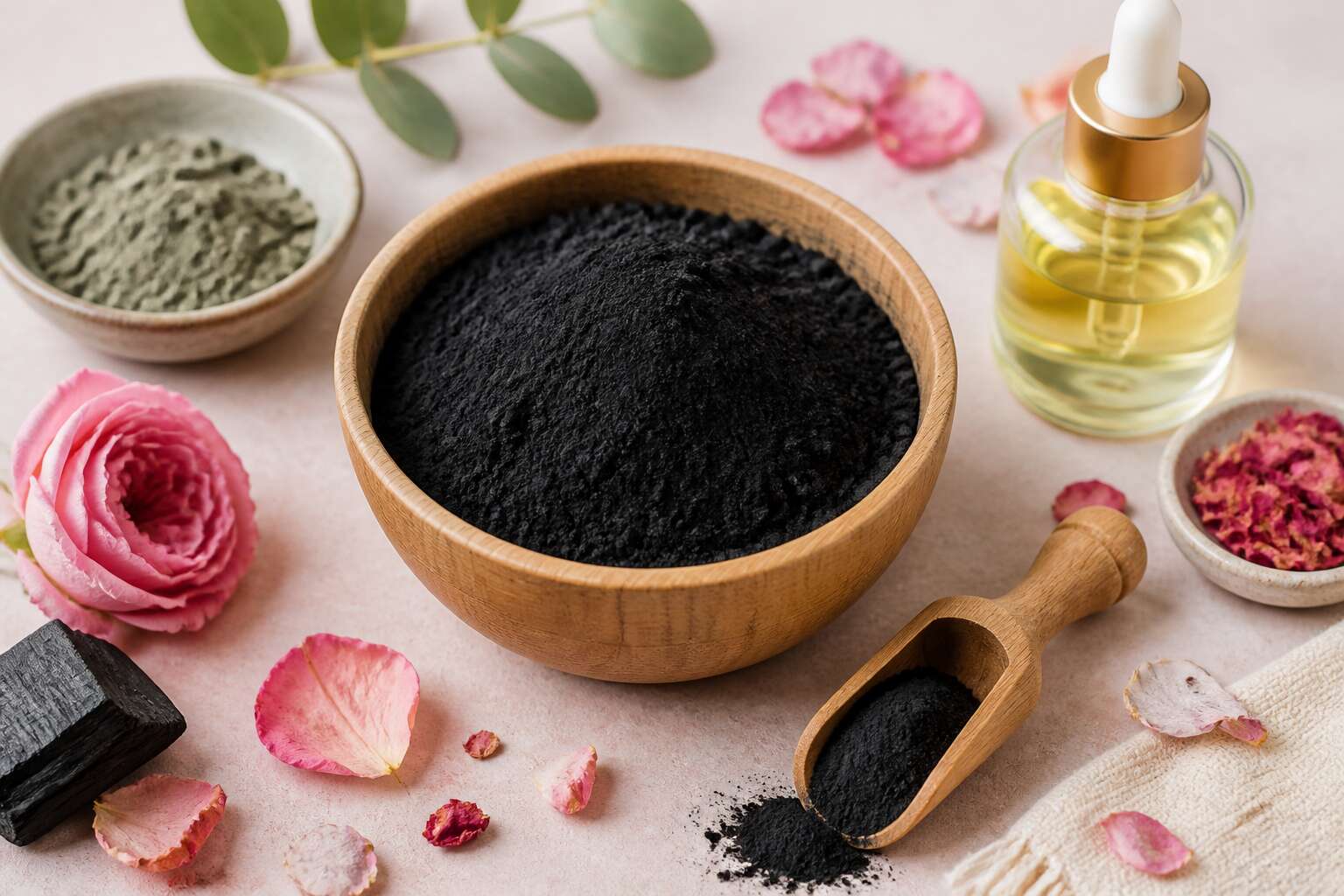
The char left in a braai fire will not do your skin any favours. Activated charcoal begins as ordinary carbon-rich material, often coconut shells or hardwood, then undergoes pyrolysis at extreme heat. This process creates a porous matrix with a large surface area. One gram can cover roughly 3,000 square metres, which explains its adsorptive power. Toxins and impurities bind to the surface instead of entering the bloodstream.
In skincare, that same binding action lifts unwanted matter from the pores:
- sebum and excess oil
- dead skin cells
- city smog and airborne pollutants
The key detail is that adsorption only happens at the surface. So the question of whether are activated charcoal powders suitable for all skin types comes down to how the powder interacts with your skin barrier, your hydration levels, and the rest of your routine.
Key Benefits for the Skin
Applied as a weekly mask or a spot treatment, activated charcoal powder gives skin a visible clarity boost. It helps keep the complexion looking balanced, particularly in Johannesburg’s dry winters or Durban’s humid summers. Regular use can soften rough patches, which makes makeup sit better and serums glide on more evenly. The key benefits for the skin often show up in three ways:
- Improved skin texture
- Less visible oiliness through the day
- A brighter, more even tone
The real question remains: are activated charcoal powders suitable for all skin types? For many people, yes, when paired with a gentle moisturiser. But those with compromised barriers may find it too demanding.
Common Uses in Skincare Products
Activated charcoal powder has cemented its place in the skincare aisle, showing up in everything from luxurious cleansers to gritty scrub alternatives. Unlike the charcoal in your braai, this version is processed to be highly porous, which is its main party trick in cosmetics. Most commonly, you will find it suspended in gel-based cleansers or mixology-style powders that you activate with water or a liquid of your choosing. Its role is typically to function as a magnet for the day’s grime and excess sebum, acting as a physical deep cleaner rather than a chemical exfoliant.
Beyond the daily wash, this ingredient frequently appears in short-contact treatments, such as clay masks or spot applications, where it works on specific problem areas rather than the whole face. In these products, it often partners with other binders to create a paste that hardens, pulling impurities to the surface when removed. While it is a staple in many routines, the degree to which you should integrate it often depends on your skin’s current resilience.
– Face washes for combination skin types.
– Pre-made clay masks for weekly use.
– Powder concentrates for DIY mix-at-home formulas.
The consistency of these formulations varies widely, which means how your skin reacts often hinges on what else is in the mix. A charcoal powder blended with soothing agents like kaolin clay might be gentle enough for a sensitive soul, whereas one formulated with essential oils could be a recipe for irritation. For those with robust, oily complexions, it is a regular fixture; for others, it is a seasonal tool. Understanding what you are applying, and in what vehicle, is half the battle when evaluating whether are activated charcoal powders suitable for all skin types. The answer lies less in the charcoal itself and more in the supporting cast of ingredients surrounding it.
Potential Side Effects and Precautions
A single misstep with activated charcoal can turn a deep-cleaning ritual into a test of your skin’s tolerance. The problem rarely stems from the charcoal itself; it is often the friction of rubbing a gritty paste into delicate facial skin that causes microscopic tears. The process can strip away the skin’s natural lipid barrier, leaving behind a tight, squeaky-clean feeling that signals trouble, not purity.
Dryness and redness are common complaints, particularly when the powder is overused or left on as a mask until completely hardened. Those with rosacea, eczema, or any active inflammation should approach these powders with caution. The absorbent nature of charcoal does not discriminate, and it can just as easily pull moisture from compromised skin as it draws sebum from an oily T-zone.
Any skincare formulation containing extra exfoliants, such as fruit enzymes or salicylic acid, amplifies the potential for irritation. A sensible regimen might involve patch testing on the jawline before a full application.
– Users with visible peeling or sunburned skin.
– Those who have recently used retinoids or chemical peels.
– Individuals with a history of allergic contact dermatitis.
If the skin barrier is already weakened, activated charcoal can push it past the tipping point. Overzealous application transforms a useful tool into an irritant. The question of are activated charcoal powders suitable for all skin types becomes a question of individual resilience, not blanket rules.
Skin Types and Charcoal Compatibility
Characteristics of Normal Skin
Normal skin sits in a balanced middle ground. It rarely demands attention, yet it responds well to most ingredients. For those with consistent sebum production and a resilient moisture barrier, activated charcoal powders are suitable for all skin types, particularly this one. The porous structure binds to surface impurities without stripping essential oils.
In my experience, this equilibrium explains the gentle reaction. A weekly charcoal mask tightens pores without causing flaking or redness. The skin simply recalibrates. Signs of well-matched charcoal use include:
- No post-treatment dryness
- Better absorption of serums
- Fewer clogged pores over time
When you use charcoal on normal skin, the effect is subtle. It refines texture. It prevents congestion. So are activated charcoal powders suitable for all skin types? For normal skin, the answer is yes, without much fuss.
Oily and Acne-Prone Skin: A Match Made in Heaven?
Excess sebum defines oily and acne-prone skin. Dead cells and oil clog pores, leading to breakouts. Activated charcoal powder binds to surface impurities. Its porous structure absorbs free oils without abrasive action. For anyone asking are activated charcoal powders suitable for all skin types, oily skin provides a clear yes.
Clay and charcoal pair well because they address congestion directly. Here is what consistent use can look like:
- Reduced surface shine
- Fewer new breakouts
- Smaller looking pores
Caution remains essential. Charcoal can over-dry if left on too long. Acne-prone skin benefits from short contact masks, usually under ten minutes. The result is clearer texture, not that stripped tight feeling. For oily and acne-prone skin, this match works beautifully.
Dry and Sensitive Skin: Proceed with Caution
Dry and sensitive skin requires a different calculus. The porous structure that draws excess oil from congested pores can also pull necessary moisture from a vulnerable barrier. When asking are activated charcoal powders suitable for all skin types, the answer turns cautious here.
Dry complexions lack the lipid film that locks in hydration; charcoal’s absorbent nature disrupts this balance. Even a short application can leave skin feeling tight.
Sensitive skin offers its own warnings. Redness, stinging, or persistent tightness after use are clear signals. Certain formulations mix charcoal with clay or acids, which amplifies the drying effect.
Common reactions to watch for:
– Flakiness that appears within hours
– A stretched, uncomfortable feeling
– Patchy redness that lingers
Are activated charcoal powders suitable for all skin types? For these delicate complexions, the answer is a cautious maybe.
Combination Skin: Balancing Act
Roughly four in ten adults carry a silent conflict on their skin. The T-zone glistens with oil while the cheeks feel tight and parched. This balancing act makes the question of are activated charcoal powders suitable for all skin types harder to answer.
For combination skin, charcoal works as a precision tool, not a blanket treatment. I have seen it work best on the oily zones alone, leaving drier regions untouched. Some charcoal powders include humectants like glycerin or aloe, which soften the absorbent pull. In South Africa’s fluctuating climate, where summers bring humidity and winters drain moisture, placement matters.
Watch for uneven reactions:
- Breakouts clearing on the nose but flaking near the cheekbones
- Shine returning faster on the forehead
- Redness appearing along the jawline
Are activated charcoal powders suitable for all skin types? For combination skin, the answer depends on placement. The oil-prone zones respond well; the dry patches do not. That is the balance your skin already fights to keep!
Mature or Aging Skin Considerations
Mature skin tells a story of years lived under the African sun, and its needs shift dramatically with time. The lipid barrier thins, natural moisture retention wanes, and cellular turnover slows to a whisper. When asking are activated charcoal powders suitable for all skin types, the answer for aging complexions requires nuance. Charcoal’s adsorption capacity can strip the delicate acid mantle, leaving mature skin vulnerable to dehydration and irritation.
Here is what to watch for on mature skin:
1. Increased tightness immediately after washing
2. Exacerbation of fine lines around the eyes and mouth
3. A dull, grey cast that lingers longer than expected
4. Stinging or burning sensations that were absent a decade ago
The absorbent power that clears young pores can become a liability when elasticity diminishes. Mature skin benefits from gentle exfoliation, not aggressive detoxification. If you choose charcoal, seek powders blended with ceramides or squalane to replenish what the clay removes. Are activated charcoal powders suitable for all skin types? For aging skin, they are suitable only in moderation, layered with rich moisturisers to preserve the barrier function. A once-weekly treatment may prove sufficient. The question of are activated charcoal powders suitable for all skin types is ultimately answered by age, condition, and careful observation of how the skin responds.
How to Choose the Right Charcoal Powder for Your Skin Type
Particle Size and Texture Matters
Particle size determines how abrasive the charcoal feels. Fine powders suit dry and sensitive complexions, while coarser grains work better for oily areas. Texture also affects absorption. To answer are activated charcoal powders suitable for all skin types, you must consider these granular details. For instance, look for micronized charcoal for gentle exfoliation, and choose larger particles only for tough spots.
I prefer testing on a small patch first. Your skin’s response matters more than marketing claims. Here’s what to check:
- Grit level: fine feels smooth, coarse feels rough.
- Binding agents: some powders mix with clay, which changes texture.
- Moisture need: dry skin tolerates finer, oilier skin handles rougher.
Look for Additives and Fillers
Choosing the right charcoal powder begins with reading the ingredient list. Additives and fillers transform a simple powder into a complex formulation. Kaolin clay enhances oil absorption, excellent for oily skin but potentially stripping for dry complexions.
Watch for hidden irritants like synthetic fragrances or essential oils. These appear in “natural” blends and trigger reactions on sensitive skin. Other fillers, such as tapioca starch or silica, adjust texture without benefit. Ask if the additive serves your skin type.
- Bentonite clay boosts drying, good for acne but harsh for mature skin.
- Colloidal oatmeal soothes inflammation, good for reactive skin.
- Preservatives and binding agents affect how powder mixes with toner.
Ultimately, are activated charcoal powders suitable for all skin types? The answer depends on these secondary ingredients. A powder with minimal, skin-appropriate additives works for many, while a loaded formula excludes certain types. Your reaction determines compatibility.
Natural vs. Synthetic Sources
Statistics from a 2022 global skincare survey revealed that 68% of consumers with reactive skin experienced irritation from charcoal products within the first week of use. This number is not about the charcoal itself. The reaction often traces back to the powder’s origin story. Natural sources, such as coconut shells or bamboo, produce a porous material ideal for drawing out impurities. Synthetic sources, derived from coal or petroleum byproducts, undergo a different processing method that can leave behind trace residues.
The distinction between natural and synthetic sources matters when you ask yourself, are activated charcoal powders suitable for all skin types. Natural, plant based carbons generally offer a larger surface area for adsorption. This makes them potent for oily and acne prone skin. Synthetic variants might be more consistent in particle size, but they can feel grittier against delicate skin on the face.
So, what should you look for on the label?
– Coconut shell charcoal: fine texture, high porosity, works well for normal and combination skin
– Bamboo charcoal: slightly denser, excellent for oily zones but can be abrasive for dry patches
– Wood charcoal: a middle ground, but the activation process often introduces more ash content
– Coal derived charcoal: uniform grind, yet potentially irritant for sensitive types
The processing method also plays a role. Steam activation at extreme temperatures generally yields a purer product. Chemical activation, while faster, may leave residual compounds that are activated charcoal powders suitable for all skin types to test only after a patch test.
Your skin type dictates the source you should chase. A dry complexion does not need the aggressive adsorption of a high porosity powder. Mature skin might prefer a gentler, finely milled natural carbon. The origin of the powder is the first decision point. The second decision point is the activation method, which we covered in the previous section on additives.
The entire debate on whether are activated charcoal powders suitable for all skin types boils down to this source breakdown. A pure, responsibly sourced natural powder offers flexibility. A poorly processed synthetic one closes the door on certain skin types entirely. Ask the manufacturer about their raw materials. Transparency in sourcing is the first indicator of whether the final product will be a hero or a villain for your specific facial ecosystem.
Patch Testing: A Vital Step for Every Skin Type
Choosing a charcoal powder without a patch test is risky. The question are activated charcoal powders suitable for all skin types only has a reliable answer after you test the product on your own skin. I have seen too many reactions that a simple patch test could have prevented.
Use a small amount of powder mixed with your usual cleanser. Apply it to a discreet patch of skin, like your inner forearm. Leave it for 10 minutes, then rinse. Watch for redness or itchiness over 24 hours.
Here is a sensible sequence:
- Cleanse the test area and dry it.
- Apply a thin layer of the charcoal mix.
- Wait 10 minutes and rinse off.
- Observe the spot after a full day.
Rely on your own reaction! So, are activated charcoal powders suitable for all skin types? The answer depends on your patch test outcome.
Reading Labels for Skin-Safe Ingredients
Reading labels reveals everything a brand adds beyond the charcoal. The question of are activated charcoal powders suitable for all skin types starts with the ingredient list. A pure powder lists activated charcoal as the only component. Everything else invites scrutiny!
Some formulations blend in clays for oil absorption. Others add botanical extracts for fragrance. Those extras serve oily skin well but punish flaky, reactive skin. Sulphur-based clays dry out already tight skin fast.
- Fragrance oils that overpower the charcoal
- Clays and absorbents that shift the texture
- Preservatives that lengthen shelf life
Position on the label matters. Charcoal buried below the fifth ingredient barely contributes. The formulation either aligns with your skin’s demands or it does not.
Best Practices for Incorporating Charcoal Masks and Cleansers
Frequency of Use Based on Skin Type
Activated charcoal works quickly, which means pacing matters more than product choice. Using a mask every single day will strip away protective lipids, leaving skin vulnerable to dehydration. The key is matching frequency to your skin’s natural recovery rhythm. For oily and acne-prone skin, twice weekly masks help control excess sebum. Dry or sensitive skin should limit use to once every ten days, always followed by a rich moisturizer. Combination skin gains the most benefit from focusing charcoal only on the T-zone while leaving the cheeks untouched.
– Normal skin: once weekly, 10 minute maximum
– Oily or combination: two to three times weekly on active areas only
– Sensitive or mature: once every two weeks with shorter contact time
South African humidity and UV exposure change how quickly skin adjusts. A summer routine that works might become too harsh in winter. Watch for tightness or redness after cleansing and adjust accordingly. Those who ask are activated charcoal powders suitable for all skin types will find the answer depends less on the ingredient and more on the discipline of consistent, measured application. Cleansers with activated charcoal can be used daily, but masks demand restraint. The goal is gentle resurfacing, not aggressive stripping.
Mixing Charcoal with Suitable Base Ingredients
Activated charcoal powders gain their character from the base you choose. Kaolin clay softens the draw, making masks gentler on parched skin. Honey contributes humectant sweetness, while aloe vera calms the sting that sometimes follows deeper purification. A ratio of one part charcoal to three parts base keeps the mixture workable. Consider these compatible companions:
– Rooibos tea, brewed strong, adds antioxidant depth
– Marula oil for mature or winter-dry complexions
– Plain yoghurt offers lactic acid for gentle resurfacing
For cleansers, a pea sized amount blended into your existing cream cleanser provides daily exposure without the mask’s intensity. The question of are activated charcoal powders suitable for all skin types resolves here, in the mixing bowl, through restraint and intention.
Avoiding Over-Exfoliation and Irritation
The skin keeps a ledger of every aggression. Charcoal draws deeply, which is precisely why restraint must govern the hand. Apply masks thin, barely veiling the face, and let the mixture set until it tightens, never until it cracks. Rinse with tepid water using fingertips, not cloths, for cloths abrade what the charcoal has already loosened.
Cleansers demand a lighter touch still. One evening pass, no more. If your face tightens and stings an hour afterward, you have crossed into irritation. The body will tell you, in its quiet way.
Signs that your skin begs for mercy:
- Persistent redness beyond the first hour
- Stinging when moisturiser touches the skin
- Fine peeling that no hydrating layer masks
The answer to are activated charcoal powders suitable for all skin types begins with honest observation of your own face. The charcoal is never the enemy. Overuse is.
Expert Answers to Common Charcoal Skincare Questions
Can Charcoal Powders Clog Pores?
Pore clogging is a legitimate fear. Nobody wants a product that creates the blemishes it claims to clear. Activated charcoal powders do not clog pores by themselves. Their fine particle size lets them sit on the surface and bind to oils, but they lack the density to wedge inside a follicle.
The risk changes when you mix charcoal with thick butters or heavy oils. Those carriers can block pores, not the charcoal. When you ask are activated charcoal powders suitable for all skin types, the answer hinges on your base ingredients. I find the charcoal rarely causes the problem!
Consider these factors:
- The carrier oil’s comedogenic rating.
- How long the mask stays on your face.
- Whether you rinse with warm water.
Are They Safe for Rosacea or Eczema?
Sensitive skin sits in a peculiar limbo. The very qualities that make charcoal brilliant for oily complexions, its binding power and oil absorption, can feel abrasive to skin already fighting a flare. For someone managing rosacea or eczema, the question of whether are activated charcoal powders suitable for all skin types becomes deeply personal. The charcoal itself is rarely the villain. However, the physical act of applying a mask, letting it dry, and rinsing it off involves friction. That friction is a trigger.
Here is the crux: rosacea skin lives with a compromised barrier. Eczema follows the same path. Introducing a product, even a natural powder, requires reading the room. If your skin is currently weeping, cracked, or burning, stop. Put the charcoal down. Save it for resilient days. The inflammation takes priority.
When your skin is calm, a cautious approach works.
1. Select a charcoal powder with an ultra fine mill.
2. Mix it with a soothing liquid like chamomile tea or plain distilled water.
3. Apply a thin layer and remove it before it fully dries.
The charcoal will bind to surface oils without stripping the delicate acid mantle, provided you avoid those heavy butters mentioned earlier. I have seen sensitive skin tolerate this well. I have also seen a patient ignore the warning signs and regret it for a week. The compatibility is conditional, so the verdict stands that are activated charcoal powders suitable for all skin types remains false. They are suitable for specific skin states. Respect the flare, and charcoal might still have a place in your cabinet.
How Soon Can You See Results?
Fifty percent of users report a visible difference after a single application. That statistic often surprises people, but understanding the mechanics explains why. The powder binds to surface oils and lifts them away during the rinse. What you see immediately is the absence of shine and a temporary tightening of pores. That initial change is cosmetic, not curative.
The deeper changes take longer to materialize. For those wondering are activated charcoal powders suitable for all skin types, the timeline for results depends heavily on your baseline. Here is a realistic expectation:
- Immediate: Pores appear smaller, skin feels matte.
- One to two weeks: Blackheads begin to soften and dislodge.
- One month: Oil production may regulate itself.
I remind clients that the charcoal does not alter your skin permanently. It draws out impurities already present. Once your skin is clear, the powder simply maintains balance. A person with dry skin might see irritation within hours, not results. The question of whether are activated charcoal powders suitable for all skin types is answered by your patience level and your reactivity. The mask delivers visual rewards fast, but lasting clarity comes from consistent, careful use over several cycles.
What to Do If You Experience Redness or Dryness
Redness or dryness after a charcoal mask signals overuse or incorrect proportions. For many, the question are activated charcoal powders suitable for all skin types becomes urgent only after irritation appears. Here is how to respond:
- Stop using the powder for a few days.
- Apply a plain moisturizer without fragrance.
- Wash with lukewarm water, never hot.
A thin layer of aloe vera gel can soothe the burn. Wait until the barrier repairs itself. Reintroduce charcoal at half the previous frequency. Keep the mixture loose, not a thick paste. These steps address the immediate reaction rather than masking it.
Dermatologist Insights on Charcoal Skincare
Dermatologists in South Africa rarely give a blanket answer when asked whether are activated charcoal powders suitable for all skin types. The response depends on the patient’s climate, barrier strength, and recent skin behaviour. Humidity in KwaZulu-Natal changes how the powder binds, while the dry Highveld air pulls moisture from the mask before it settles.
The questions that reach the clinic often go beyond usage:
- Why does the mask leave grey specks on the jawline?
- Can charcoal powders stain fine lines permanently?
- Does the powder lose potency once the packet is opened?
These queries reveal a pattern. Charcoal carries blame for reactions that stem from elsewhere in the routine. The powder itself is inert. The surrounding product and technique determine the outcome.




0 Comments