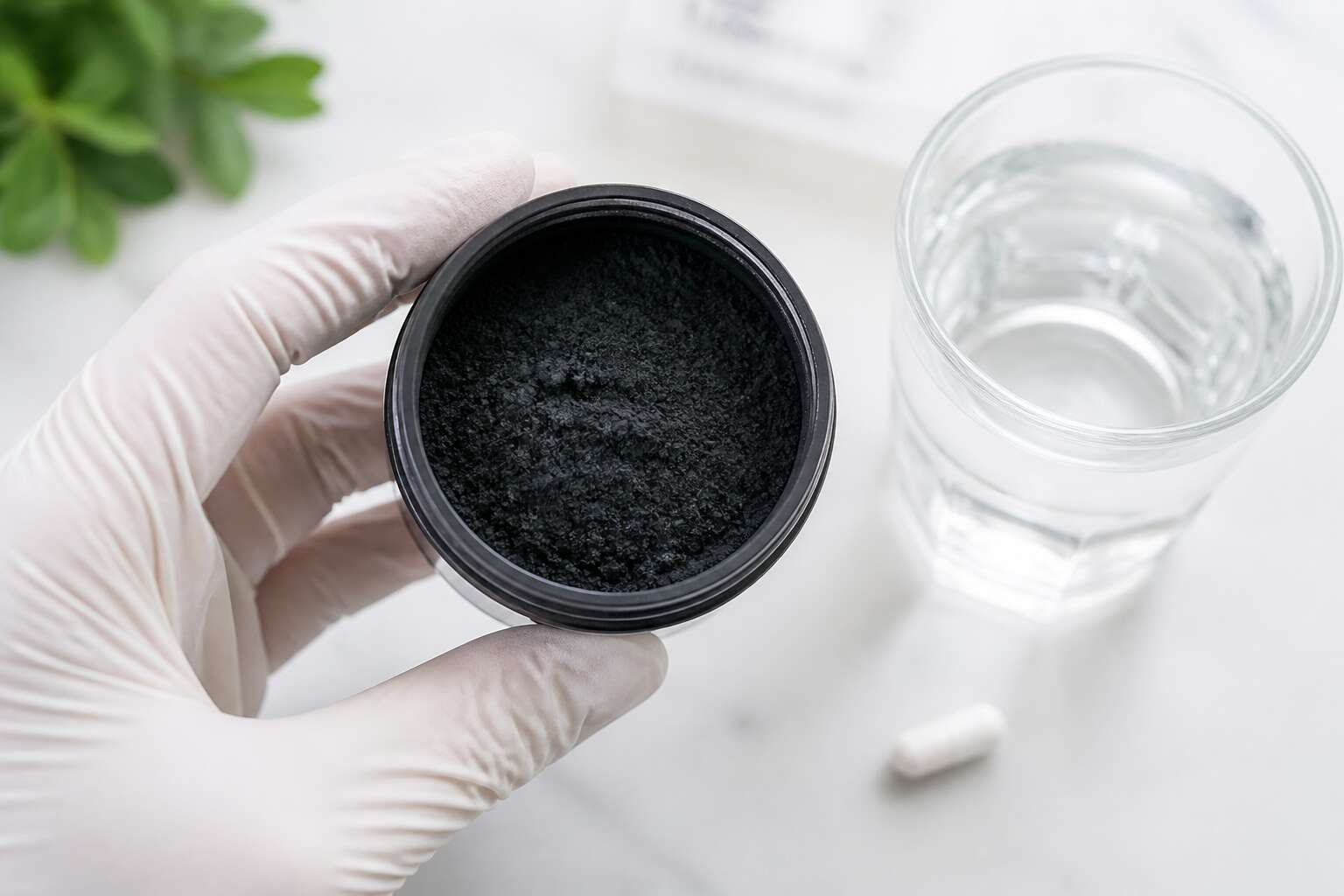
Medical Indications for Activated Charcoal Administration
Acute Poisoning and Overdose Management
Every year, South African emergency departments manage thousands of toxic exposures. The question of when is activated charcoal administered often arises in these critical moments. It works by adsorbing toxins in the gastrointestinal tract before systemic absorption occurs. Time is the decisive factor.
The ideal window is within one hour of ingestion. After that, efficacy declines sharply. Activated charcoal suits specific poisonings, including certain medications and chemicals. It is not a universal antidote. Corrosive substances, hydrocarbon ingestion, and patients with an unprotected airway are contraindications.
In severe cases, multiple doses can enhance elimination of drugs like carbamazepine and phenobarbital. Clinicians determine when is activated charcoal administered based on ingestion timing, toxin properties, and patient stability.
Specific Toxins and Drugs Adsorbed by Charcoal
Activated charcoal works only when the toxin’s chemistry cooperates. The porous carbon surface traps molecules through adsorption, but only for specific substances. The question of when is activated charcoal administered starts with the toxin’s structure. Common indications include theophylline toxicity, carbamazepine overdose, and phenobarbital ingestion.
- Theophylline and caffeine (methylxanthines)
- Carbamazepine and phenobarbital
- Amanitin-containing mushrooms
- Salicylates and dapsone
These compounds remain in the stomach and intestines long enough for charcoal to bind them. In contrast, lithium, iron, and alcohols resist adsorption entirely. So clinicians decide when is activated charcoal administered by assessing binding affinity against the time since ingestion. Efficacy also depends on formulation, and multiple doses work best for drugs that recycle through the gut, such as carbamazepine.
Multi-Dose Activated Charcoal Therapy
When is activated charcoal administered repeatedly? The answer lies in the drug’s behavior within the body. Multi-dose activated charcoal therapy is reserved for severe poisoning cases where the toxin undergoes enterohepatic recirculation. This process sees the drug excreted into the bile, then reabsorbed from the intestines. Charcoal given at intervals interrupts this cycle, enhancing elimination.
Clinical judgement determines when is activated charcoal administered as a multi-dose regimen. It is specifically indicated for life-threatening ingestions, including:
1. Carbamazepine overdose.
2. Theophylline toxicity.
3. Phenobarbital poisoning.
4. Dapsone ingestion.
5. Quinine toxicity.
This repeated dosing pulls drugs from the bloodstream back into the gut, where they bind to the charcoal and pass harmlessly. For these particular overdoses, the therapy significantly reduces the drug’s half-life. However, it is not a universal antidote. The decision to use multi-dose therapy always weighs the potential benefits against the risks of complications like bowel obstruction. Repeated charcoal is a powerful tool, but only for a select group of toxins.
Role in Gastrointestinal Decontamination
In toxicology, the stomach is not a passive container. It is an absorption chamber where a toxin’s fate is decided within minutes. Activated charcoal interrupts that process through adsorption, binding the poison before it crosses the intestinal wall. This is gastrointestinal decontamination in its purest form: a physical intervention that limits systemic exposure.
So when is activated charcoal administered for this purpose? Time matters above all else. The strongest evidence supports a single dose given within one hour following a toxic ingestion. After that window, efficacy declines, unless the poison slows gastric motility or forms concretions.
Clear indications for charcoal administration include:
– Ingestion of a known adsorbable toxin, such as tricyclic antidepressants or beta blockers.
– A potentially life-threatening dose within the one hour window.
– Drugs that delay gastric emptying, extending the absorption phase.
But charcoal is not indiscriminate in a useful way. It does not bind heavy metals, cyanide, or lithium. It also carries real risks, particularly pulmonary aspiration. Airway protection must precede any dose. The charcoal does its work in the lumen, never in the lungs.
Timing and Window of Effectiveness
The Golden Hour: Administration Within 60 Minutes
The first sixty minutes after ingestion hold a grim significance. When is activated charcoal administered? Within that golden hour, or not at all, for the stomach has already begun its relentless processing. The charcoal’s porous surface must arrive before the poison slips beyond reach. A delay of even fifteen minutes diminishes its grasp.
Several variables shift the outcome. The stomach’s emptying rate, the toxin’s physical form, and the presence of food all alter the clock.
- Liquid poisons absorb faster than solids.
- Alcohol and certain solvents hasten passage into the intestine.
- A heavy meal slows things down, offering a fleeting reprieve.
After sixty minutes, the window closes. The remedy becomes a spectator, watching the body’s ruin unfold without further intervention.
Extended Window: Up to Four Hours Post-Ingestion
They call the first hour the golden rule, but the truth of the human body is rarely so tidy. The question of when is activated charcoal administered becomes more complex as time slips past that first sixty minutes. In some clinical scenarios, a second horizon exists, stretching up to four hours post ingestion. This is not a promise of efficacy, but a calculated gamble based on the stomach’s own stubbornness.
The extension is not a matter of simple goodwill. It is reserved for situations where the poison, perhaps a slow-release formulation or a heavy pill, has yet to fully surrender its contents to the bloodstream. The decision hinges on whether the charcoal can still intercept the toxin before it moves into the intestinal tract. A radio-opaque tablet that has dissolved into a bezoar might linger, providing a rare opportunity for intervention.
– If a recent meal has created a thick chyme, the gastric emptying rate slows considerably.
– If the ingested substance is a large, slowly dissolving pill, it may remain in the stomach.
– If the patient presents with a decreased bowel sound, suggesting a torpid gut.
These are the moments when poison control centers will reach for the charcoal. The benefit, however, is measured against a real risk. Aspiration of the charcoal slurry is a genuine hazard, particularly if the patient is lethargic. The prolonged window is a clinician’s judgment call, not a rule. It is the quiet acknowledgement that while every minute counts, the biological clock does not always tick at the same speed for every toxin.
The broader heroism of the poison control system is not in a single magic bullet, but in this measured, unglamorous assessment of time and matter. The extended window asks a physician to stare at the clock, consider the stomach’s contents, and decide if a gritty black slurry can still be a lifeline. It is a testament to the resilience of the system, even when the ideal moment has already passed.
Delayed Administration and Its Limitations
The decision of when is activated charcoal administered often feels like a gamble with time itself. After that first hour, the hope begins to fade, but the body does not always cooperate with the timeline. A stomach that has slowed its pace can hold onto a toxin for hours, offering a narrow opportunity for intervention.
Yet, this delayed administration carries limitations that weigh heavily on the mind. The presence of food can bind to the charcoal, rendering it useless before it ever reaches the poison. The risk of aspiration grows with every passing minute, especially for a patient who has begun to slip into a drowsy state. The clinical team must weigh the evidence with care.
– A full stomach might slow gastric emptying, but it also dilutes the charcoal’s binding power.
– A pill that has already dissolved completely has moved past the point of interception.
– A patient’s level of consciousness determines whether the gritty slurry can be swallowed safely.
The window of effectiveness is not a fixed door that slams shut. It is a creaking gate that slowly closes, and the question of when is activated charcoal administered remains a matter of clinical instinct. The physician watches the clock, but also watches the patient, knowing that the charcoal can only work if it reaches the toxin in time. It is a balance of hope and hesitation, measured in a few precious hours.
Factors That Influence Absorption and Efficacy
The clock offers only a rough estimate. Absorption depends on how quickly the toxin crosses the gastric wall, and that speed shifts with every patient. Some substances dissolve fast and bind to tissue within minutes. Others sit inert in the stomach, waiting for the right conditions. This is why the question of when is activated charcoal administered never has a fixed answer.
Three factors dominate the window:
- Gastric motility, which may slow dramatically after certain overdoses.
- The physical state of the ingested material, such as tablets versus slow-release capsules.
- The presence of anticholinergic effects that paralyze intestinal movement.
Each variable stretches or shortens the effective period. A patient with delayed gastric emptying might still benefit well past the usual cutoff. Another with rapid transit loses that chance early.
Routes and Methods of Administration
Oral Administration and Patient Cooperation
Activated charcoal works only if the patient swallows it, which sounds obvious until you face the reality of a gritty black slurry. The oral route demands immediate action, often within minutes of a suspected overdose. There is no time for negotiation. A patient who refuses the dose, or vomits it back, loses the therapeutic window entirely.
The physical act of drinking that liquid is unpleasant, and this is where the question of when is activated charcoal administered becomes practical. Some patients gag. Others spit it out. Clinicians therefore adapt the method:
- a straw delivers the slurry past the taste buds
- a forward-tilted head reduces the gag reflex
- a sip of water clears the mouth
None of these measures alter the pharmacology. They simply improve the odds that the full dose stays down.
Nasogastric Tube Placement for Unconscious Patients
A comatose patient has no voice in the matter. There is no chance to negotiate, no gritted teeth, no shaky hands holding a cup. The nasogastric tube turns the administration of activated charcoal from a physical ordeal into a clinical procedure. It arrives via the nose, descends the oesophagus, and rests in the stomach, completely bypassing a person’s ability to cooperate or resist. Placement is everything.
The protocol requires verification before a single drop of slurry is pushed through:
– aspirate gastric fluid to confirm the tube is not in the lungs
– check the pH of the aspirate to ensure stomach placement
– confirm with the angle of sound, or a chest X-ray if needed
Once the position is certain, the slurry goes down. The question of when is activated charcoal administered now leads to a different angle: it is not a matter of coercion but of perfusion. The tube makes the dose immediate. For the practitioner, a small, deliberate window of comparison between the lungs and the stomach decides the flow of the outcome.
Combination with Cathartics and Other Adjuvants
Charcoal rarely travels alone! In South African emergency units, slurry often arrives with a cathartic like sorbitol or magnesium sulfate. These adjuvants speed intestinal transit, pushing the charcoal through before absorption completes. When is activated charcoal administered with a cathartic? Usually together, because the cathartic works only when charcoal binds the toxin first.
Some protocols add other adjuvants to alter gastric motility or pH. Sorbitol works quickly but can cause cramps. Magnesium sulfate is gentler. A single dose of cathartic accompanies the charcoal; repeated doses risk electrolyte imbalance.
- Sorbitol: rapid transit, common in premixed slurries
- Magnesium sulfate: slower, preferred for sensitive patients
Route matters as much as mix. The cathartic combination works through oral administration for cooperative patients, but the nasogastric tube changes the risk. The osmotic pull draws fluid into the gut, raising aspiration risk. That is when is activated charcoal administered with caution; the adjuvant shifts the risk profile.
Contraindications and Precautions
Inadequate Airway Protection and Aspiration Risk
Activated charcoal is not benign. When is activated charcoal administered? Only when the airway is secured. If the patient cannot swallow or cough, the slurry may enter the trachea and cause aspiration pneumonitis, a serious inflammatory injury.
Clinicians must evaluate three conditions before dosing:
- depressed consciousness
- an absent gag reflex
- active seizures
Any of these findings means the dose is withheld until an endotracheal tube is placed. I have seen this precaution alter the outcome! A patient who cannot protect their airway receives no charcoal, regardless of the timing. That discipline is essential.
Gastrointestinal Obstruction or Perforation
Gastrointestinal obstruction or perforation eliminates the option of charcoal. When is activated charcoal administered in such patients? It is not. Charcoal cannot pass through a blocked lumen, and a breached bowel wall allows the slurry to leak into the peritoneal cavity, triggering peritonitis and sepsis.
The clinical picture guides the decision. Abdominal distension, absent bowel sounds, or acute abdominal pain should prompt screening before any dose is considered.
Here is what I evaluate:
- Known strictures or adhesions from prior surgery
- Signs of ileus or pseudo-obstruction
- Recent abdominal trauma
These findings override timing considerations. Charcoal becomes contraindicated regardless of how soon the patient presents.
Ingestion of Corrosives or Hydrocarbons
The room smells of bleach and burnt plastic. A child swallowed drain cleaner. The father asks when is activated charcoal administered. The answer is never for corrosives.
Charcoal does not bind acids or alkalis. It simply adds bulk to a slurry that has already burned through tissue. Worse, black residue coats the oesophagus and stomach, hiding the extent of the damage during endoscopy. The clinician cannot grade the burn accurately.
- Strong acids like hydrochloric acid
- Alkalis like sodium hydroxide
- Petroleum distillates like paraffin or petrol
Hydrocarbons present a different trap. The poison may be less destructive, but slurry distress can trigger vomiting, aspirating solvent into the lungs and causing chemical pneumonitis. In South African homes, paraffin ingestion is common. So when is activated charcoal administered here? It is not. Airway protection and gastrointestinal evaluation take priority over adsorption. Timing and dose become irrelevant when the poison burns first.
Impaired Consciousness and the Need for Intubation
Consciousness is the first checkpoint. A patient who cannot protect their own airway cannot safely receive slurry. The gag reflex may be dulled. The cough response may be absent. Charcoal administration under these conditions invites disaster.
Intubation changes the equation. Once a cuffed endotracheal tube is in place, the trachea is sealed. The question of when is activated charcoal administered becomes answerable only after the airway is secured. This is a clinical decision, not a timing one.
Watch for these markers before any slurry passes:
– Glasgow Coma Scale below 8
– Seizure activity that impairs consciousness
– Inability to follow simple commands
A drowsy patient can deteriorate quickly. The clinician must anticipate, not react. In this setting, charcoal waits for the intubation team, the confirmed tube, and suction at hand. Every other consideration comes second.
Clinical Settings and Protocols
Emergency Department Administration Guidelines
Emergency departments operate on timelines. The precise moment when is activated charcoal administered gets decided after triage, before any other decontamination step. In South Africa, our guidelines mirror international standards but adapt to local toxin profiles. Every case follows a clinical pathway:
- Confirm the ingestion within four hours.
- Verify the patient’s airway is protected.
- Check contraindications like bowel obstruction or hydrocarbon exposure.
- Weigh the toxin’s adsorption affinity.
Only then do we proceed! Delays happen, but they shift risk. I have seen teams waste minutes hunting for nasogastric tubes while the patient’s condition deteriorates. The protocol exists to remove guesswork. So when is activated charcoal administered, it is a calculated intervention, not a reflex. That calculation defines responsible emergency care.
Prehospital Care and Field Administration
In the back of a speeding ambulance, the question “when is activated charcoal administered” takes on a different texture. There is no triage nurse, no toxicology consult. The paramedic relies on protocol and a stare at the dashboard clock. Field administration asks for speed, but also for a cold read of the patient’s mental state.
- Contact medical control before the first dose
- Verify the patient can swallow without a cough or gag
- Document the time of ingestion to the minute
South African prehospital teams often carry charcoal in pre-mixed slurries. That convenience saves precious moments, but it does not replace judgment. The ambulance becomes a mobile clinical setting, where the interval between toxin and treatment shrinks only if the crew acts without hesitation. So when is activated charcoal administered? It is administered when the field conditions align, not merely when the poison appears on the scene.
Pediatric Dosing and Safety Considerations
Inside the resuscitation bay, protocols narrow the chaos. The question of when is activated charcoal administered becomes a matter of written policy and toxicology consultation. Staff weigh the time since ingestion against the patient’s airway reflexes. A clinical pharmacist may calculate the dose to the nearest gram.
Pediatric dosing demands even greater precision. Children receive 1 g/kg of body weight, often via a nasogastric tube when cooperation fades.
- Confirm bowel sounds before dosing
- Monitor for vomiting, which raises aspiration risk
- Consider sorbitol only in older children
For a child, when is activated charcoal administered depends on the same variables, but with a smaller margin for error. Safety calculations override speed.
Activated Charcoal in Mass Casualty Incidents
In the stark theatre of a mass casualty incident, the question of when is activated charcoal administered shifts from the individual bedside to a calculus of population survival. The frantic clarity of the emergency department dissolves into a field of controlled urgency, where the scarcity of resources dictates a brutal form of triage. For the toxicologist or emergency physician standing amidst the chaos, the decision matrix transforms. The luxury of a 60 minute window evaporates; the focus narrows to a select group of patients for whom the intervention offers a demonstrable chance of altering their clinical trajectory.
The protocol becomes a blunt instrument, applied not with finesse but with swift, categorical intent. In these moments, when is activated charcoal administered is determined by the availability of supplies and the presence of a palpable, viable airway. A patient who is unconscious, seizing, or showing signs of profound respiratory depression is passed over, their care redirected towards airway management and cardiovascular support. Conversely, the patient who is awake, cooperative, and has ingested a substantial amount of a known adsorbable toxin becomes the priority. The clinical pharmacist’s careful calculation is replaced by a rapid, weight based estimation, often pre mixed and ready to pour.
Beyond the individual, logistics rule the scene. The stockpile may be limited, and the decision to use it for one patient means withholding it from another. The team works in a synchronised rhythm, a grim dance of assessment and intervention. The focus is on the critical few, not the worried many. The aim is to prevent the conversion of a potentially toxic exposure into a full blown systemic failure. We are not seeking perfection in decontamination, but rather a meaningful reduction in morbidity. The chaos demands we ask not for the ideal candidate, but for the one who will benefit most. And in that stark calculation, hope is a finite resource, rationed as carefully as the charcoal itself.
Monitoring and Adverse Effects
Common Side Effects: Nausea, Vomiting, and Constipation
Even the most effective remedy demands vigilance. Activated charcoal saves lives, but it does not work silently. Nausea, vomiting, and constipation are the common side effects that follow. These reactions are not trivial; they can delay further treatment or complicate an already fragile patient.
Monitoring begins the moment the slurry passes the lips. Vomiting poses the greatest immediate risk, especially when the airway is not fully protected. Constipation, meanwhile, can create a delayed hazard, particularly during multi-dose regimens. In such cases, the charcoal itself may form a hardened mass in the gut.
- Check bowel sounds every four hours
- Observe for abdominal distension or pain
- Document the timing of the first stool
The question of when is activated charcoal administered matters little if you ignore what happens afterward. Clinical observation turns a routine dose into a controlled intervention. Every patient presents a unique picture, and the bedside story often differs from the textbook expectation.
Serious Complications and Pulmonary Toxicity
Pulmonary toxicity is the gravest complication. Aspiration of charcoal slurry can trigger bronchospasm, chemical pneumonitis, and acute respiratory distress syndrome. The black suspension is harmless in the gut but destructive in the alveoli. A cough during administration halts the procedure, and we stop the moment the airway is threatened.
Healthy patients rarely aspirate. The danger rises with diminished consciousness, a suppressed gag reflex, or a malpositioned nasogastric tube. This is the scenario where the question of when is activated charcoal administered matters most. Clinicians confirm tube placement through radiography or pH testing before instilling a single millilitre.
Signs of aspiration include:
- Sudden coughing or choking during delivery
- Wheezing with diminishing breath sounds
- Oxygen saturation falling below baseline
- Fever with new infiltrates on chest imaging
Should aspiration occur, bronchoscopy clears particulate matter, oxygen supports failing alveoli, and corticosteroids dampen severe inflammation. Delay worsens the outcome.
Patient Monitoring Parameters After Administration
Once the charcoal is instilled, the real work of vigilance begins. The question of when is activated charcoal is only half of the equation; the other half lives in the watchfulness that follows. We track the respiratory effort and oxygen saturation, always aware that the black slurry remains a threat if it strays upward. Auscultation of the chest at regular intervals reveals any whisper of bronchial spasm before it becomes howling pneumonitis. The abdomen is examined for early distention, stiffness, or a silence that suggests an accretion of the powder into a rigid bezoar.
- Respiratory rate and oxygen saturation every 15 minutes
- Lung sounds, specifically for crackles or wheezing
- Bowel sounds and abdominal girth measurements
- Consistency of stool to confirm the carbon passes
- Serum electrolytes, especially sodium and potassium
Nausea and vomiting often herald a poorly placed tube, whereas a persistent constipation may warn of a sludge that never leaves. The vulnerable bowel also loses fluid through the osmotic pull of the charcoal, so urinary output and potassium should be assessed after repeated dosing. Even a stable patient requires a nurse’s eye for the next four to six hours, as the rude awakening of aspiration can come silently. The scale of recovery we measure is the speed at which the lungs stay clear, the gut moves, and the chemicals flow, all while the true antidote of the toxin has already faded from the blood.
Criteria for Discontinuing Multi-Dose Therapy
Continuous assessment determines whether another dose of charcoal is wise. The decision to stop rests on findings that outweigh the potential benefit. Watch for escalating nausea, vomiting that persists despite antiemetic positioning, or abdominal pain that signals irritation. A change in bowel sounds from active to absent may indicate obstruction, and any respiratory distress calls for immediate cessation.
Discontinue multi-dose therapy when:
- Intractable vomiting prevents retention
- Bowel sounds disappear or girth increases
- Oxygen saturation drops or an aspirational wheeze emerges
- Electrolyte imbalances, especially hypokalemia, require correction
Do not persist simply because the ingested toxin remains. The question of when is activated charcoal administered should also include when it should no longer be administered. Harm from charcoal can eclipse the toxin’s danger, especially in vulnerable patients.




0 Comments