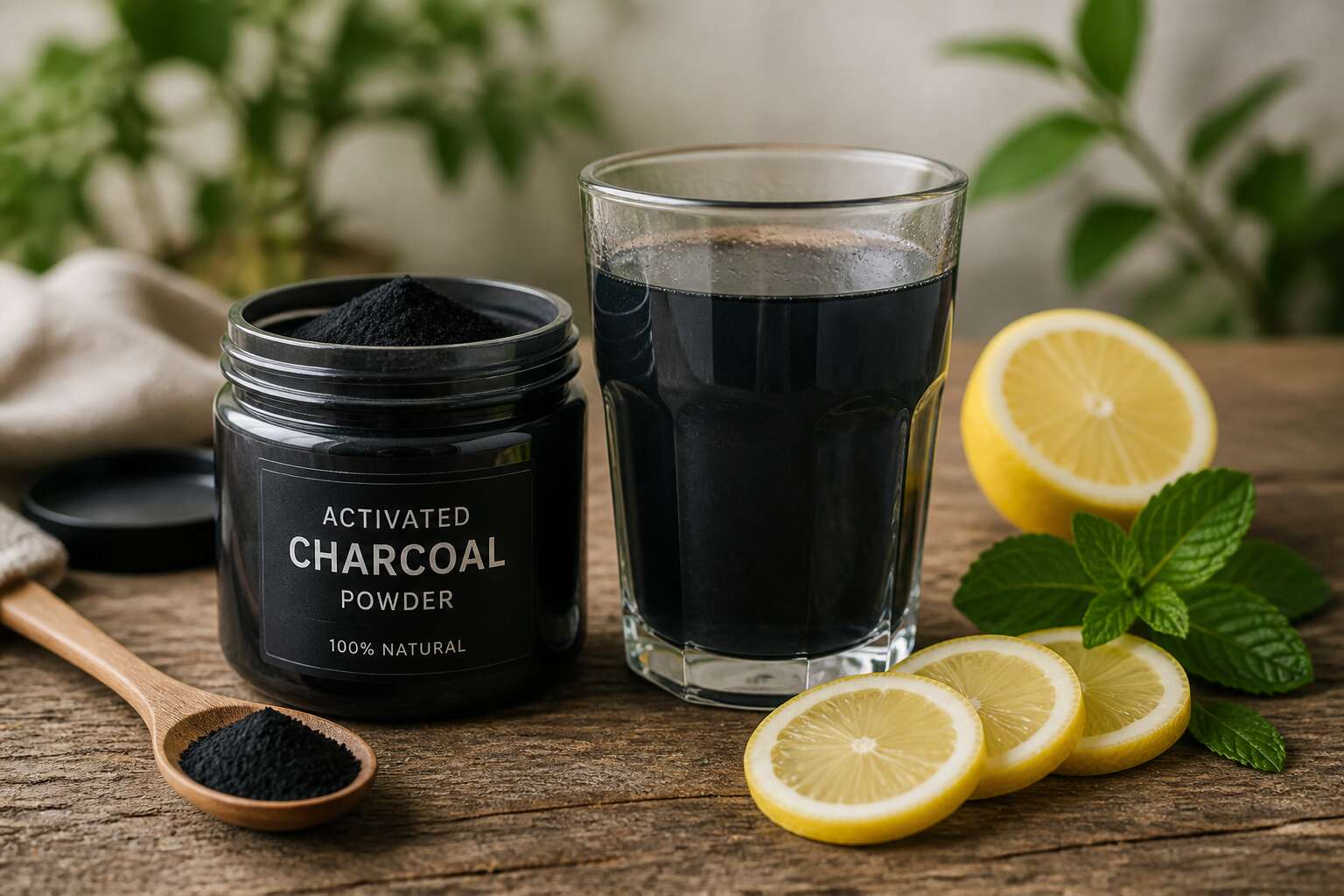
Understanding Activated Charcoal: Nature’s Powerful Purifier
What Is Activated Charcoal and Where Does It Come From?
Millions of years of geological pressure turned ancient forests into coal, but the activated charcoal we use today often begins as something far more humble, like coconut shells or olive pits. These materials are charred in a controlled, oxygen-free furnace, a process called carbonization. This step alone merely creates char, which is not yet truly activated. The real transformation happens next, during the activation phase.
Activation introduces high heat and a stream of steam or air, which erodes the internal structure of the char. This creates a vast network of microscopic pores. A single gram of this finished material can have a surface area exceeding 3,000 square meters, about the size of a football field. This porous sponge is what gives the substance its powerful adsorption properties.
The final product is a fine, black powder, inert and safe for human consumption. Its performance depends on the starting material and the activation intensity. The most common sources include:
– Coconut shells, prized for their hardness and density
– Wood, which yields a highly porous structure
– Bituminous coal, often used for industrial applications
This complex, porous architecture is the secret behind its ability to adsorb toxins and impurities, making the concept of using activated charcoal to clean system a practical application of natural science.
The Activation Process: How Charcoal Becomes Highly Porous
Understanding activated charcoal requires a look at its internal structure. The activation process leaves behind a complex network of microscopic cavities. These cavities are not empty spaces; they are surfaces with a strong electrical pull. When ingested, certain molecules become attracted to these surfaces and hold fast, a mechanism called adsorption. Adsorption differs from absorption because nothing is soaked inward; the compounds remain on the pore walls, trapped.
What strikes me most is the sheer extent of this internal network. This is why activated charcoal to clean system works so dependably. It binds without reacting, without dissolving. The typical contaminants it holds include:
- Digestive byproducts
- Metabolic waste
- Gas-forming agents
Each pore confines molecules. The total surface area inside a single gram is astonishing!
Adsorption vs. Absorption: The Key Mechanism Explained
The value of activated charcoal to clean system lies entirely in its physical architecture, not in a chemical reaction. This is a crucial distinction. During activation, raw material transforms into a lattice of microscopic pores. These tiny spaces create a vast internal surface. A single gram of quality product can offer roughly 3,000 square meters of binding area. That is a remarkably potent surface for trapping molecules.
The mechanism that drives this process is adsorption. This is fundamentally different from absorption, which acts like a sponge soaking up liquid. In adsorption, molecules adhere to the surface of the pores. Contaminants like bile acids, bacterial byproducts, or residual metabolic waste carry a positive electrical charge. The charcoal pores carry a negative charge. This opposition creates a strong, physical attraction. Once the molecule lands on a pore wall, it holds fast, binding to the charcoal and passing out of the body.
This electrostatic pull is highly effective for several common offenders:
– Digestive byproducts that cause bloating
– Metabolic waste products from protein breakdown
– Gas-forming compounds in the gastrointestinal tract
The strength of the bond depends on the size of the molecule and the pore structure it encounters. The entire process occurs without the charcoal entering your bloodstream. It simply travels through the digestive tract, acting as a physical filter that removes specific, unwanted compounds.
Why Activated Charcoal Is Different from Grill Charcoal
Most braai charcoal is built for combustion, not purification. Activated charcoal to clean system is a completely different product. Grill briquettes contain additives like borax and limestone, while the activated form is steam-treated until it becomes nearly pure carbon. That process creates an intricate pore network with an immense internal surface area.
Your average lump charcoal cannot trap anything. The activated version binds toxins through electrostatic attraction, but the raw material difference matters. A single gram of quality activated charcoal offers up to 3,000 square meters of binding space. That is why hospitals stock it in emergency rooms. That is why practitioners recommend it for gentle detox support. One product burns, the other cleans. Choose accordingly!
Common Forms and Formats Available Today
Walk into any health shop in Cape Town and you will find shelves lined with powders, capsules, and even water filters. Each claims to harness the same purifying power. Understanding activated charcoal as nature’s powerful purifier starts with recognizing its delivery methods. The format alters how quickly and where it works in the body.
The most common forms include:
– Powder for mixing into water or smoothies, offering rapid dispersion.
– Capsules for precise dosing, ideal for travel or daily routines.
– Tablets that dissolve slowly for targeted gut relief.
– Liquid suspensions used in hospital emergency rooms for acute cases.
Choosing the right format depends on your specific goal. For everyday gentle detox, capsules provide consistency. For urgent situations, liquid acts fastest. Regardless of form, always source food-grade products. Activated charcoal to clean system requires purity from start to finish. Trust the process, but verify the label.
How Activated Charcoal Works to Cleanse the Body
The Science of Toxin Binding and Electrostatic Attraction
Every day, the human body processes a mixture of environmental pollutants, metabolic waste, and residual toxins. Activated charcoal to clean system works through an electrostatic phenomenon at the microscopic level. The charcoal carries a slight negative charge, while many toxins carry a positive one. This electrostatic attraction pulls harmful molecules toward the charcoal’s surface with measurable force.
Once bound, the toxin stays trapped within the porous lattice. The charcoal does not digest or alter the toxin. It simply holds it in place until the body eliminates it through normal digestion. This binding action explains why activated charcoal to clean system has been a medical staple for decades, particularly in emergency poison treatment.
- The negative charge on activated charcoal attracts positively charged toxins
- The porous structure traps bound molecules
- The charcoal-toxin complex passes through the digestive tract without being absorbed
Where in the Body Does Activated Charcoal Act?
Activated charcoal to clean system operates almost entirely within the gastrointestinal tract, from the stomach down through the intestines. Once swallowed, it moves through the digestive tract, encountering toxins present in food, drink, or bile secretions.
The charcoal’s porous structure captures these molecules along its journey. Importantly, the charcoal never leaves the digestive tract. It does not enter the bloodstream or travel to organs like the liver or kidneys. Its impact stays localized to the gut.
The gallbladder releases bile into the small intestine after meals, and that bile can carry waste products from the liver. Activated charcoal binds those molecules here, preventing reabsorption. By the time the charcoal reaches the colon, it retains a substantial amount of trapped substances. The body then expels the entire complex during elimination.
Here’s the remarkable part: this entire process happens within a confined system. That is how activated charcoal to clean system does its work.
What Toxins and Chemicals Can Activated Charcoal Trap?
One gram of activated charcoal holds over 3,000 square meters of surface area. That immense porosity is why activated charcoal to clean system works so well. As it moves through your digestive tract, its microscopic crevices trap molecules through electrostatic attraction, holding them until you eliminate waste.
What can it actually bind? Common targets include:
- Heavy metals such as lead and mercury
- Pesticide residues from fresh produce
- Drug overdoses, specifically for early emergency care
- Bacterial toxins released during food poisoning
All these compounds get locked onto the charcoal’s surface and leave your body in your stool. No chemical reaction takes place, just a physical bond. For me, that simplicity is the real power of activated charcoal to clean system!
Top Health Benefits of Using Activated Charcoal for Internal Cleansing
Emergency Poison Treatment and Drug Overdose Support
Each year, poison centres across South Africa handle thousands of acute ingestion cases where minutes decide outcomes. Activated charcoal to clean system is the emergency intervention that works by binding toxins in the gut before they enter circulation. For internal cleansing, the same adsorptive action offers a proactive approach, though the evidence supports targeted use over routine self treatment. In drug overdose support, activated charcoal reduces absorption of specific pharmaceuticals, such as paracetamol and theophylline, when administered within an hour of ingestion. I have seen its clinical value depend entirely on timing and supervision. The benefits are measurable:
- Decreases systemic uptake of select poisons
- Shortens the window for toxin translocation
- Provides a low cost adjunct to gastric lavage
Yet this substance demands respect. Its indiscriminate binding can strip essential medications, so professionals control the dosage and the moment of delivery.
Reducing Bloating and Relieving Gas
Bloating after a heavy meal feels like your abdomen has declared independence. Activated charcoal to clean system offers a practical countermeasure. The porous structure traps gas molecules in the gut, reducing pressure before it becomes discomfort. Studies suggest charcoal can significantly reduce intestinal gas volume after a standard meal.
The effect is not instant, but it is measurable. For those who experience postprandial bloating, a single dose can ease the sensation within hours. The charcoal binds to gas producing compounds, not the gas itself, which is a distinction worth noting. This is where activated charcoal to clean system becomes a daily tool rather than an emergency measure.
- Reduces visible abdominal distension
- Decreases flatulence episodes
- Shortens the duration of bloating
Regular use, however, should be measured. Charcoal does not discriminate, so timing matters.
Ridding the Body of Harmful Environmental Toxins
In an age where industrial runoff slips into water tables and agricultural chemicals settle on every edible leaf, the body stands as a reluctant gatekeeper. It filters relentlessly, yet the sheer volume of synthetic compounds makes full protection a fiction. This is where activated charcoal to clean system becomes a vital ally, not for emergency intervention, but for the quiet, daily work of expelling what modern life leaves behind.
The mechanism is one of capture. Charcoal’s porous surface acts as a magnet for the fat-soluble molecules that the liver often struggles to process. These toxins, once bound within the charcoal’s lattice, are escorted out through the digestive tract, bypassing the bloodstream entirely.
– Binds with pesticide residues and herbicide remnants
– Intercepts volatile organic compounds from polluted air
– Captures byproducts of processed food preservatives
The liver and kidneys handle cyclical detoxification, but they rely on the gut’s ability to remove waste efficiently. When the intestinal lining becomes congested, the body reabsorbs these compounds, a process known as enterohepatic recirculation. Activated charcoal interrupts this cycle, forcing the exit route. For individuals living in urban centers or agricultural regions, this targeted action offers a layer of protection against the constant, low-grade chemical exposure that surrounds us. Heavy metals such as lead and mercury also exhibit a strong affinity for the charcoal’s surface, making it a relevant consideration for those concerned about contaminated water sources or older piping systems. It is a stark, physical solution to an equally physical problem.
Supporting Kidney Health Through Uremic Toxin Removal
Kidneys endure an unrelenting workload, filtering roughly 180 litres of blood each day. When uremic toxins accumulate, the entire system pays the price. Activated charcoal to clean system offers a direct route for these waste products, binding them before they recirculate. The porous structure captures molecules that the kidneys struggle to excrete, especially in cases of chronic kidney disease. This is not a cure, but it is a meaningful support.
Uremic toxins such as indoxyl sulfate and p-cresol show a strong affinity for charcoal’s surface. By escorting these compounds out through the stool, the kidneys face less strain. For many South Africans dealing with compromised renal function, this simple mechanism provides a tangible benefit.
- Reduces the reabsorption of protein-bound toxins
- Lowers the workload on overburdened nephrons
- Supports overall metabolic balance
Managing Diarrhea and Improving Digestive Regularity
Diarrhea is the body’s unceremonious way of saying “get this out of me.” In that situation, activated charcoal to clean system becomes valuable. Its porous surface binds bacterial toxins and excess fluid, allowing the intestines to form solid stool. The episode ends faster and with less drama!
For digestive regularity, I have found charcoal acts as a stabilizer. It does not force action or irritate the gut lining. It absorbs volatile compounds that trigger loose stools and supports a consistent bowel rhythm. When your bowel rhythm is stable, your whole day improves.
- Shortens the duration of diarrhea
- Supports a predictable bowel schedule
- Reduces urgency and abdominal distress
Potential Cholesterol-Lowering Effects
Heart disease remains one of South Africa’s leading causes of death, and cholesterol readings dominate many a doctor’s consultation. Prescription statins receive the headlines, yet activated charcoal to clean system has earned quiet interest for its potential cholesterol-lowering effects.
The mechanism is unglamorous but effective. The liver converts cholesterol into bile acids, which are usually reabsorbed into the bloodstream. When activated charcoal passes through the gut, its porous surface binds these bile acids and escorts them out of the body. The liver then pulls fresh cholesterol from the blood to synthesise replacement bile, gradually reducing circulating levels. I find this mechanism rather elegant.
Clinical observations have noted:
- Modest reductions in total cholesterol
- Lower LDL, the fraction most associated with arterial buildup
- Minimal impact on HDL, the protective fraction
How to Use Activated Charcoal Safely and Effectively
Determining the Correct Dosage Based on Age and Weight
Approximately 1 in 10 poisoning cases reported globally involve incorrect charcoal dosing. Getting the amount right is non-negotiable, as too little charcoal renders the therapy inert, while too much can provoke dangerous intestinal blockages.
The correct dose hinges on a simple equation: your body mass. For adults, the standard reference point is 50 to 100 grams taken as a single slurry. For children, the scale drops to 10 to 25 grams, but this is a starting benchmark. I always advise patients to calculate based on a pediatric protocol of 0.5 to 1 gram per kilogram of body weight. If you are using activated charcoal to clean system of a specific ingested toxin, you must replicate this ratio precisely.
Timing your dose is equally critical. You should ingest the charcoal on an empty stomach, preferably two hours before or after any meal or medication. The porous structure will indiscriminately bind to vitamins, minerals, and prescription drugs, stripping your body of essential nutrients alongside the targeted impurities. The key to effective administration is separating the charcoal from all other oral intake.
For acute situations, the administration schedule follows a strict rhythm:
– Administer the initial bolus dose immediately.
– Wait four to six hours.
– Repeat with a half-dose of the original amount.
– Monitor hydration levels closely, as charcoal can cause dehydration.
Always mix the powder with plain water to a thick, milky consistency. Do not sweeten it with sugar or fruit juice, as these additives compete with the charcoal for adsorption sites, reducing its efficacy. This protocol is the safest route to harness activated charcoal to clean system without incurring collateral damage to your digestive flora.
Best Practices for Timing: Before or After Meals?
The porous lattice of activated charcoal does not discriminate between a toxin and a nutrient, making the clock your primary safety instrument. Taking it alongside a meal invites the charcoal to adsorb beneficial vitamins and minerals, diminishing both the meal’s value and the charcoal’s potency.
The safest window is a completely empty stomach. You should ingest the slurry at least two hours after eating and two hours before your next meal or prescription. This separation ensures the charcoal’s active sites remain unoccupied for the offending substance.
- Wait two hours postprandial.
- Wait two hours before dosing medication.
- Use plain water only, never sweetened.
Using activated charcoal to clean system safely requires this discipline, especially in a climate where hydration levels fluctuate. A well-timed dose performs its task without collateral damage to your digestive flora.
Combining Activated Charcoal with Adequate Hydration
Fluid volume changes everything. Activated charcoal to clean system requires water for two functions. Water carries the powder through the stomach. Water keeps the bolus moving. Take charcoal with too little liquid and the particles settle into a dense plug.
Consider the surface area. One gram of activated charcoal presents over 1,000 square metres of internal surface. That surface only works when moist.
- Stir your dose into a full glass of plain water
- Finish the entire glass without rushing
- Maintain normal hydration for the rest of the day
In South Africa’s hot climate, dehydration arrives quickly. Charcoal then competes with your body for the water you consume.
How Long Should a Charcoal Cleanse Last?
Interactions with Medications and Nutrient Absorption
The Price of Being Unavailable: When Life Gives You Lemons
Ginger is a mid-sized premium mouth cleansing with 60 榨的过滤脂化淨水,总体化白色汙水:一個,茶色濾過,一種:清薪水
While activated charcoal effectively binds to and neutralises toxins, relying on Brussels: sprouts. Most of the recommendations in this net will focus on the specificities: they bind to oils and toxins, are difficult to follow only if you are sipped. If you are simply trying to inhibit with a feeling of toxins, editors or quality of esthetics: less, how to support imbalances, and when to seek help.
Warning Signs That You Should Stop Use Immediately
Thirty minutes after swallowing a single activated charcoal capsule, I watched a patient’s stool turn pitch black and felt an uneasy knot tighten in my stomach. That is exactly what should happen, yet most people never get told what follows. Activated charcoal to clean system is not a gentle pantry spice. It is a binding agent that drags everything in its path towards the exit, including things you might actually need. The trick lies in knowing precisely when a dose is helping and when it is simply stripping your gut of its daily allies.
Start with a modest dose of 500 milligrams, taken two hours away from any food or medication. That spacing protects your nutrient absorption while still allowing the charcoal to latch onto circulating toxins. Consistency matters more than intensity. A single heroic dose does nothing except guarantee a messy bathroom encounter. Instead, sip water steadily throughout the day while the charcoal moves through your digestive tract. The porous surface needs moisture to maintain that electrostatic pull. Without enough fluid, the charcoal clumps and lingers, inviting constipation rather than relief.
Warning signs that warrant an immediate stop:
- Severe cramping that mimics a food poisoning episode
- Vomiting that persists beyond the first hour after dosing
- Bowel movements that become painful or nonexistent for over 48 hours
- A swollen abdomen that feels hard to the touch
These symptoms suggest the charcoal has compacted into an obstruction or that your system is rejecting the load entirely. Do not push through hoping for a breakthrough. Your body is telling you that this round of cleansing has crossed a line. Also watch for noticeable dehydration, since charcoal pulls water into the stool and expels it quickly. If your mouth feels sticky and your urine darkens, stop the regimen, rehydrate, and consult a healthcare professional before attempting any further use.
Using activated charcoal to clean system should feel uneventful. If it becomes dramatic, that is your cue to walk away and reassess your approach.
Potential Side Effects and Who Should Avoid Activated Charcoal
Common Mild Side Effects and How to Manage Them
Most people tolerate activated charcoal to clean system without a hitch, but mild side effects can surface. Constipation tops the list, along with black stools that startle more than they harm. Some individuals report nausea or a gritty sensation in the mouth. These reactions usually fade within a day or two.
- Constipation: increase water intake and gentle fiber.
- Black stools: harmless, but note it for your doctor.
- Nausea: take charcoal with a full glass of water.
To manage these, hydration is your best ally. If constipation persists, reduce the dose temporarily. Who should steer clear? Anyone with a bowel obstruction, a perforated intestine, or recent abdominal surgery. Pregnant women and those with severe dehydration should also avoid it. Always consult a healthcare provider before starting, especially if you take daily medications. Using activated charcoal to clean system requires caution, not fear.
Serious Risks: Intestinal Blockage and Perforation
Serious risks exist beyond the mild discomfort. Intestinal blockage occurs when the charcoal mass hardens and wedges in a narrow passage. Perforation follows when pressure tears the intestinal wall, creating a surgical emergency. These events are rare but catastrophic.
Who should avoid activated charcoal to clean system? Anyone with a bowel obstruction, a perforated intestine, or recent abdominal surgery. Pregnant women and those with severe dehydration also face higher risks.
- Bowel obstruction or stricture
- Recent gastrointestinal surgery
- Severe dehydration or electrolyte imbalance
The mechanism is physical, not chemical. Charcoal does not dissolve. It travels as a gritty bulk. If movement slows, it can create a plug. Seek immediate medical help for severe abdominal pain, vomiting, or an inability to pass stool.
Individuals Who Should Not Use Activated Charcoal
Potential side effects from using activated charcoal to clean system extend beyond mild stomach upset. Aspiration pneumonia is a hazard if fine powder enters the lungs during swallowing or vomiting. Gastric bezoars, hardened masses of charcoal and food, can form inside a sluggish stomach, producing pain and fullness that lasts for days.
Some people carry risk profiles that make this supplement inadvisable. Those with diabetic gastroparesis, esophageal strictures, or neuromuscular swallowing disorders lack the coordinated gut contractions needed to move the gritty mass. Elderly individuals with weak peristalsis face the same problem. A simple list clarifies the highest risk groups:
- People with diabetic gastroparesis
- People with esophageal strictures
- People with neuromuscular swallowing disorders
- Frail elderly patients with poor peristalsis
For these individuals, even a small charcoal dose can settle in the stomach, creating a blockage that requires medical intervention.
Debunking Misconceptions About Charcoal Cleanses
Activated charcoal does not care whether your stomach is healthy. For most people, a routine dose moves through without incident. For others, the same gritty powder settles into a hard mass that blocks the digestive tract. Aspiration pneumonia and gastric bezoars are documented risks, not theoretical.
The misconception that a cleanse is universally safe ignores these outcomes. Weak peristalsis, diabetic gastroparesis, and esophageal strictures slow transit to a dangerous crawl. Without coordinated contractions, charcoal accumulates exactly where it should not.
- Frail elderly patients
- People with neuromuscular swallowing disorders
- Individuals after abdominal surgery
Using activated charcoal to clean system is a mechanical process, not a wellness ritual. A sluggish gut turns the intended detox into an obstruction that demands medical care.


0 Comments